

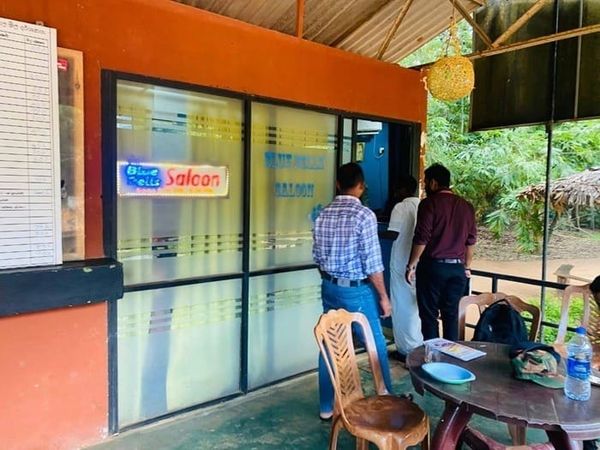
Karaithuraipatru Council Shuts Army Salon — Residents Left to Pay the Price

Karaithuraipatru Council Shuts Army Salon — Residents Left to Pay the Price


Share this post

A military-operated salon in northern Sri Lanka has been ordered to close by local authorities, sparking debate over business competition, union influence, and the affordability of basic services in war-affected communities.

The Karaithuraipatru Pradeshiya Sabha issued a directive to shut down “Blue Bells Salon,” which had been run by the Sri Lankan Army on Forest Department land in Kepapulavu, Mullaitivu District.

Council Cites Economic Impact
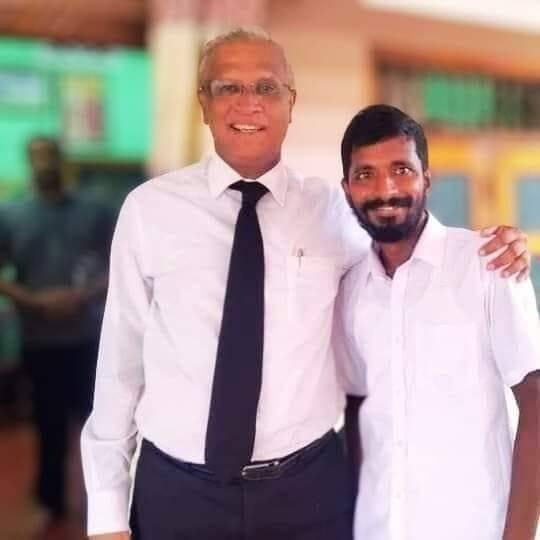
Chinnarasa Logeswaran with M.A.Sumanthiran

Chinnarasa Logeswaran,  chairman of the Karaithuraipatru Pradeshiya Sabha and a representative of the Illankai Tamil Arasu Kachchi (ITAK), said the decision followed complaints from local residents about the military's commercial activities.

"Such ventures undermine the fragile local economy," Logeswaran said, adding that the council would pursue legal action if its directive was not implemented. The ITAK representative, who is closely associated with party heavyweight M.A. Sumanthiran, condemned military involvement in civilian business operations in the region.

Residents Point to Union Monopoly

However, interviews with local residents reveal a more complex economic landscape. Multiple residents told Jaffna Monitor that while they understood the political concerns, the closure eliminates what many considered their only affordable option.

According to locals, the Barbers' Union controls nearly all salons and barbershops in the northern region, requiring mandatory registration for operators. Residents allege that the union enforces a monopoly, with unregistered establishments facing intimidation and being forced to close.

This structure, they claim, has enabled salons to maintain high prices that many struggling families cannot afford.

The Price Gap

According to the union-approved price list dated October 7, 2025, standard services cost:

  • Hairdressing: Rs. 600
  • Shaving: Rs. 350
  • Beard shaping: Rs. 500
  • Children’s haircut (under 12): Rs. 500
  • Women’s haircut: Rs. 800
  • Head shaving: Rs. 1,500

This means a person opting for a simple haircut and beard shaping would have to spend Rs. 1,100.

By contrast, residents told Jaffna Monitor that the army-run salon charged just Rs. 250 for a haircut and shave—less than a quarter of the union-mandated rates.

“For families still recovering from the war, these prices matter,” one resident said, speaking on condition of anonymity. “The army salon was affordable. That’s why it was always crowded.”

Neither military officials nor representatives of the Barbers’ Union were available for comment at the time of publication.

Share this post

Be the first to know

Join our community and get notified about upcoming stories

Subscribing...
You've been subscribed!
Something went wrong
Why Tamil Politics Cannot Be a Pensioner's Hobby
A cut-out portrait of Judge M. Ilancheliyan from his farewell ceremony.

Why Tamil Politics Cannot Be a Pensioner's Hobby

If you trace the arc of Tamil political leadership from Independence to today, one pattern repeats with stubborn persistence: our fate has been decided almost exclusively by lawyers. From Sir Ponnambalam Ramanathan and G.G. Ponnambalam to Thanthai Chelva and Amirthalingam, and now to Sumanthiran and Gajendrakumar—the legal profession has monopolized Tamil political space for more than a century. Nothing personal against lawyers. But their craft is built on argument, narrative construction, and


Kaniyan Pungundran

Kaniyan Pungundran

Jaffna Swami
Picture produced using GPT-4 https://chat.openai.com

Jaffna Swami

Translated from the original Tamil short story yāḻppānaccāmi  (யாழ்ப்பாணச் சாமி)  by Shobasakthi. The original story is available at his website. If you have any questions or feedback, please contact ez.iniyavan@gmail.com. This story is not about the Aruḷampalam Swami who was immortalized in song by the great Tamil poet Bharathiyār, calling him the eye of the world and the enlightened vessel that delivers sinners from their suffering. I am about to tell you the story of a different Jaffna Swami


Eḻuttukkiṉiyavaṉ

Eḻuttukkiṉiyavaṉ

WE ARE SORRY

WE ARE SORRY

Editorial Thirty-Five Years of Silence, Thirty-Five Years of Shame On October 30, 1990 — thirty-five years ago — the Liberation Tigers of Tamil Eelam, with we Tamils as mute spectators, committed an atrocity that erased whatever moral or ethical ground our struggle once stood upon. In an orchestrated act of ethnic cleansing — not in scale, but in spirit comparable to the mass expulsion of the Rohingya from Myanmar; reminiscent of the 1948 Palestinian Nakba; echoing the forced displacement of


Kaniyan Pungundran

Kaniyan Pungundran

No Minority Politician Can Solve Ethnic Issues Without the Trust of the Majority: Faiszer Musthapha
Faiszer Musthapha

No Minority Politician Can Solve Ethnic Issues Without the Trust of the Majority: Faiszer Musthapha

At Jaffna Monitor, we believe that meaningful conversations about ethnic representation, national unity, and pluralistic governance are essential for Sri Lanka’s democratic future. For decades, ethnic politics has shaped — and often fractured — the country’s political landscape and the fate of its people. Yet critical questions remain unanswered: What is the most effective path for minority communities to secure their rights and interests? Should minority leaders work within majority-led nationa


Jaffna Monitor

Jaffna Monitor