

Sixteen Years After War, Valikamam North Families Still Await Resettlement — Shritharan Raises Issue in Parliament

Sixteen Years After War, Valikamam North Families Still Await Resettlement — Shritharan Raises Issue in Parliament


Share this post

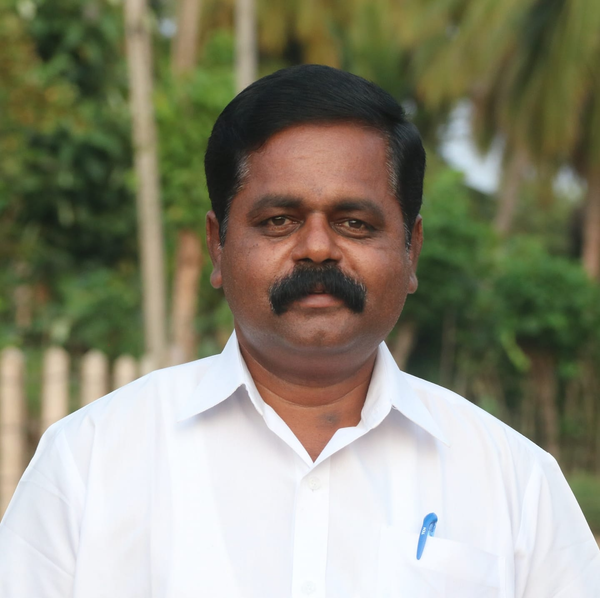
Sixteen years after Sri Lanka’s civil war officially ended, the people of Valikamam North remain barred from returning to their ancestral lands. The issue reverberated in Parliament this week when Ilankai Tamil Arasu Kachchi (ITAK) president-elect and Jaffna–Kilinochchi MP Sivagnanam Shritharan demanded answers from the government on why resettlement continues to be delayed..

A Question to the House

Raising a special statement under Standing Order 27(2) during Wednesday’s sitting, Shritharan asked why, despite repeated regime changes and promises, thousands of families from Valikamam North still live in displacement.

“On 15 June 1990, residents from thirteen Grama Niladhari divisions under the Valikamam North Divisional Secretariat were uprooted due to the expansion of the Palaly military base and the shelling in surrounding villages. Even after 35 years since that displacement, and 16 years since the war’s end, these families remain without resettlement,” he said.

Shritharan pressed the government to disclose how many families continue to live as refugees within their own country—sheltering in welfare camps or with relatives—while their original lands remain under military occupation.

Lands Still Under Military Grip

The MP highlighted that nearly 2,700 acres of fertile land in villages such as Myliddy, Palaly, Vasavilan, Katkovalam, Kurumbasiddy, Kuppilan, Thayiddy, Urani, and Tholagatty are still withheld under the guise of the “High Security Zone.”

“These were lands where people lived for generations. Today, their right to resettle is denied, and their children’s futures are being destroyed,” Shritharan told the House.

Sixteen Years, No Answers

Despite the war’s end in 2009 and successive promises from governments since, resettlement remains elusive. Families who once cultivated their lands now struggle with poverty and uncertainty in cramped, temporary shelters.

Shritharan demanded that the Minister clarify why the lands remain occupied, what measures—if any—have been taken during the past year under the new government, and when resettlement will actually be implemented.


Share this post

Be the first to know

Join our community and get notified about upcoming stories

Subscribing...
You've been subscribed!
Something went wrong
The Cosmic Dance of Shiva: A Journey through Time and Philosophy

The Cosmic Dance of Shiva: A Journey through Time and Philosophy

The temporal evolution of Hindu iconography was the result of changes in the philosophical understanding on the nature of existence and the ability to express these insights through suitable artistic media. In addition to being a source of artistic inspiration these changes also trigger reflection and introspection amongst religious seekers. The journey from the abstract and amorphic Shivalinga through the early anthropomorphic ‘Pasupathi’ of the Indus Valley civilisation and the further exubera


Prof. Mahesh Nirmalan

Prof. Mahesh Nirmalan

The Battle for Elephant Pass – 1991

The Battle for Elephant Pass – 1991

Editor’s Note The Battle of Elephant Pass has long been remembered through differing — and often opposing — narratives. Many Tamils are familiar with the version told from the LTTE’s perspective. The account that follows offers another vantage point: that of a surgeon who was on duty at Palaly during the siege and witnessed its human cost firsthand. It is presented as a personal historical recollection. Documenting multiple perspectives is essential to understanding the full complexity of Sri


Dr. Gamini Goonetilleke

Dr. Gamini Goonetilleke

The Black Day Delusion: How Political Opportunism Is Cannibalising the Tamil Future

The Black Day Delusion: How Political Opportunism Is Cannibalising the Tamil Future

The Ritual of Self-Defeat Once again, on February 4th, as Sri Lanka marked its 78th year of independence from British rule, a familiar theatre of political spectacle unfolded across the North and East. Black flags were hoisted. Placards were raised. Slogans denouncing the Sri Lankan state echoed through the streets of Kilinochchi, Batticaloa, and Jaffna. Tamil political figures — some elected, others self-appointed — declared the day a “Black Day,” a day of mourning and defiance. To the uninit


Kaniyan Pungundran

Kaniyan Pungundran

‘Because I Loved It’: The Jaffna Tamil Hailed as ‘Father of Italian Cricket’ Speaks to Jaffna Monitor

‘Because I Loved It’: The Jaffna Tamil Hailed as ‘Father of Italian Cricket’ Speaks to Jaffna Monitor

Italy’s recent victory over Nepal — a side widely regarded as far superior in the associate cricketing world — has raised more than a few eyebrows. For many, it was an upset. For those who know the deeper story of Italian cricket, it was something else entirely: a reminder of a forgotten past making itself heard once again. Cricket was once a visible presence in Italy. One of the country’s oldest sporting institutions, the Genoa Cricket and Football Club, founded in 1893, still carries the name


Aruliniyan Mahalingam

Aruliniyan Mahalingam