

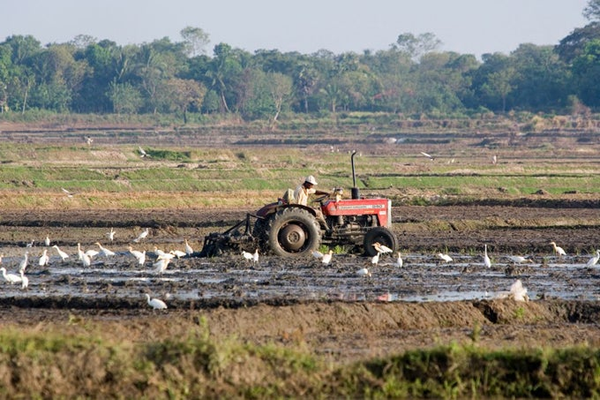
A policy framework for agricultural revival in Sri Lanka's Northern Province — and the case for treating it not as a welfare programme, but as an economic system designed to win.
By Jeevan Thiagarajah
The Northern Province of Sri Lanka holds more than 100,000 hectares of paddy land, some of South Asia's most productive onion soil, and a coastline that ranks among the country's richest fishing grounds. Revitalising it is not merely a regional ambition — it is a national opportunity.
This piece sets out a coordinated framework for that revival. It moves through eight connected areas: attracting the right investors, mastering water and soil, choosing the right crops and production methods, adding processing value, feeding the province first, building markets from village to export, deploying technology intelligently, and creating the institution that holds it all together.
The province that turns climate adversity into the country's most sophisticated agricultural system becomes the national model — and the preferred destination for serious investment.
1. Unlock the land — and invite the right investors
Three distinct sources of capital can bring idle Northern land into production. Each brings something the others cannot.
Indian agribusiness
Tamil Nadu sits 64 kilometres across the Palk Strait. Its seed companies, cooperative mills, contract farming enterprises, and food manufacturers already work in the same crops, climates, and languages that the North is proposing. Indian agribusiness brings agronomic knowledge, processing technology, and established market access — alongside capital. The Jaffna-Rameswaram corridor should be actively promoted to Tamil Nadu investors as a joint-venture highway, not merely a shipping route. The Board of Investment and the Provincial Council should run a standing Tamil Nadu investment programme — a permanent facilitation desk.
Diaspora capital
Tamil landowners in Australia, Canada, the United Kingdom, and Germany hold substantial agricultural land in the North that lies fallow because ownership is abroad, tenancy is informal, and no clear pathway to productive use exists. A structured mechanism — special agricultural investment zones, streamlined approvals, and tax incentives — allows diaspora owners to formally lease, co-invest, or transfer land to cooperatives or agribusiness partners. Diaspora investors also carry something no domestic institution possesses: direct knowledge of the London, Toronto, and Melbourne consumer communities that are the natural premium buyers of certified Northern Province produce.
Domestic block farming
State land in Mullaitivu and Vavuniya sits under low-yield shifting cultivation or scrub. Consolidating fragmented plots into larger units managed by farmer cooperatives with professional agronomic support creates the scale needed for commercial production — including sugarcane cultivation that could begin to address Sri Lanka's annual sugar import bill of roughly USD 200–250 million.
Across all investor categories, livestock and cropping must be reconnected. Cattle, goats, and poultry are currently raised separately from crop operations. Integrating them — with organised manure collection and composting — builds a self-replenishing fertility cycle that reduces imported fertiliser costs and strengthens the organic certification case that premium export markets require.
"The Jaffna-Rameswaram corridor should be actively promoted as a joint-venture highway, not merely a shipping route."
2. Master water and soil
Climate change is the Northern Province's most urgent structural challenge. Rainfall is becoming less predictable, dry seasons longer, and the peninsula's aquifers are already showing saline intrusion from over-extraction. The response must be offensive: the province should set a clear goal — to become the most water-efficient agricultural region in Sri Lanka, and the national demonstration model for climate-adaptive farming.
Close the efficiency gap
Conventional flood irrigation loses most of its water to evaporation and runoff before it reaches the root zone. During the Yala dry season, only 30 to 40 percent of paddy land can be irrigated at all. Subsurface drip irrigation — perforated pipes delivering water directly to roots — cuts water use by up to 70 percent. On the Jaffna peninsula, where every litre over-extracted risks pulling saltwater in its place, drip irrigation is not an upgrade. It is the condition for continued cultivation. Combined with soil moisture sensors, automated controls, mulching with paddy straw or coconut husks, and sequenced planting to allow soil recovery between harvests, this technology could double or triple the cultivable acreage that existing water sources support — without any additional extraction.
Modern farming methods including vertical planting and tower cultivation make productive use of limited space and water, particularly relevant near urban centres where land is constrained but demand is high.
Restore what has been lost
Water efficiency is necessary but not sufficient. The aquifer systems and ancient tank networks of the interior must be actively recharged. Percolation ponds, check dams, and managed recharge structures — placed to capture monsoon rainfall and return it to groundwater rather than losing it to runoff — are infrastructure the province urgently needs. The cascading tank systems of Kilinochchi, Mullaitivu, and Mannar require desilting and must be operated as integrated catchment units. The Iranamadu reservoir, Giant's Tank, and Akkarayankulam need technically coordinated management covering releases, recharge timing, and irrigation allocation across the cascade.
The investment case is commercial, not environmental. Every hectare of restored aquifer capacity is a hectare of future cultivation secured against the longer dry seasons climate projections confirm are coming. Indian agribusiness investors — who understand aquifer depletion from their own Tamil Nadu experience — should see the recharge programme as part of the investment proposition. It is the long-term productivity guarantee that makes a 20-year agricultural commitment viable.
Build soil fertility from local inputs
The province already generates everything needed to maintain productive soil. Dairy cattle produce slurry rich in nitrogen and potassium. Poultry droppings deliver fast-release nitrogen. Fishing communities across the coast generate fish waste — frames, offal, unsaleable catch — that currently poses a disposal problem. Solar-dried and ground into fishbone meal, it becomes a phosphorus-rich fertiliser for root crops, onions, and fruiting vegetables.
These three organic streams — dairy slurry, poultry droppings, fishbone meal — together cover the primary nutritional needs of most Northern crops. They build organic matter, improve water retention, and meet the certification standards that organic export markets require. The inputs are already being produced. What is needed is collection systems, simple processing infrastructure, and cooperative distribution — not import budgets.
Where chemical fertiliser remains necessary, it should be applied with precision — targeted by soil tests and combined with organic inputs to achieve maximum effect at minimum cost.
3. Grow the Right Things
Crop selection must be driven by three realities together: agro-ecological conditions, climate resilience, and market demand.
Paddy (Maha season) serves as the backbone of national food security, with its primary market being domestic consumption.
Black gram, green gram, and finger millet play a critical role in drought rotation and nutrition, with demand spanning both domestic and export markets.
Jaffna red onion stands out as an off-season premium crop, with a key market in the Tamil Nadu corridor.
Moringa (pods, powder, oil) represents a high-value superfood export with full-plant utilisation, targeting international and diaspora markets.
Mango, banana, and jackfruit are positioned for both fresh and processed export, serving regional and diaspora markets.
Palmyrah products occupy a niche in artisanal premium goods, catering primarily to diaspora communities and high-end retail markets.
Sugarcane is strategically important for import substitution, with its primary role in serving the national market.
Cassava (manioc) contributes as a drought-hardy crop suited for starch processing, supplying the food industry.
Ayurvedic plants are cultivated for herbal products, with export potential in both regional and international markets.
Rice anchors the Maha season and food security. But paddy monoculture must give way to planned seasonal rotation: during the Yala season, with limited irrigation available, drought-tolerant crops including black gram, green gram, finger millet, and sorghum make better use of the land and carry growing demand both domestically and internationally.
Fodder cultivation — Napier grass, Guinea grass, stylosanthes — must be treated as a planned crop in its own right. Better fodder produces healthier livestock, which generates more milk income and richer manure, which raises yields in the following season.
The Palmyrah palm is a climate-resilience asset as much as a commercial crop. Among the most drought-tolerant, saline-resistant, and heat-hardy trees in the world, restoring Palmyrah density across the peninsula simultaneously provides climate adaptation, soil stabilisation, and long-term income. Moringa is similarly versatile: pods sell fresh at premium prices, leaves are dried and powdered for the international superfood market, and oil commands specialty prices. Full-plant utilisation of moringa and Palmyrah — both in Sri Lanka and for export — represents some of the highest-value opportunities available.
Pollinators are not a minor detail. Healthy production of fruits, vegetables, and flowering crops depends on bees, companion planting, and maintaining the fauna and flora that support natural pollination. Establishing managed bee colonies alongside agricultural plots — and designing farm layouts that support pollinators — is a practical investment in yields, not an environmental gesture.
The home garden — fruit trees, leafy vegetables, small poultry — must be treated as distributed food security infrastructure. A province-wide programme to establish productive home gardens creates a food system that no supply chain disruption can shut down.
4. Process, store, and add value
Production without preservation and processing is a poverty trap. Processing infrastructure is where a farming province becomes an agricultural economy.
Solar-powered cold storage at village level — compact three-to-five tonne units serving a cluster of farms — eliminates distressed selling. These units are in commercial use across Gujarat and Tamil Nadu at costs cooperative models can support. Modern par-boiling and colour-sorting mills produce premium-grade branded Northern rice. A central processing unit in Vavuniya converts surplus manioc, banana, and jackfruit into dehydrated chips, purees, and starches. Sugarcane from the interior, processed in a cooperative mill, produces raw sugar, molasses, and bagasse usable as biomass fuel — making the processing system partially energy self-sufficient.
Indian agribusiness partners are the natural investors here. Tamil Nadu cooperative mills and food manufacturers bring established processing technology, quality management systems, and buyer relationships that would take a decade to build from scratch. Joint-venture processing facilities — owned partly by Northern farmer cooperatives, partly by Indian agribusiness partners — align incentives in a way that purely contract arrangements cannot.
"Joint-venture processing facilities align incentives in a way that purely contract arrangements cannot."
5. Feed the province first — then the nation
Before the first export container is loaded, there is a prior obligation. A network of community dining halls — anchored in temples, community centres, and local authority premises — serving affordable or free meals sourced from local farms connects agricultural surplus directly to social need. Tamil Nadu's Amma Canteen model shows this works at scale, with dignity, and at modest cost. Procurement should flow through local farmer producer organisations, guaranteeing a demand floor for smallholder produce. School feeding programmes, sourced the same way, teach children where food comes from while sustaining the farmers who grew it.
The Northern Province should also reframe its relationship with central government: from recipient of post-conflict spending to strategic contributor to national food security. The tank-irrigated flatlands of Kilinochchi, Mullaitivu, and Mannar, restored and managed with block farming discipline, can become a major national paddy source. Organised cold chain infrastructure connecting landing sites to national distribution transforms fish catch currently lost to spoilage. With consistent production and cold storage, the North can supply Colombo and Kandy with onions, chillies, leafy greens, tropical fruits, and pulses that currently come from other provinces or from import.
This reframes the case to central government. Investment in irrigation, cold chain, roads, and rail freight is national food security spending — not regional charity. The distinction matters for budget allocation, for political will, and for the seriousness with which the programme is designed and executed.
6. Build markets — from village to export
Markets must be built at every level simultaneously. A farmer with no local buyer, no storage, and no price transparency cannot benefit from export ambitions.
At the local level, rural weekly markets — at village, town, and district level — give smallholders a reliable cash outlet and consumers access to fresh produce. Dedicated agricultural retail spaces in Colombo, modelled on the Diyatha Uyana concept where tree plants, flower plants, seedlings, and bulk produce are available to both retail and wholesale buyers, create direct urban sales channels that put cash directly in farmers' hands.
At the national level, branded positioning matters. Northern Province Organic stalls in Colombo and Kandy, branded Jaffna onion packaging, Palmyrah syrup as an artisanal product, and heritage millet varieties as premium health foods build an identity that commands a price premium. The night rail service from Jaffna, Kilinochchi, and Vavuniya to Colombo, with refrigerated cargo capacity, moves bulk produce at low cost. A digital marketplace connecting Northern farmer producer organisations directly to Colombo wholesale buyers and restaurant chains reduces exploitative margins.
For export, the Jaffna-Rameswaram sea corridor is the primary route — 64 kilometres to a Tamil Nadu market of 80 million people who share the culinary traditions of Northern Sri Lanka. Jaffna onions during India's off-season, Northern chilli, dried vegetables, moringa powder, Palmyrah products, certified organic produce, mangoes, and bananas all have natural buyers. The ferry route requires refrigerated cargo capacity and phytosanitary inspection facilities at both ends. A target of at least 25 percent of agricultural household income from export earnings within a decade is achievable — and should be set explicitly.
The Tamil diaspora is an underused channel. Diaspora consumers in London, Toronto, and Melbourne currently purchase inferior substitutes from Indian suppliers because Northern Province produce has not been organised for consistent export. Given diaspora loyalty to authentic origin products — and willingness to pay a premium — this market is within reach. It requires consistent quality, reliable supply, and certified origin labelling.
7. Deploy knowledge and technology
The Northern Province's Agricultural Instructor network is its most underused institutional asset. These are trained, Tamil-speaking, field-deployed officers present in every division, currently reduced by policy neglect to form-fillers and subsidy distributors. Retrained and redeployed as frontline educators, certification assessors, and technical problem-solvers — each carrying a defined portfolio of farmer organisations to mentor and demonstration plots to manage — they become the backbone of knowledge transfer. Performance must be measured on farmer outcomes, not paperwork.
A provincial digital platform — algorithm-driven and built for Tamil-speaking smartphone users — should deliver real-time services to every connected farmer: soil moisture data, satellite-based crop advisories, geo-tagged pest alerts, live market prices from Colombo, Jaffna, and Chennai, and back-office services including crop insurance, lease registration, and export documentation. Critically, this platform must work offline, since connectivity across the province remains patchy.
Technology should drive scientific water distribution — sensors, automated irrigation controls, and weather-linked scheduling reduce waste and protect aquifers. Smart seed selection, climate-resilient varieties, and sequenced planting calendars that prevent harvest gluts and give soil time to recover between seasons should all be informed by data, not habit.
Women must be centred throughout. They already perform the majority of transplanting, post-harvest sorting, and home garden cultivation across the North, yet remain systematically excluded from land titles, credit, and cooperative membership. Certification programmes, digital platforms, and cooperative governance rules should all be designed with active female participation as a requirement, not an afterthought.
8. The institutional engine — the Northern Province Growers Federation
Every element of this framework can be delivered in isolation. It functions as a system only if one institution coordinates the whole. That institution is the Northern Province Growers Federation: a market-driven, farmer-majority enterprise that holds the digital platform, coordinates block farming policy, manages the certification programme, administers the cold chain network, governs export access, and leads investment promotion.
The Federation is not a government agency. It is a commercial company — registered under the Companies Act — in which farmer cooperatives hold the majority shareholding bloc, private local and Indian agribusiness partners hold equity stakes, diaspora investors contribute capital and market intelligence, and the Provincial Council holds a defined minority public stake as governance anchor. No single external investor can outvote the cooperative bloc.
The Farmer Cooperatives, which hold the majority stake, are positioned as dividend shareholders rather than grant beneficiaries. They carry both rights and accountability within the system.
Local private agribusinesses contribute operational capital and on-ground market knowledge, with their returns directly tied to the efficiency of the overall system.
Indian agribusiness partners bring in processing technology, established buyer relationships, and strategic access to the Rameswaram corridor.
Diaspora investors provide market intelligence from diaspora consumer communities, along with capital derived from converted land equity.
The Provincial Council, holding a minority stake, ensures governance legitimacy and serves as the liaison with the central government for infrastructure development and regulatory approvals.
Two practitioner councils advise the board without holding equity. The Farmer Knowledge Council brings experienced local farmers — including women with deep post-harvest and soil knowledge — into crop planning, varietal selection, and water management decisions. The Diaspora Advisory Network brings professionals in food retail, export compliance, logistics, and food technology from the UK, Canada, Australia, and Germany. A diaspora food technologist working for a supermarket chain in Toronto knows exactly what that buyer requires from a certified organic supplier. That knowledge is current, market-tested, and available — the Federation simply needs a structured channel to receive it.
The commercial logic is straightforward. Private investors earn returns only if the system produces, processes, certifies, and sells at volume and quality. Farmer cooperatives earn dividends only if the Federation is profitable. The Provincial Council's stake is justified only if the system delivers measurable food security and export outcomes. Every shareholder's interest points in the same direction — and that alignment is what grant-funded development programmes, however well-intentioned, structurally cannot provide.
The Northern Province faces the most severe climate pressures of any region in Sri Lanka. Rainfall variability, aquifer depletion, saline intrusion, and longer dry seasons are not future risks — they are present conditions. The question is only how.
A province that masters water efficiency and groundwater recharge, produces rice and fish that meaningfully anchor national food supply, exports through a sea corridor 64 kilometres from one of the world's great food markets, certifies its farmers, closes its fertility loop, processes its own produce, and governs itself through a Growers Federation that Indian agribusiness and diaspora capital choose to invest in — that province is not a development problem. It is a development model.
The land is here. The water, managed intelligently, is here. The organic fertility inputs are already being generated. The crops have identified buyers. The sea corridor is 64 kilometres. What remains is the institutional will to build a Federation worthy of that coalition — and to treat Northern agriculture not as a welfare programme, but as an economic system designed to win.
Jeevan Thiagarajah is a former Governor of the Northern Province.