By: Gamini Goonetilleke
Cricket in Sri Lanka has long been more than a sport. It has functioned as a powerful social and cultural force, capable of transcending ethnic, religious, and class divisions, particularly during periods of political conflict and economic uncertainty. From village playgrounds to international stadiums, cricket has united communities and fostered a shared national identity. During the decades of civil conflict, the achievements of the national team created moments of collective pride and hope, offering rare spaces of unity in a divided society.
Cricket in Sri Lanka originated during British colonial rule in the nineteenth century. Initially confined to elite schools and urban centres, the sport gradually spread to rural communities, becoming a key element of national culture. After independence in 1948, cricket developed steadily, supported by strong school competitions and club structures.
A major milestone was the granting of Test status in 1982, marking Sri Lanka’s formal entry into the highest level of international cricket. The establishment and evolution of Sri Lanka Cricket played a central role in organising domestic tournaments, identifying talent, and facilitating international participation. Despite limited financial resources, Sri Lanka developed a reputation for innovation and resilience. School cricket became the backbone of talent development. Competitive inter-school tournaments produced technically skilled and mentally tough players. The system encouraged discipline and national pride, ensuring a continuous supply of emerging talent.
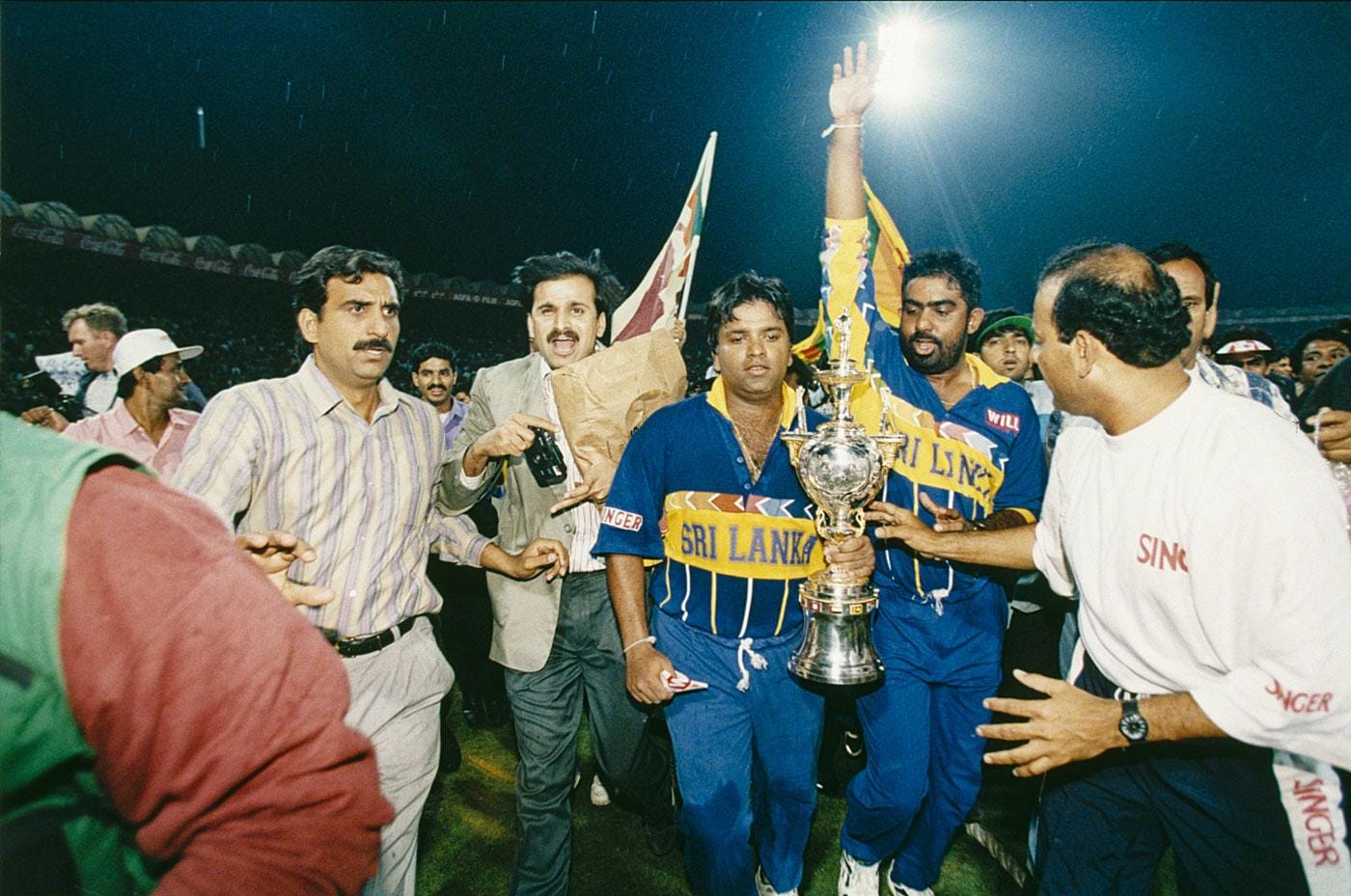
The rise of Sri Lanka as a formidable cricketing nation in the late twentieth century symbolised resilience, innovation, and national aspiration. The pinnacle of this journey was the historic triumph at the 1996 Cricket World Cup, which transformed the team from underdogs into a respected global force. This triumph revolutionised global cricket. Sri Lanka introduced aggressive opening batting, innovative field placements, and flexible strategies. This period demonstrated that creativity and teamwork could overcome financial and structural limitations.
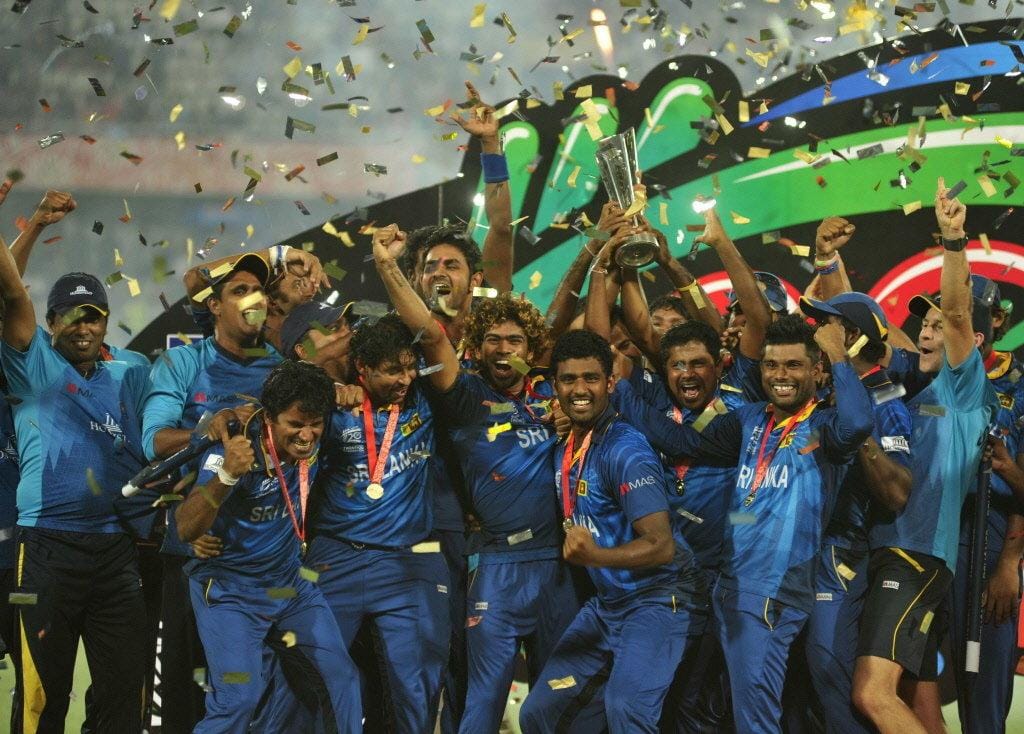
This golden era extended well beyond 1996. In the years that followed, Sri Lanka consolidated its reputation through sustained success in both One Day International and T20 formats, driven by visionary leadership, tactical creativity, and a strong domestic structure that nurtured young talent. Sri Lanka shared the 2002 ICC Champions Trophy, won the 2014 ICC World T20, and reached the finals of the Cricket World Cup in 2007 and 2011. They were also runners-up in the ICC World T20 2009 and 2012, alongside multiple Asia Cup victories.
Success in the inaugural T20 global competitions reinforced the country’s adaptability to emerging formats. Strong leadership, clear team identity, transparent and committed administration, together with experienced coaching, contributed to consistency. The domestic structure during this era was competitive and merit-based. Players were motivated by national pride rather than financial gain. Public enthusiasm, political support, and media attention strengthened the cricketing ecosystem. A generation of world-class cricketers emerged, inspiring unity and pride across social and ethnic divides.
Cricket has evolved through three major formats. Test cricket remains the most traditional and technically demanding form, emphasising endurance, discipline, and strategy. One Day Internationals introduced quicker scoring and tactical balance, expanding global appeal.
T20 cricket began in England and Wales in 2003 as a domestic innovation to engage younger fans and soon gained international popularity. The introduction of T20 cricket revolutionised the sport by prioritising speed, entertainment, and unpredictability. Its shorter duration attracted new audiences, broadcasters, and sponsors, but reduced emphasis on patience and technique. As commercial pressures increased, focus shifted toward T20, influencing player development and national priorities. The Franchise leagues that developed created financial security and global exposure for players, yet commercialisation also altered traditional values, particularly loyalty to national teams, benefiting economically stronger cricketing nations.
The rapid global expansion of T20 cricket has reshaped governance, economics, and player priorities. While wealthier nations have adapted effectively, smaller economies such as Sri Lanka have struggled to keep pace. The global cricket economy is now dominated by the Indian Premier League, supported by the financial and political influence of the Board of Control for Cricket in India. The IPL generates enormous revenue through broadcasting rights, sponsorship, and advertising. Franchise ownership by major business figures and entertainment personalities has further increased its global appeal. Players are paid in foreign currency and enjoy international recognition. As a result, participation in franchise leagues often becomes financially more rewarding than representing national teams. Smaller cricketing nations such as Sri Lanka struggle to compete. Limited domestic resources, economic crises, and smaller media markets reduce their bargaining power. The inability to retain players and invest in infrastructure widens the performance gap between nations. Modern cricketers face increasing pressure to balance national commitments and franchise opportunities. Financial incentives encourage participation in global leagues. This creates conflicts of interest and affects national team availability.
Players who participate in multiple formats experience heavy workloads. Continuous travel, competition, and performance pressure increase fatigue and reduce recovery time. T20 cricket demands explosive power, agility, skill, and speed. Although the matches are shorter, the physical intensity is higher. Players must maintain peak fitness throughout the year. Scientific studies indicate an increasing incidence of soft tissue injuries, particularly hamstring injuries. These injuries affect fast bowlers and fielders, leading to frequent player unavailability. Inconsistent team selection disrupts stability and performance.
In recent years, Sri Lankan cricket has experienced a sustained decline. Inconsistent performances, administrative instability, injuries, and repeated failures in major tournaments—particularly in the 2026 ICC Men's T20 World Cup—highlight deeper structural and cultural issues.
Frequent changes in the team selection committee have significantly undermined team continuity and long-term planning. Repeated alterations—often sanctioned by the Ministry of Sports—have fuelled concerns about political influence and weakened confidence in the independence of the process. Instability at this level inevitably filters down to the team, affecting not only squad composition but also the appointment of captains and senior leaders. As a result, morale, unity, and clarity of purpose suffer, while players struggle to understand their defined roles within a consistent strategic framework.
Short-term decision-making has also distorted talent identification and development. Promising young players are sometimes introduced prematurely, only to be discarded after a handful of matches. Such abrupt changes erode confidence and disrupt both technical refinement and mental resilience. International cricket demands gradual grooming within a stable environment. Leading nations invest in structured pathways, patient mentoring, and clearly articulated expectations, enabling players to mature and contribute meaningfully over time.
The consequences of uncertainty were visible on the field. Frequent alterations in batting order, bowling combinations, and overall team balance reflect experimentation without a coherent long-term vision. While adaptation is necessary in modern cricket, it must be guided by consistent planning rather than reactive impulses. A transparent, professionally driven, and independent selection system—operating with clear criteria and accountability—is therefore essential to restore stability and trust.
Selection, however, is only one pillar of success; discipline is equally fundamental. Representing one’s country is the highest honour, carrying both privilege and responsibility. Performance must remain the primary criterion for continued inclusion, irrespective of past achievements. When standards are not met consistently, timely change is necessary to preserve competitiveness.
Discipline must extend beyond match days. Regular training attendance, fitness standards, punctuality, and respect for team protocols are non-negotiable. Professional conduct—on and off the field—strengthens team culture and reinforces the seriousness of purpose required to compete successfully at the highest level.
Technical weaknesses have been exposed. Sri Lankan batsmen have struggled against high-quality pace and spin, particularly during power play overs. Strike rotation, boundary hitting, and finishing ability have been inconsistent. Modern T20 requires adaptability and calculated aggression in the four phases of batting, namely launch, consolidate, accelerate, and finish. Fielding standards have declined. Dropped catches, misfields, and slow outfield movement have contributed to narrow defeats. In contemporary cricket, fielding is often decisive. Bowling strategies have lacked innovation. Opponents have analysed Sri Lankan bowlers, exploiting predictable variations. Successful teams rely on data analytics and match-ups, which Sri Lanka has not fully utilised.
Fitness and injury concerns have increasingly disrupted team balance and overall performance. Frequent injuries to key players have not only weakened the side but have also affected confidence and continuity. This raises important questions: are players being overexposed to excessive amounts of cricket without adequate rest and recovery, and are injuries being managed in a sufficiently scientific and systematic manner? Modern sports medicine demands careful workload monitoring, biomechanical and ergonomic assessment, and evidence-based rehabilitation in order to both treat injuries and prevent recurrence. Without specialists in this field or hired consultants, such structured approaches cannot be carried out, and the team risks repeated setbacks and long-term loss of player effectiveness.
Equally important is the need for high-quality replacements when injuries occur. Bench strength is a critical component of any successful international team, ensuring that performance does not decline when key players are unavailable. This must be a central consideration when selecting squads for major tournaments. The current tournament has clearly illustrated this deficiency: the early loss of two important players exposed the lack of equally capable replacements and disrupted team balance. Ultimately, cricket is a team game, and sustained success cannot depend on one or two individuals. Depth, resilience, and collective strength are essential if the team is to compete consistently at the highest level.
Psychological pressure has profoundly shaped performance in high-stakes matches. At critical moments, Sri Lankan teams have sometimes appeared tentative and reactive rather than calm and assertive, indicating that mental resilience has not consistently paralleled technical skill. Modern elite cricket recognises mental conditioning as essential, integrating structured psychological training, stress regulation, and performance optimisation. The absence of a dedicated sports psychologist within the team structure may therefore be a significant omission. Prolonged media criticism, intense public scrutiny, and social media pressure further erode confidence, particularly among younger players. The decline of senior leadership has also weakened team culture, diminishing belief, cohesion, and emotional stability under sustained competitive pressure.
Sri Lanka was one of the host nations, together with India. The team played all its group stage and Super Eight matches on home soil. Under such circumstances, they should have been thoroughly familiar with local pitch behaviour, weather patterns, and playing conditions, which ought to have provided a distinct competitive advantage. However, this advantage was not effectively utilised, raising concerns about preparation, strategy, and adaptability to home conditions.
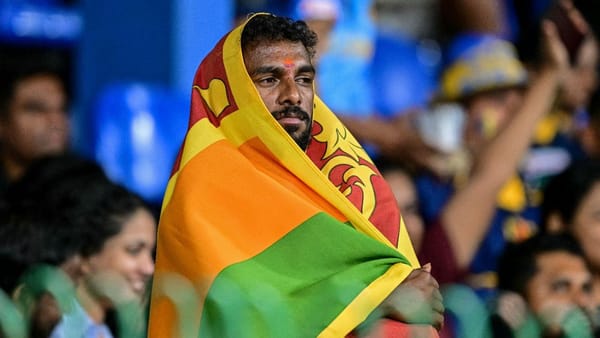
Crowd support was initially overwhelming, with stadiums filled by passionate supporters who travelled from across the country. The atmosphere was electric, strengthening player motivation and reinforcing national pride. However, as defeats became more frequent, public patience waned. Frustration surfaced both in stadiums and on social media, with some criticism directed harshly at individual players. At times, even television commentators appeared to exceed professional boundaries, offering speculative and critical remarks about players, team selection, and administration. Such reactions inevitably carry psychological consequences. Constant scrutiny and public criticism can erode confidence, disrupt team cohesion, and weaken collective morale. Rather than building resilience, this environment may intensify anxiety and self-doubt, contributing to inconsistency and further decline in performance.
The comparison with the 1996 Cricket World Cup shows that success depends less on numbers and more on clarity of roles, planning, and leadership. Today, the Sri Lanka national team has a large, specialised coaching structure, yet the recent T20 failure suggests problems of coordination rather than individual competence. An effective coaching unit must operate as an integrated system, with clear communication, coherent strategy, and well-defined roles. Technical expertise in batting, bowling, and fielding is valuable only under a strong head coach who provides vision, discipline, and accountability. Psychological preparation, adaptability, and data-driven planning remain essential for sustained success.
Sri Lanka’s recent economic instability has significantly affected cricket through reduced funding, infrastructure constraints, and administrative challenges. These limitations have weakened domestic development and restricted investment in grassroots programmes, coaching, and sports science. In contrast, wealthier cricketing nations invest heavily in advanced technology, data analytics, and high-performance systems, creating a clear competitive advantage. Although high-performance facilities have been established in Colombo under the auspices of Sri Lanka Cricket, their optimal and systematic utilisation remains uncertain. A critical review of their effectiveness, accessibility, and integration into national training, injury prevention, and player development is therefore essential to improve preparation, resilience, and long-term competitiveness.
The concerns outlined above have intensified public debate regarding cricket governance in Sri Lanka. Sri Lanka Cricket (SLC) is responsible for administration, financial regulation, development of the game, and the organisation of domestic and international tournaments. Registered under the Sports Ministry and affiliated with the International Cricket Council (ICC), it operates with constitutional autonomy. While this structure is designed to safeguard independence from political interference, it may also have allowed entrenched leadership to persist. The continuity of the same executive committee and president since 2019, together with administrators who have held influence for over two decades, has created a perception of consolidation of power rather than renewal.
Allegations that board elections are effectively uncontested because of control over voting members raise further concerns about transparency and democratic functioning. Even in the absence of proven corruption, the appearance of a closed system erodes public confidence. In sports governance, accountability, leadership rotation, and transparent decision-making are essential to maintaining credibility.
In 2023, following Sri Lanka’s disappointing World Cup performance, Parliament passed a resolution to dismiss SLC officials and appointed an interim committee. SLC challenged the decision in the Appeal Court. Meanwhile, the ICC suspended Sri Lanka Cricket. The ICC Under-19 World Cup tournament, scheduled to be held in Sri Lanka, was shifted to another country, resulting in the loss of much-needed revenue to Sri Lanka Cricket and the country itself. The reinstatement of the previous administration followed. A cabinet sub-committee and a Presidential Commission were subsequently appointed to investigate SLC and draft a new constitution. Although proposals were prepared, no substantive reform followed, and the same leadership continued. When declining performance, administrative stagnation, and public dissatisfaction converge, reform becomes imperative. Constitutional amendments ensuring independent oversight, term limits, and broader stakeholder representation may be necessary to restore trust and secure the long-term development of Sri Lankan cricket.
The way forward for Sri Lankan cricket must begin with the honest recognition that recent failures reflect deeper systemic weaknesses rather than isolated setbacks. Leading cricketing nations such as Australia, England, New Zealand, and India have demonstrated the value of professional governance, advanced sports science, and transparent domestic structures. Integrated academies, data-driven performance analysis, and comprehensive player-welfare programs promote consistency and long-term success. Systematic talent identification at district and provincial levels, supported by sustained investment in youth development, strengthens the national pipeline. Structured training, financial stability, psychological support, and mentoring for players adapting to unfamiliar conditions enhance resilience and professionalism. These principles can be thoughtfully adapted to Sri Lanka’s cultural and economic realities.
Rebuilding cricket requires comprehensive reform. Governance must be transparent, accountable, and free from political interference, guided by long-term strategic planning. Domestic cricket should be streamlined to raise standards, while grassroots programs and school cricket demand sustained support. Strengthening sports science, injury management, rehabilitation, mental conditioning, and leadership development is equally vital. Balancing franchise commitments with national duty is essential. Ultimately, restoring public trust and national pride will determine success. With integrity, strategic reform, and commitment to youth, Sri Lankan cricket can regain its competitive edge and proud legacy.