
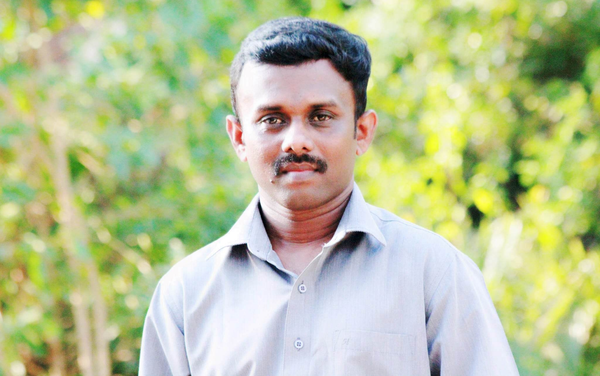
KILINOCHCHI — A Tamil journalist based in Kilinochchi has alleged that police attempted to pressure him into revealing a confidential journalistic source after he published CCTV footage related to an incident involving a senior medical specialist at the Jaffna Teaching Hospital.
In a detailed statement posted on Facebook, journalist Murukaiya Thamilselvan said he was summoned to the Jaffna Police Station following a complaint lodged by Dr. Selvaganesh Sellakkuddy, a plastic surgeon attached to the hospital and a prominent figure in the Government Medical Officers’ Association (GMOA) in Jaffna.
According to Thamilselvan, the complaint centered on CCTV footage from the hospital premises that he had uploaded to Facebook on April 20. The video allegedly showed Dr. Sellakkuddy violently pushing a man off a motorcycle during an altercation involving a hospital security officer, footage that later drew criticism on social media and among sections of the public.
Thamilselvan said police initially instructed him to appear at the Jaffna Police Station on May 23, but later requested that he come instead at 10 a.m. on Sunday, May 24.
The journalist said that after recording his personal details, police officers informed him that the complainant wanted to know how he had obtained the CCTV footage.
“When they asked where I got the CCTV footage from, I told them that as a journalist I could not reveal my news source under any circumstances,” Thamilselvan wrote.
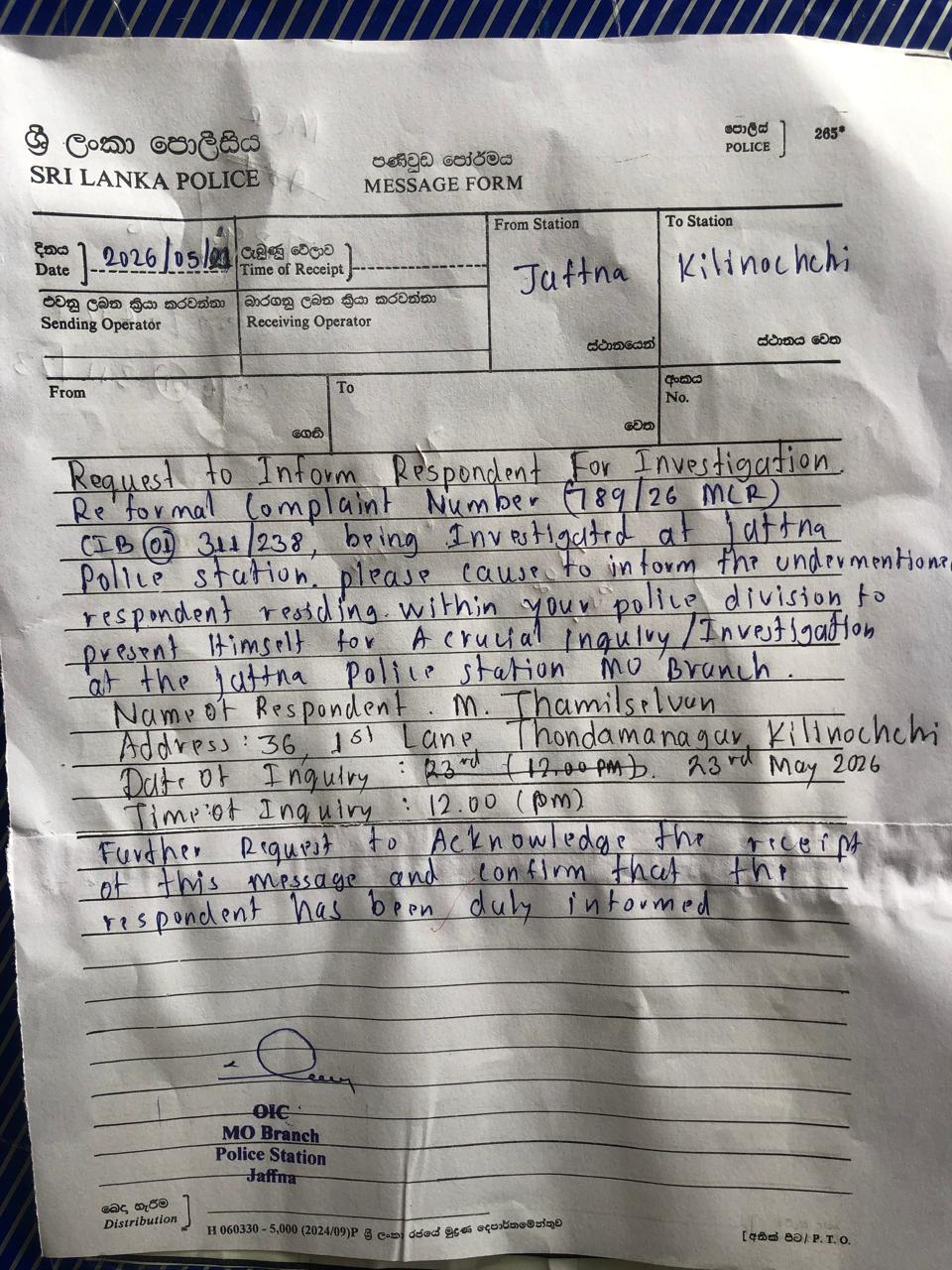
According to him, police then allegedly insisted that he was obliged to disclose the source because he had come to provide a statement in relation to a complaint.
Thamilselvan said he responded that there was no legal requirement compelling him to reveal a confidential journalistic source and urged police instead to investigate whether the footage itself was authentic.
“I told them this is not the first time I have faced this kind of complaint. This is the third time,” he stated.
According to the journalist, police also questioned what benefit he had gained from publishing the footage and what motive lay behind the post.
“I said I gained no personal benefit. I published it believing it would benefit society, help ensure justice for the affected party, and prevent similar incidents from happening in the future,” he wrote.
Thamilselvan said he later signed the statement provided to police and left the station.
The case has renewed concerns among journalists and media freedom advocates in Sri Lanka's north over the vulnerability of reporters to legal and police pressure aimed at exposing confidential sources — protections widely regarded as foundational to independent journalism.
Sri Lanka has no explicit shield law guaranteeing journalists the right to protect confidential sources, despite repeated calls from media organizations and press freedom groups for stronger legal safeguards. Media rights advocates have also warned that the Online Safety Act of 2024, which grants broad powers to a state-appointed Online Safety Commission to regulate online expression and investigate "prohibited statements," could further erode press freedom protections and deepen the chilling effect on investigative journalism.
Sri Lanka ranks 134th out of 180 countries in the 2026 World Press Freedom Index published by Reporters Without Borders, an improvement of five places from the previous year but still placing the country in the "difficult" category for press conditions.