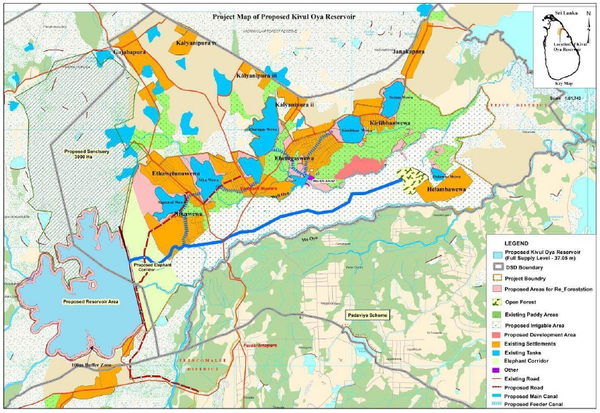
Two Members of Parliament from the Ilankai Tamil Arasu Kachchi (ITAK) have raised serious concerns in Parliament and parliamentary committee meetings over the implementation of the Kivul Oya Irrigation Project, alleging that the scheme would lead to the submersion of Tamil villages, the destruction of traditional irrigation systems, and potential changes to the demographic composition of Tamil areas in the region.
The objections come as the government prepares to resume the long-stalled project with Rs. 2.5 billion allocated in the current budget, having secured Cabinet approval to proceed with construction from 2026 to 2031.
Parliamentary Intervention

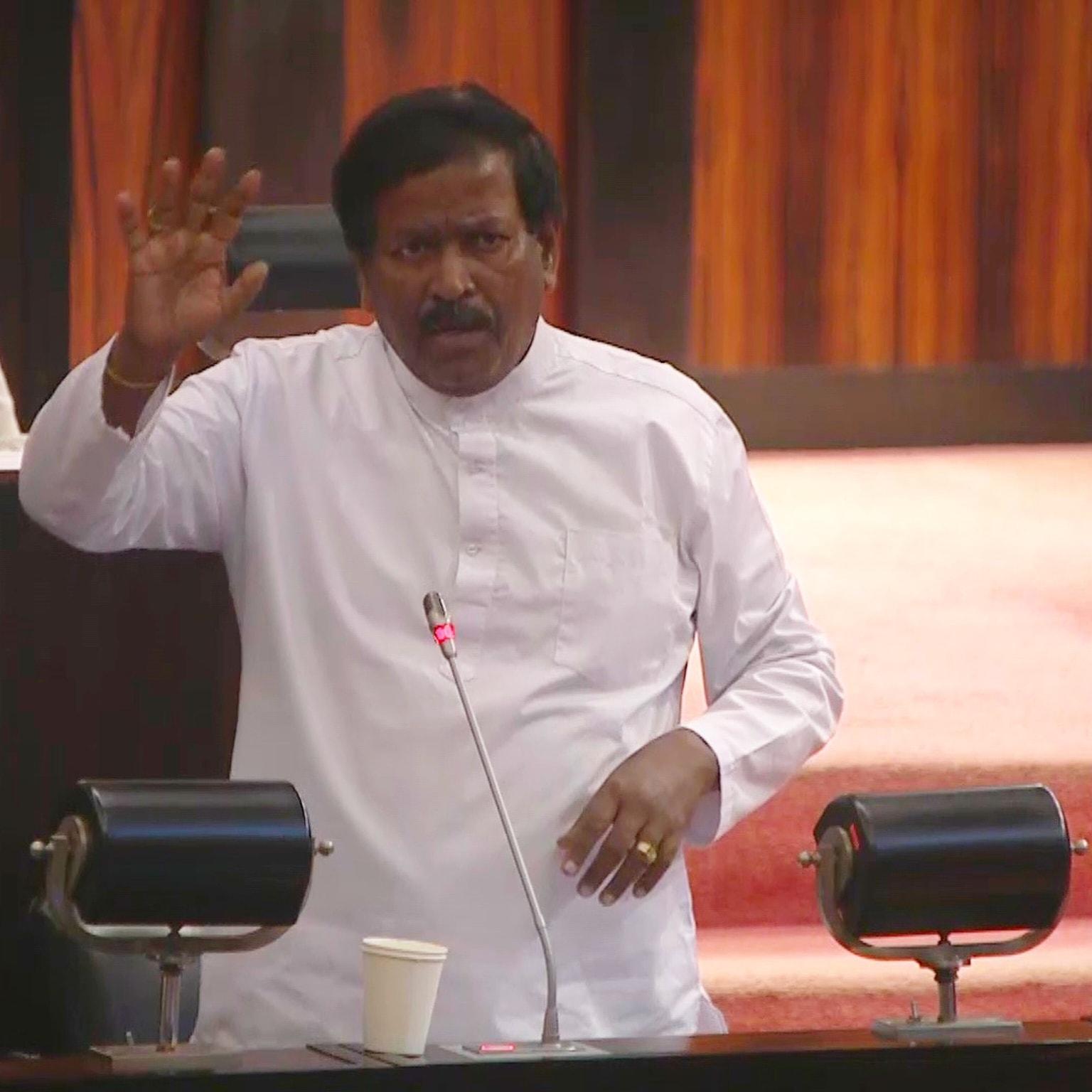
Speaking in Parliament on Wednesday, ITAK MP Dr P. Sathiyalingam said the government was proceeding with the Kivul Oya irrigation scheme in a manner that would facilitate Sinhala settlements across large areas of the Vanni, following what he described as the continued appropriation of Tamil resources.
"It is clearly evident that government officials are acting in a partisan manner in this process," Dr Sathiyalingam told Parliament, referring specifically to land registration practices in the Vavuniya North Divisional Secretariat area.
He raised concerns over large-scale deforestation that occurred in the area several months ago, citing information from local residents that more than 200 acres of forest land—and, according to some accounts, up to 1,000 acres—had been cleared using heavy machinery over a period exceeding one month.
"When Tamil people are arrested for cutting even wooden poles to fence their agricultural land, it is surprising that large-scale deforestation using heavy machinery over one and a half months went unnoticed," Dr Sathiyalingam said, questioning how such operations could have proceeded without the knowledge of the police or the Forest Department.
He also questioned the financial logistics of such extensive clearing operations, noting that clearing even a single acre would cost at least Rs. 100,000 at current prices.
Dr Sathiyalingam said successive governments since independence had pursued broadly similar policies on land in Tamil-majority areas, adding that the National People's Power (NPP) administration was continuing this pattern despite election pledges to halt demographic engineering.
Specific Villages and Tanks at Risk
Separately, ITAK Vanni District MP Thurairasa Ravikaran told a meeting of the Consultative Committee of the Ministry of Agriculture, Livestock, Lands, and Irrigation that implementation of the project would seriously threaten several Tamil villages, small irrigation tanks, and paddy lands in Vavuniya North.
Ravikaran said several small irrigation tanks and the paddy lands sustained by them would be lost or severely damaged if the project proceeds, citing Raman Kulam, Kottodai Kulam, and Periya Kattukulam, among many others, along with paddy lands irrigated by Vedivaichakallu Kulam.
He warned that villages, including Kattupoovarasan Kulam and Kanchuramottai, parts of Maruthodai, and areas such as Navalar farm, Kallatrikulam, Ichchankulam, and Koolankulam, could be submerged if the project proceeds, as reservoir catchment areas.
"The appropriation of Tamil ancestral lands and irrigation tanks cannot be accepted under any circumstances," Ravikaran said.
Government Position and Project Background
The Kivul Oya Reservoir Development Project was initially approved by the Cabinet of Ministers in 2011 as part of the 'L' zone of the Mahaweli system, with an original estimated cost of Rs. 4,170 million and a four-year completion timeline. The government says the project is designed to address chronic shortages of drinking and agricultural water in parts of Vavuniya and Mullaitivu districts.
Construction was suspended on December 31, 2023, amid Sri Lanka's economic crisis. The government has since decided to resume the project using domestic funds, with a revised total cost of Rs. 23,456 million—a more than five-fold increase from the original estimate—and work scheduled from 2026 to the end of 2031.
Jaffna Monitor contacted the Ministry of Agriculture, Livestock, Lands, and Irrigation for detailed comment on the specific allegations raised by the ITAK MPs but had not received a response by the time of publication.
Five-Fold Cost Increase Draws Scrutiny
The dramatic cost escalation—from an initial estimate of Rs. 4,170 million in 2011 to a revised figure of Rs. 23,456 million—represents an increase of more than 460 per cent over the original budget. While a significant rise would be expected over a 15-year period due to inflation and the sharp depreciation of the rupee, construction sector analysts note that cost increases for major infrastructure projects in Sri Lanka over similar timeframes have generally been substantially lower, often in the range of two to three times the original estimates. This has raised questions as to whether the revised figure reflects major changes in project scope, design specifications, implementation timelines, or construction methodology.
Historical Pattern of Concern
Tamil communities and political leaders in the Vanni have consistently viewed large-scale irrigation projects in the region with scepticism, warning that such schemes have historically altered land use patterns, threatened existing Tamil villages and traditional irrigation systems, and facilitated demographic change.
Land rights and demographic concerns in the Northern and Eastern provinces have remained contentious issues in post-war Sri Lanka, with Tamil political parties regularly raising concerns over state-sponsored land acquisition, settlement patterns, and what they characterize as the militarization of civilian administration.
The government maintains that development projects are designed to benefit all communities and address genuine infrastructure gaps, with officials frequently rejecting accusations of demographic engineering as politically motivated.