

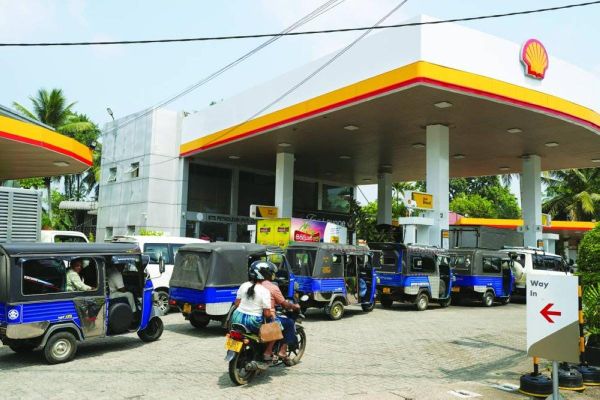
COLOMBO — March 16
Sri Lanka’s reinstated National Fuel Pass system, intended to regulate fuel distribution amid global supply uncertainties, ran into significant technical problems on its first mandatory day, leaving many motorists unable to register their vehicles and triggering criticism of the digital platform developed by the technology firm MillenniumIT ESP.
The system, which requires motorists to present a QR code linked to their vehicle in order to obtain fuel, became compulsory nationwide at 6:00 a.m. on Sunday, March 15. But within hours of its relaunch, thousands of users reported being unable to register vehicles through the official portal, fuelpass.gov.lk.
The most common complaint involved motorists attempting to register more than one vehicle under the same National Identity Card (NIC) or business registration number. The system rejected these attempts, displaying error messages indicating that the identification number or associated phone number had already been registered.
Critics say the platform appears to have been built on the assumption that each individual owns only a single vehicle — a design limitation that effectively blocks households or businesses operating multiple vehicles from registering them under the same identity.
Journalist Ranga Sirilal, posting on the social media platform X, wrote that the Fuel Pass “seems to have been designed on the bold assumption that no one in Lanka owns more than one vehicle.”
Newly Registered Vehicles Unable to Enroll
The platform’s second major problem involves vehicles registered after the original Fuel Pass system was introduced in 2022.
Motorists attempting to register such vehicles encountered a message on the government portal stating that registration had not yet begun.
The issue is particularly significant because Sri Lanka recently relaxed restrictions on vehicle imports, allowing thousands of newly imported vehicles to enter the country. Many of these vehicles have not previously been registered in the Fuel Pass database.
As a result, owners of newly registered vehicles currently have no immediate way to legally obtain fuel under the system.
The Fuel Station Owners’ Association acknowledged the problem, with its president, Kumara Rajapaksa, confirming that complaints had emerged regarding newly registered and recently transferred vehicles.
Under current regulations, fuel stations are not permitted to dispense fuel without scanning a valid QR code linked to the system.
President Orders Immediate Fixes
The technical failures prompted intervention from the highest levels of government.
President Anura Kumara Dissanayake, who also oversees Sri Lanka’s digital transformation initiatives, convened a meeting with senior officials and technology representatives, including Dr. Hans Wijayasuriya, chairman of the Information and Communication Technology Agency (ICTA).
According to officials familiar with the discussions, the president ordered the immediate correction of the system’s technical faults and instructed authorities to ensure that the platform functions as intended.
Earlier discussions among government officials had emphasized the importance of strengthening the digital QR-based distribution system amid uncertainty in global fuel markets following tensions in the Middle East.
Backlash Against System Developers
The problems have placed MillenniumIT ESP, the technology firm responsible for developing the system in partnership with Dialog Axiata, under intense public scrutiny.
The company originally developed the Fuel Pass platform during the 2022 economic crisis, when Sri Lanka faced severe fuel shortages that led to massive queues and nationwide protests. At the time, the system was widely praised for helping manage limited supplies and reducing waiting times at filling stations.
The platform was reportedly built within three weeks during the height of the crisis and quickly attracted more than one million registrations during its initial rollout.
But the relaunch has exposed what critics describe as structural design flaws, particularly the inability to accommodate multiple vehicles under a single identity and the failure to enable new registrations before the system was made mandatory.
As of Sunday evening, MillenniumIT ESP had not issued a public statement addressing the technical problems or outlining a timeline for their resolution.
Public Frustration and Policy Questions
The troubled rollout comes as the government attempts to manage fuel consumption amid global energy tensions following the recent war involving the United States, Israel, and Iran.
The government, which had repeatedly assured the public that the country possesses sufficient fuel stocks, now says the measure is precautionary rather than a response to an immediate shortage.
Yet the digital platform’s difficulties have angered many ordinary citizens and fueled criticism online about the government’s capacity to implement large-scale digital governance projects, particularly as the country moves forward with ambitious initiatives such as an electronic national identity system and expanded digital public services.