

Trincomalee Site Long Linked to Wartime-Era Abductions Is Sealed

Trincomalee Site Long Linked to Wartime-Era Abductions Is Sealed


Share this post

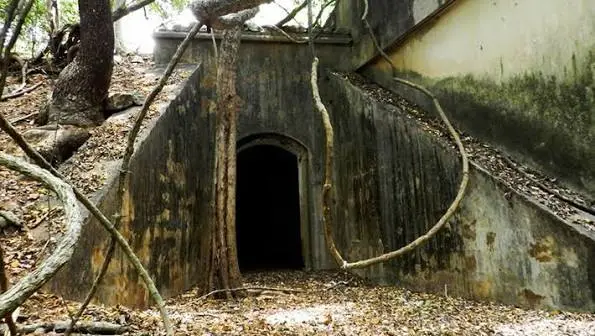
COLOMBO, Sri Lanka — Sri Lanka’s Criminal Investigation Department has sealed an underground detention facility inside the Trincomalee Navy Camp, a site long known as the “Gun Site,” in a major development in one of the country’s most disturbing unresolved disappearance investigations.

The Trincomalee magistrate is expected to visit the site for an official inspection, a step investigators believe could help preserve evidence and clarify how the facility was used during the final years of Sri Lanka’s civil war and its aftermath.

The site has been linked for years to allegations that people abducted by members of a naval intelligence unit were secretly held there, tortured, and, in some cases, never seen again. Investigators now believe nearly 60 people may have been detained at the underground complex — far more than the 11 youths at the center of the best-known case.

That case, often referred to as the “Navy 11” disappearance case, involves young men abducted between 2008 and 2009, many from Colombo and its suburbs. Court records and investigations have alleged that the victims were held for ransom before disappearing. The case has drawn national and international attention because of the alleged involvement of senior naval officers and the long delays in bringing accountability.

The latest move suggests that the investigation is expanding beyond the 11 youths. According to reports, evidence has emerged linking the Gun Site to several other disappearances, including the case of a man named Shantha in Kegalle, now before the Polgahawela Magistrate’s Court; the cases of two Tamil youths in Colombo, being examined before Colombo Magistrate’s Court No. 3; and the disappearances of Ibbagamuwe Pradeep and two young women in Trincomalee, which have also been reported to court.

Authorities say former detainees, as well as people connected to the operation of the site, have given confidential statements before magistrates. Their testimony is expected to be central to determining who was held there, who controlled the facility, and whether senior officers knew of or authorized its use.

Human rights groups and families of the disappeared have long alleged that it functioned as a secret detention center inside one of the country’s most secure naval installations. The allegations have persisted despite repeated denials, delays, and procedural setbacks.


Share this post

Be the first to know

Join our community and get notified about upcoming stories

Subscribing...
You've been subscribed!
Something went wrong
JVP Sang the Same Songs. Only Tamil Rapper Went to Jail.
Sangeethasan Ganeskumar

JVP Sang the Same Songs. Only Tamil Rapper Went to Jail.

By M.R. Narayan Swamy “O land that yearned for valour O soil where Tamil pride has flourished The land where history was born And gave the nation its national leader (Prabhakaran) A bronze statue of the Tamil national leader Shall stand in the land of his birth.” These lyrics are not from the Tamil Tigers’ liberation songs. They are from a song — believe it or not — popularized by Sri Lanka’s incumbent ruling party, whose government has now sent a young Tamil man to prison for singing


M.R. Narayan Swamy

M.R. Narayan Swamy

Why Sri Lanka Has Yet to Unlock the Indian Market

Why Sri Lanka Has Yet to Unlock the Indian Market

By M.R. Narayan Swamy Why are India and Sri Lanka struggling to embrace a mutually beneficial trade agreement despite plenty of attempts? Why do exports to India account for only about 6 percent of Sri Lanka’s total exports? Colombo and New Delhi have long sought to upgrade the original India-Sri Lanka Free Trade Agreement (ISFTA) by addressing its shortcomings and expanding its scope to include services and investment provisions. The Comprehensive Economic Partnership Agreement (CEPA) was pr


M.R. Narayan Swamy

M.R. Narayan Swamy

At Jaffna University, a Damaged Vesak Lantern Tests a Fragile Consensus

At Jaffna University, a Damaged Vesak Lantern Tests a Fragile Consensus

JAFFNA, Sri Lanka — When a few Vesak lanterns erected by Sinhala Buddhist students at the University of Jaffna were vandalized this week, the damage itself was limited. What followed was more unusual: student leaders, university representatives, and even Tamil nationalist politicians quickly united to condemn the act and reject attempts to turn it into an ethnic controversy. The lanterns, displayed as part of Vesak celebrations at the university’s Faculty of Management Studies and Commerce, wer


Our Reporter

Our Reporter

Deepthi Attygalle, Pioneer of Sri Lankan Anaesthesia, Dies at 86
Deepthi Attygalle

Deepthi Attygalle, Pioneer of Sri Lankan Anaesthesia, Dies at 86

Deepthi Attygalle, the Sri Lankan anaesthesiologist whose work on magnesium sulphate became an important reference point in the treatment of severe tetanus, died on June 1, 2026. She was 86. For much of the twentieth century, severe tetanus was managed by heavily sedating patients and supporting them on mechanical ventilators for weeks at a time, a regimen that consumed intensive-care resources often unavailable in many developing countries. At the General Hospital in Colombo, Dr. Attygalle and


Jaffna Monitor

Jaffna Monitor