

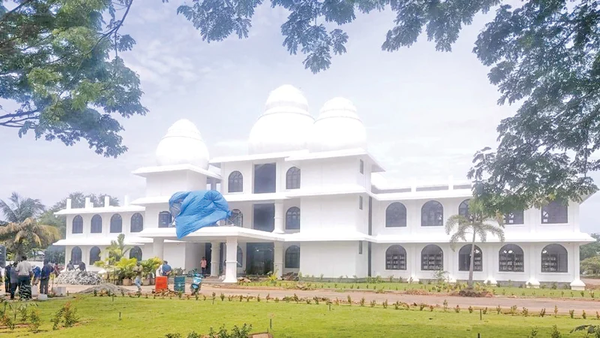
BATTICALOA, Sri Lanka — President Anura Kumara Dissanayake is scheduled to visit Batticaloa on Wednesday to inaugurate what the government describes as Sri Lanka’s second-largest public library after the Colombo Public Library, before attending a series of development and administrative events across the Eastern Province.
The new Batticaloa Public Library, built at a reported cost of 435 million rupees, is scheduled to open at 9:30 a.m. The facility replaces one of the country’s oldest public libraries, founded in 1855, and is expected to serve as a major educational and cultural institution for the Eastern Province.
Following the inauguration, the president is expected to attend the Batticaloa District Coordinating Committee meeting at the Old District Secretariat auditorium, where officials are to discuss regional development priorities and administrative matters.
He will later travel to Nintavur in Ampara District to lay the foundation stone for a new cultural centre, a long-discussed project in the predominantly Muslim town.
The president is also scheduled to participate in the “Rata Ekata” (“The Entire Nation Together”) national programme at the Weber Stadium in Batticaloa. The event is expected to focus on economic development initiatives connected to a proposed commercial complex in Ampara town.
The visit will continue on Friday with a tour of Ampara District, during which the president is expected to inaugurate several additional development and construction projects before concluding the trip with the Ampara District Coordinating Committee meeting.
The opening of the library also carries a layer of political symbolism in Sri Lanka’s East. Sivanesathurai Chandrakanthan, the former Eastern Province chief minister whose supporters credit him with helping initiate the project during his administration, remains in jail as the building is formally opened. Chandrakanthan is currently in custody in connection with the killing of a former Eastern University vice chancellor.
Construction on the library began during Chandrakanthan’s tenure as chief minister and later stalled during the years he was imprisoned. The project regained momentum only after his return to political office — a trajectory that mirrors the turbulent political history of Sri Lanka’s Eastern Province itself.