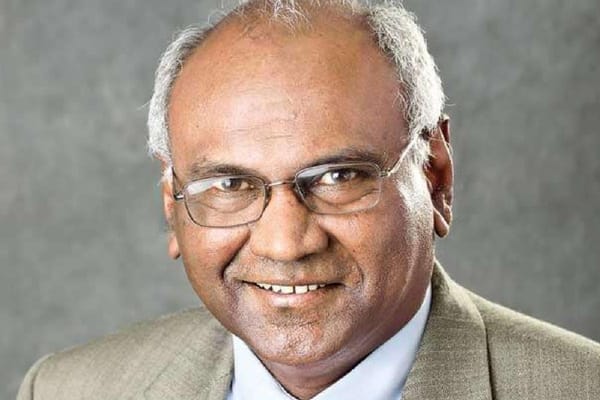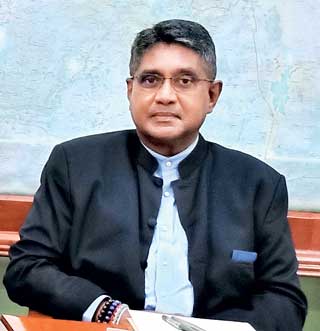

Buddhist monk and human rights activist Venerable Gnanananda Thero has accused the Sri Lankan government of deliberately obstructing the investigation into the Chemmani mass grave, alleging that authorities are spreading misinformation to deflect accountability for alleged wartime atrocities.
Gnanananda Thero, a prominent figure in the Equal Rights Movement, made the allegations during a recent protest in Jaffna calling for the reopening of the Chemmani mass grave excavation. Demonstrators from both the North and South gathered to demand justice for victims believed to be buried at the site and to urge the government to resume the exhumation process.
Addressing the crowd, the monk claimed he had personally reviewed photographic evidence showing skeletal remains of children and young people unearthed from the grave. He accused the government of attempting to attribute the burials to the Liberation Tigers of Tamil Eelam (LTTE) in an effort to derail a credible inquiry.
“The government, which came to power promising justice, is now backtracking,” Gnanananda Thero said. “They are trying to shift the blame to the LTTE to suppress a proper investigation. But I do not believe the LTTE killed those children and buried them there.”
Criticism of Broken Promises

The monk directed sharp criticism at the National People’s Power (NPP)-led government, accusing it of failing to uphold key pre-election commitments related to human rights and justice.
“This JVP-led administration promised to repeal the Prevention of Terrorism Act (PTA) but has not done so, even after a year in power,” he said. “Instead, it is preparing to introduce a new anti-terrorism law. People must unite to resist this move.”
Gnanananda Thero drew parallels between the Chemmani investigation and other justice-related cases he said had been politicized and ultimately abandoned by the NPP, including the Batalanda detention centre inquiry.
“Just like the Batalanda detention centre case, which was politicized and then abandoned, this government is following the same path with Chemmani,” he said. “They came to power by deceiving the people and will spend the next four years doing nothing meaningful.”
Gnanananda concluded his address by asserting that the current administration lacks a genuine commitment to conducting a fair or transparent inquiry into the mass grave. He called on civil society organizations and citizens to remain vigilant and continue to demand accountability from the authorities.
Background: Chemmani and Batalanda
The Chemmani mass grave, located in Jaffna, was first uncovered in 1998 following testimony by a detained Sri Lankan Army soldier who alleged that dozens of civilians who disappeared during the final stages of military operations in the North in 1996 were buried there. Subsequent excavations led to the recovery of multiple human skeletons, believed to be those of Tamil civilians, making it one of the most controversial human rights cases from the civil war period.
The Batalanda detention centre, situated near Colombo, was alleged to have been used in the late 1980s as a site for illegal detentions, torture, and extrajudicial killings of suspected Janatha Vimukthi Peramuna (JVP) members during the second insurrection. The official commission of inquiry appointed in the 1990s confirmed serious human rights abuses, but no prosecutions were carried out, and the case was eventually shelved.