

CVK Sivagnanam Closes the Circle That S.J.V. Chelvanayakam Opened

CVK Sivagnanam Closes the Circle That S.J.V. Chelvanayakam Opened


Share this post

In Eelam Tamil politics, few words have caused as much damage—or claimed as many lives—as the word “traitor.” And it was S.J.V. Chelvanayakam, founder of the Ilankai Thamil Arasu Katchi (Federal Party) in 1949, who first slipped this venom into the bloodstream of Tamil political discourse.
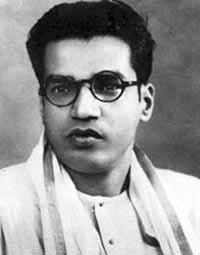
V. Nalliah Master

Until then, the Tamil Congress and its leader G.G. Ponnambalam had struggled to make in roads in the East. They remained a northern force—Jaffna-centric, both in character and reach.

In the East, the man of the moment was V. Nalliah Master—a respected leader who served as Deputy Minister for education, health, and postal services. But to plant the Federal Party’s flag in the East, Chelvanayakam launched a smear campaign, branding Nalliah as a “kaikkooli” (a political stooge)—someone blindly loyal to the Sinhalese-led government.

Stage by stage, rally by rally, the insult echoed across the East. And only after bringing Nalliah master down did the Federal Party finally step into the region.
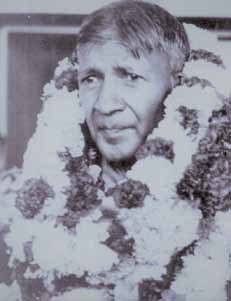
S.J.V. Chelvanayakam

Years later, Chelvanayakam’s political heir A. Amirthalingam would refine the rhetoric. “Kaikkooli” wasn’t sharp enough. He needed a word with blood on its edge. And so, “traitor” entered the lexicon—with Alfred Duraiappah,
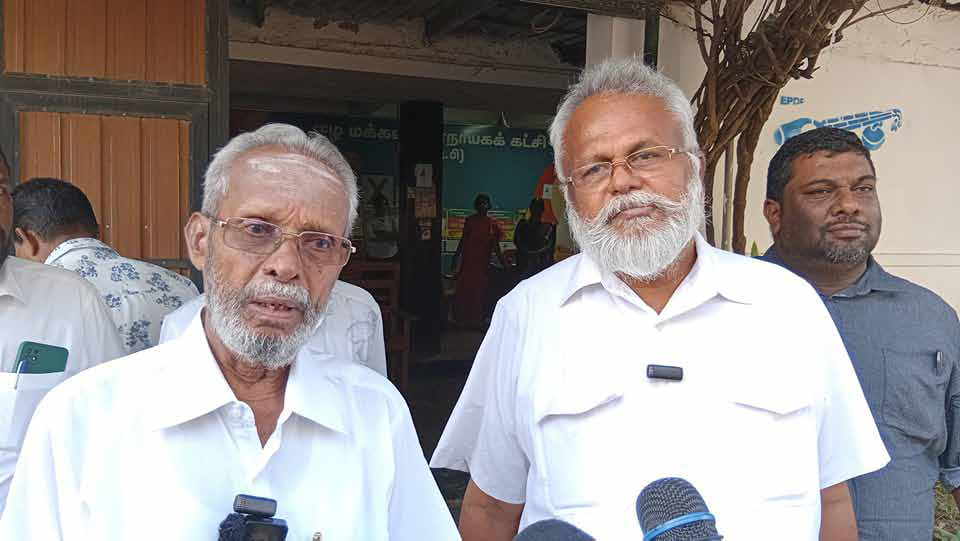
ITAK Acting President C.V.K. Sivagnanam with EPDP Leader Douglas Devananda, after their meeting at EPDP’s office in Jaffna.

Amirthalingam’s rival in Jaffna, as its first public victim. That word became a bullet— fired by a young Velupillai Prabhakaran, barely in his twenties.

What began as a slur soon evolved into an ideology. Prabhakaran used the label “traitor” not merely to justify assassinations, but to silence dissent, dismantle rival militant movements, and consolidate Tamil nationalist power under the LTTE. In a grim twist of fate, he would eventually turn the gun on Amirthalingam himself—the very man who first taught him to see Duraiappah as a traitor. Thus was born a politics of moral absolutism— where to disagree was to betray, and to betray was to die.

No one has worn the label “traitor” more often than Douglas Devananda. For decades, Tamil nationalist media hurled the word at him with unrelenting force. Yet, for all the LTTE’s reach and firepower, they never managed to silence “traitor Douglas.” Nor could they ever claim the satisfaction of having done so.

And now, history turns a curious corner.

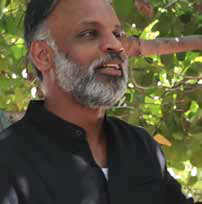
The party that first unleashed this rhetoric the Federal Party—must now be the one to bury it. And the man leading that quiet burial is none other than C.V.K. Sivagnanam, Acting Leader of the party and once a trusted figure in the eyes of Prabhakaran himself.

By walking into Douglas Devananda’s office in Jaffna-by asking for his support to form local government bodies-Sivagnanam did more than strike a political deal. He challenged a legacy. He stepped into the shadow of Chelvanayakam and began the long, painful work of undoing the curse his party had cast.

What Chelvanayakam began, Sivagnanam is now trying to end. In doing so, in his own quiet way, he is seeking to wash away the sins of his party, the legacy of his political ancestors, and the bloodstains they left behind.

Destiny, it seems, has its own strange rhythm.

Share this post

Be the first to know

Join our community and get notified about upcoming stories

Subscribing...
You've been subscribed!
Something went wrong
India Offers 200 Fully Funded Scholarships to Sri Lankan Students for 2026–27

India Offers 200 Fully Funded Scholarships to Sri Lankan Students for 2026–27

COLOMBO, Sri Lanka — India has opened applications for 200 fully funded scholarships for Sri Lankan students to pursue higher education at Indian universities during the 2026–27 academic year, in a program officials say reflects New Delhi’s continuing effort to deepen educational ties with its southern neighbor. The scholarships are administered by the Indian Council for Cultural Relations (ICCR) and are offered under four schemes: the Nehru Memorial Scholarship Scheme, the Maulana Azad Scholar


Our Reporter

Our Reporter

Sri Lankan Tamil Refugee Camp Leader Hacked to Death in Tamil Nadu; Six Arrested

Sri Lankan Tamil Refugee Camp Leader Hacked to Death in Tamil Nadu; Six Arrested

CHENNAI, India — A Sri Lankan Tamil refugee who served as chairman of a rehabilitation camp management committee in India’s southern state of Tamil Nadu was hacked to death recently in an attack police say may have stemmed from internal disputes within the camp. The victim, Sivakumar, also known as Kanna, 42, was originally from Murungan in Mannar district in northern Sri Lanka. Police said he was attacked by a group of assailants while walking near the Sri Lankan Tamils Rehabilitation Camp in


Our Reporter

Our Reporter

Jaffna Court to Decide Gotabaya Rajapaksa Testimony in 2011 Disappearance Case

Jaffna Court to Decide Gotabaya Rajapaksa Testimony in 2011 Disappearance Case

JAFFNA, Sri Lanka — A magistrate’s court in Jaffna has set April 28 as the date it will decide how former President Gotabaya Rajapaksa must provide testimony in the long-running case of two Tamil activists who vanished in 2011 amid allegations of enforced disappearance in the aftermath of Sri Lanka’s civil war. Lalith Kumar Weeraraj and Kugan Muruganandan, members of the leftist Frontline Socialist Party and organizers of protests demanding justice for victims of enforced disappearances, were l


Our Reporter

Our Reporter

“Tamil Elites May Call the NPP ‘Old Sinhala Nationalism in Disguise,’ but Ordinary Tamils See a Progressive Force” — Jayadeva Uyangoda

“Tamil Elites May Call the NPP ‘Old Sinhala Nationalism in Disguise,’ but Ordinary Tamils See a Progressive Force” — Jayadeva Uyangoda

Jayadeva Uyangoda, Professor Emeritus of Political Science at the University of Colombo, is one of Sri Lanka’s leading scholars on ethnic conflict, peace processes, nationalism, democracy, and leftist politics. Before becoming one of the country’s most influential political scientists, Uyangoda had been briefly involved with the early Janatha Vimukthi Peramuna (JVP) movement founded by Rohana Wijeweera and was imprisoned after the 1971 uprising. A former activist with a Ph.D. from Colombo, he h


Aruliniyan Mahalingam

Aruliniyan Mahalingam