“AKD Walked the Same Road”: Jaffna Protesters Reject Security Justification for Land Occupation

“AKD Walked the Same Road”: Jaffna Protesters Reject Security Justification for Land Occupation


Share this post

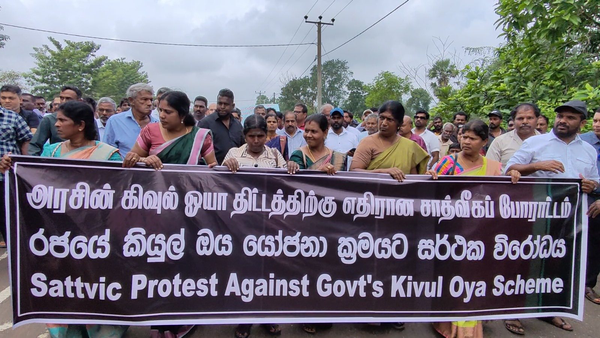
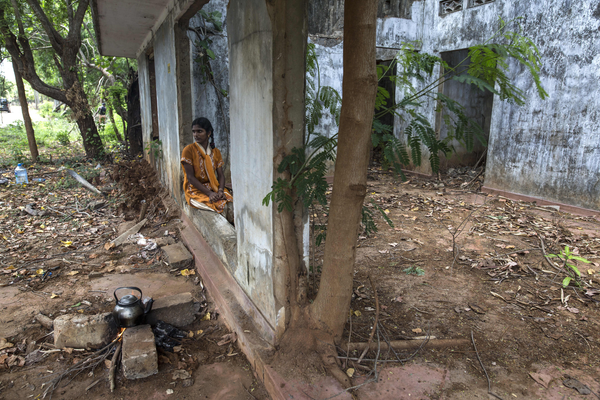
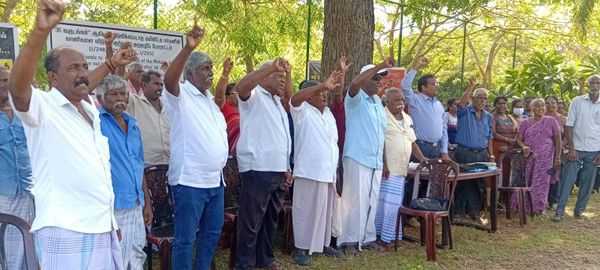
MAYILIDDY, Sri Lanka — The chairman of a local government body in Sri Lanka's Northern Province said Sunday that there was "absolutely no justification" for the military to continue occupying civilian lands in the region, speaking at a protest demanding the return of privately owned property still under military control more than a decade and a half after the end of the country's civil war.

The demonstration, organized by the Valikamam North Resettlement Development Committee, drew residents from four Grama Sevaka divisions in the Valikamam North area who say they have been unable to reclaim lands seized during the conflict between government forces and the Liberation Tigers of Tamil Eelam, which ended in 2009. Organizers say roughly 3,000 acres remain under military control in the area.

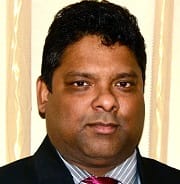
Thiyagarajah Nirosh, chairman of the Valikamam East Pradeshiya Sabha, accused successive governments of failing to return the land and alleged that displaced families continued to live without permanent housing while the military used portions of the occupied property for agriculture and other activities.

"For 37 years, the state has held these lands at gunpoint," Mr. Nirosh said. "Even 17 years after the war, our people are still fighting for the return of their own lands."

He described the continued occupation as "an ethnic-driven project" and called on the government to immediately release the lands and compensate residents for decades of military use.

Mr. Nirosh also pointed to a recent visit by President Anura Kumara Dissanayake to Jaffna as evidence that no genuine security rationale existed for maintaining the military presence.

"When the President visited Jaffna recently, he walked alone on this very road," he said. "That itself shows there is no security threat here."

Land occupation by the military has remained one of the most contentious post-war issues in Sri Lanka's Northern Province, where Tamil residents and civil society organizations have for years demanded the release of property acquired during the conflict.


Share this post

Be the first to know

Join our community and get notified about upcoming stories

Subscribing...
You've been subscribed!
Something went wrong
The Dam They Can't Account For

The Dam They Can't Account For

By Sidhartha Thamby Somewhere in the ledgers of Sri Lanka's Cabinet Office, between the fiscal crisis minutes and the debt-restructuring files, sits a two-paragraph decision that will reshape rivers, forests, and livelihoods across Vavuniya, Mullaitivu, and the wider northern dry zone. Approved quietly in January 2026, it revived the Kivul Oya Reservoir Project — suspended only two years earlier because the country had run out of money — at a cost of Rs. 23,456 million. That figure is not a typ


Sidhartha Thamby

Sidhartha Thamby

Tamil Families Displaced Since 1990 Vow Weekly Protests Until Military-Held Lands Are Returned
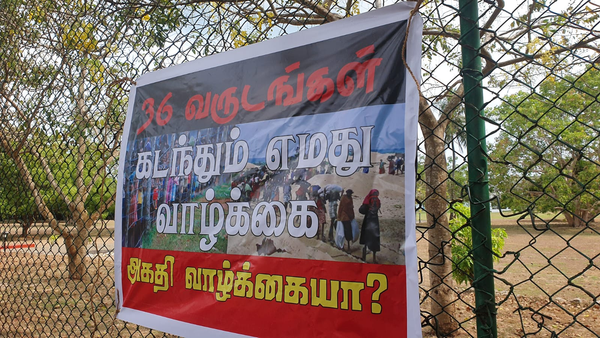
A banner at the protest site read: “Even after 36 years, must our lives still remain those of refugees?”

Tamil Families Displaced Since 1990 Vow Weekly Protests Until Military-Held Lands Are Returned

JAFFNA, Sri Lanka — Holding faded land deeds — some preserved for more than three decades as the last legal proof of ownership — displaced Tamil residents of Valikamam North gathered Friday outside the gates of the military’s Commando bungalow in Sri Lanka’s Jaffna Peninsula, demanding the return of ancestral lands they have been barred from entering since their forced displacement in June 1990. The demonstration, organized by landowners and their families, marked the start of what participants


Jaffna Monitor

Jaffna Monitor

Reconciliation in Sri Lanka: Enough Promises, Time for Proof

Reconciliation in Sri Lanka: Enough Promises, Time for Proof

Seventeen years after the end of Sri Lanka’s civil war, reconciliation remains more slogan than substance. It is invoked in speeches, embedded in policy frameworks, and repeated in international forums, but for many citizens, particularly in the North and East, it has yet to translate into meaningful, lived change. The uncomfortable truth is this: Sri Lanka does not suffer from a lack of reconciliation mechanisms. It suffers from a lack of political will, consistency, and sustained execution. R


Colonel Nalin Herath

Colonel Nalin Herath

India-Sri Lanka Fishing Row Risks Dangerous New Escalation After Violent Sea Assault

India-Sri Lanka Fishing Row Risks Dangerous New Escalation After Violent Sea Assault

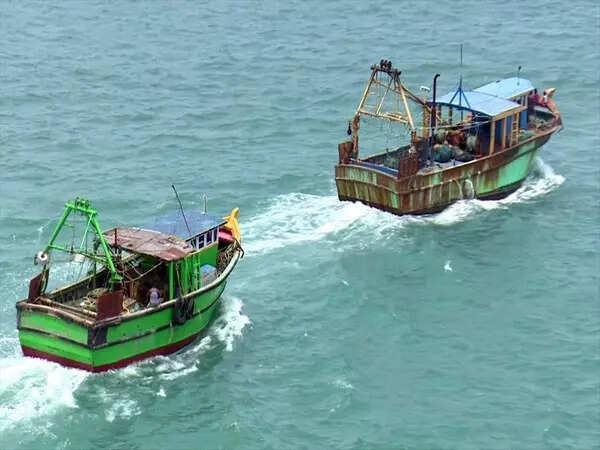
By M.R. Narayan Swamy “The fishermen issue is an unnecessary irritant that has been allowed to fester for too long,” says Yashvardhan Kumar Sinha, a former Indian High Commissioner to Sri Lanka, hitting the nail on the head. A diplomat who has studied the dispute from close quarters, Sinha made the comment in a just-released book on India-Sri Lanka relations. Like many other Indians, Sinha is aghast that bottom trawlers from Tamil Nadu are causing enormous and lasting environmental destruction


M.R. Narayan Swamy

M.R. Narayan Swamy