By M.R. Narayan Swamy
With a weather-beaten face, SR looks older than his years. By his own admission, he is a ‘coolie’ near Paranthan in northern Sri Lanka — a life of drudgery far removed from the time when he was a Tamil Tiger, fighting a protracted and determined war to carve out an independent Tamil homeland.
Ever since he surrendered to the military in 2009, along with thousands of Liberation Tigers of Tamil Eelam (LTTE) guerrillas, SR has led a difficult life, struggling to adjust to a post-war Tamil society that appears to have given up on him and others who once embraced militancy.
“A member of the Tamil diaspora promised some 10 years back to help build a toilet in my house,” he told me over a cup of plain tea. “I am still waiting for that pledge to be fulfilled… When I hear the diaspora and Tamil Nadu politicians talk about Tamil aspirations and so on, I get furious. They have all let us down.”
SR’s anger is justified. It was way back in 1985 that he signed up with the LTTE and was recruited personally by its founder leader, Velupillai Prabhakaran. He fought both the Indian and Sri Lankan armies, suffering multiple wounds. But what pains him most is the way his dreams have been shattered.
“If I work hard, Sir, I can make a few thousand rupees to feed my family,” he says, describing his daily grind. “With a family, I find it difficult to survive. And I feel bad that no one really wants to help us.”
SR’s is not a unique story in Sri Lanka’s north and east, home to hundreds of former LTTE fighters – male and female, now mostly in their 40s and 50s – who battle great odds just to survive. And this was the corps of fighters who waged a bloody war for a quarter century, a conflict that almost broke up Sri Lanka before the tide turned and the Tigers were militarily routed in May 2009.
The conflict, one of the bloodiest in the world, left an estimated 100,000 people dead in Sri Lanka. Most fatalities and maimed were innocent Tamils, although Sinhalese and Muslims also died in large numbers. When the war ended, an estimated 12,000 guerrillas surrendered to the military.
While some of them reportedly disappeared without a trace, the majority were jailed for varying periods before being officially “rehabilitated”. By then, tens of thousands of Tamils, including the educated and professional class, had fled Sri Lanka and settled mainly in the West, becoming one of the most vocal and successful diaspora groups.
It was this diaspora that heavily funded the LTTE’s brutal war, which saw innovative military tactics, classical guerrilla warfare, as well as cold-blooded assassinations of Sri Lankan and Indian leaders and Tamils dubbed ‘traitors.’ Many diaspora members financed the Tigers willingly; others did so under duress. Former LTTE guerrillas say that even a portion of what the diaspora regularly contributed to the war machinery would have been enough to sustain them now.
That, most unfortunately, is missing. As the years have rolled by since 2009, vast sections of the Tamil diaspora have turned their back to the former rebels.
This naturally saddens Isai Amudan, who, at 44, drives an auto-rickshaw in Kilinochchi with a Jaipur foot (an artificial leg), having lost his right leg during years of fighting as an LTTE guerrilla. Like many former LTTE fighters, he works long hours each day to pay off debts and meet his family’s basic needs.
Even a day’s rest — voluntary or otherwise — brings added misery.
No wonder he broods: How long can he cope with life in this manner? Is this why he quit school at 13 to join the LTTE and fight for an independent Tamil Eelam?
“Our life is an unending struggle, Sir,” he said over the telephone from Kilinochchi, a small but bustling town which served as the LTTE’s administrative capital before the war ended in 2009. His voice betrays distress and trauma.
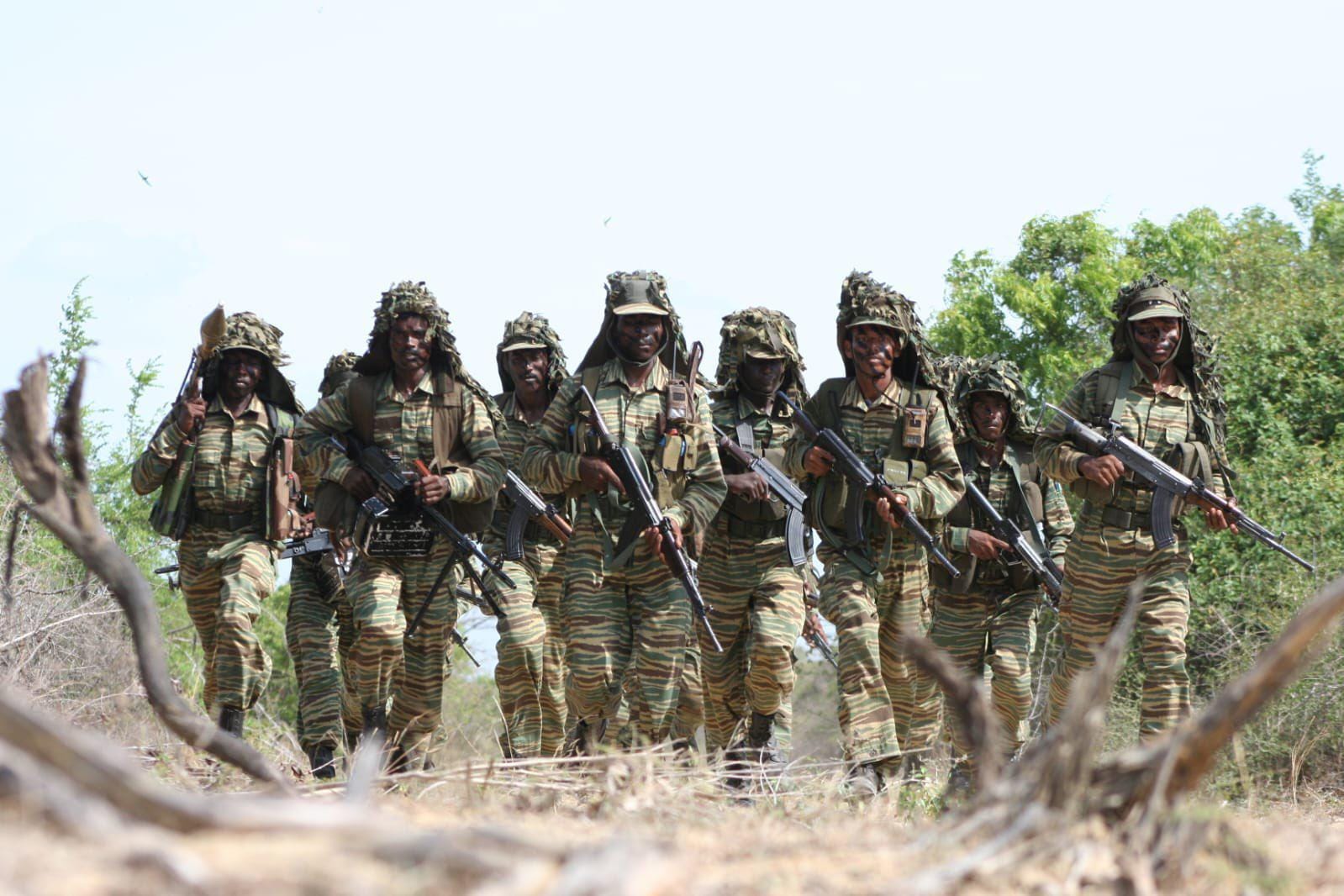
By the time he surrendered in 2009 to the army, Amudan had taken shrapnel wounds in the head and waist and also lost a leg, preventing him from taking up hard manual work. He was jailed for three years. Today, he is a diabetic too.
With a Jaipur foot fitted in 2014, he found it difficult to secure a job. He had not completed his schooling when he became a teenage guerrilla. He tried his hand at carpentry and other odd jobs before taking a loan to lease an auto-rickshaw.
He must pay the financier nearly Rs. 30,000 a month for another one and a half years before the vehicle becomes his. As a result, he has to earn significantly more to support his family, which includes his wife — also a former LTTE fighter — and their young, school-going son.
With Sri Lanka sliding from one economic crisis to another since 2022, whatever he earns is quickly exhausted after he meets his loan repayments and basic needs.
“We have got used to this tough post-war life, Sir,” Amudan says. “What we can never get over is that the Tamil society seems to have simply forgotten us, besides the taunts we face at times.”
Indeed, the overwhelming bulk of the former LTTE guerrillas now lead a life far removed from what they had dreamt of when they embraced militancy. And the worst part is that their harrowing story is largely hidden from the world at large.
Another such Tamil, known by his nom de guerre Rangan, started selling kerosene and engine oil in Kilinochchi in January this year, after somehow doing painful physical labour for years despite eight war wounds. For a while, he ran a cloth store, but it closed during the COVID-19 epidemic.
Now 55, Rangan had taken part in innumerable battles against the Sri Lankan military during the two decades he spent with the Tigers. After surrendering in 2009, he spent 63 long months in different prisons.
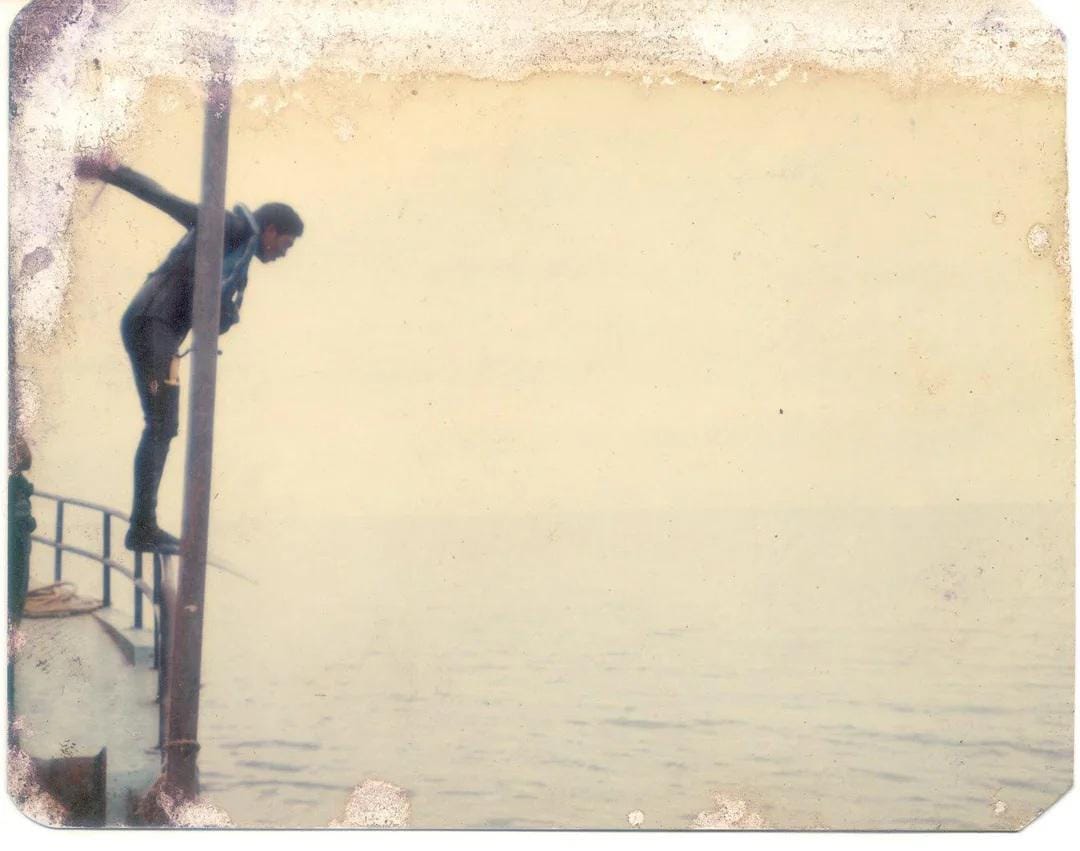
Freedom did not mean peace. Intelligence personnel hounded him for a few years, repeatedly asking what he was up to. “Remember, we could have killed you,” one officer would say. The words brought pain.
Rangan, who lost his first wife to artillery shelling during the war, undergoes severe physical distress every now and then due to shrapnel pieces embedded in his head and hand.
“I get splitting headaches,” said the man who joined the LTTE just after the Indian army deployed in Sri Lanka in 1987, returned home in March 1990. “I get needlessly angry. When I worked as a mason earlier, I could not cope due to the physical torment.”
The lack of education and skills beyond guerrilla warfare prevents former fighters from finding gainful employment. This has forced many to take up whatever manual work they can find to make a living. Some sell vegetables or take on odd jobs.
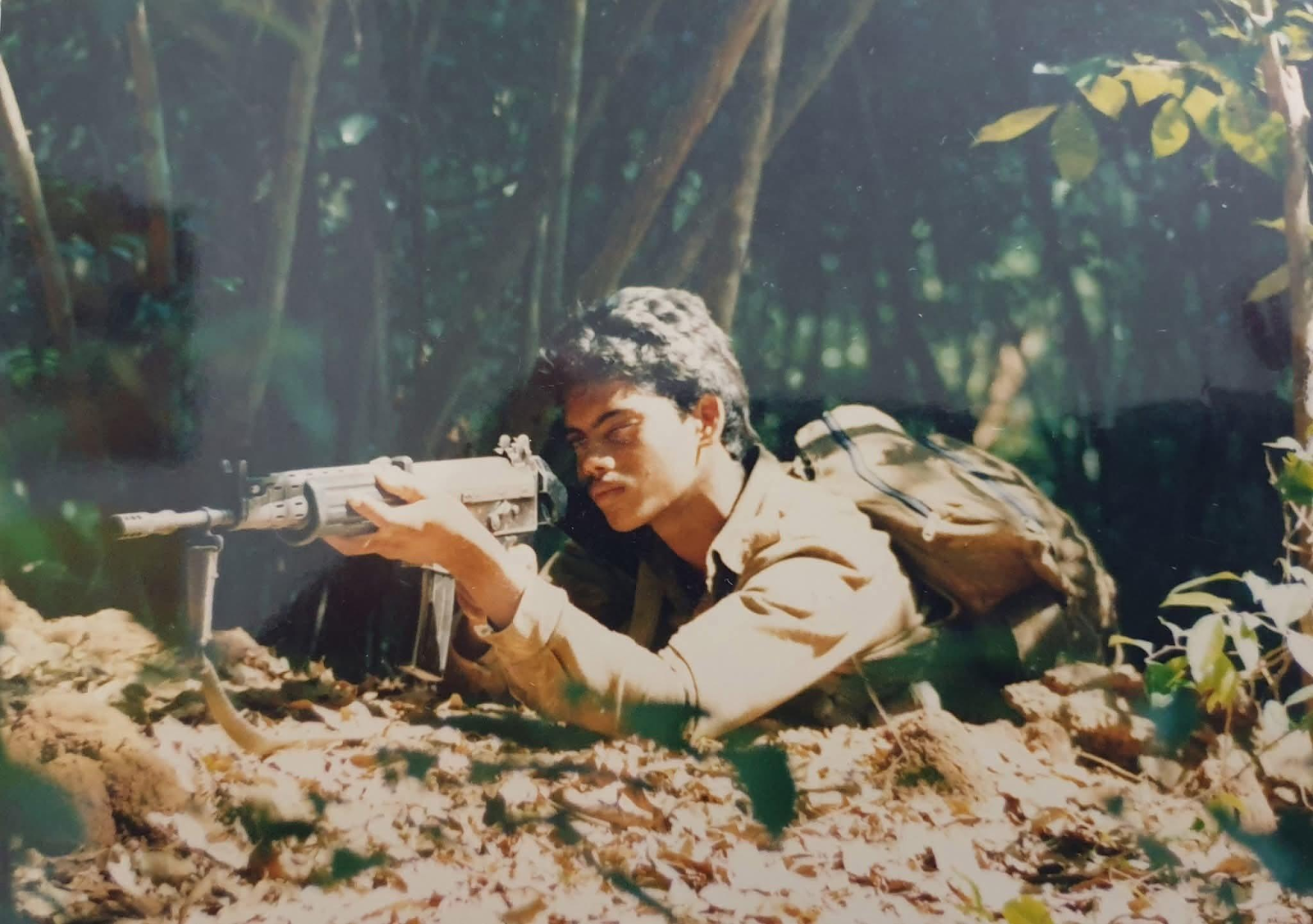
“There have been days when we could afford only a little rice, buttermilk, and salt as food,” said Rangan, who married another ex-guerrilla after walking out of prison. “It is thanks to my wife’s small job with the government that I got into the oil business on a small scale this year.”
The LTTE’s military defeat turned the world upside down for those who survived decades of bloodbath.
“Today, we lack dignity,” said Rangan, sounding bitter. “The same Tamil people for whom we fought now look down upon us. Nobody gives us decent jobs, either in the government or the private sector.”
After a pause, he added: “Sir, I ‘died’ in 2009 when I surrendered. Now, I ‘die’ every day due to the way people shame us as a defeated lot. Believe it or not, I have even been told on my face: ‘Why didn’t you die?’”
Rangan was born and brought up in the northwestern district of Mannar, where he held a senior position for the LTTE. He shifted to Kilinochchi, about 80 km away, after the war because Tamils he knew well made fun of him in Mannar.
“The same men who once addressed us with respect when we were armed would now look at me and taunt whenever I raised my voice over even the smallest issue — whether it was my mistake or theirs — saying, ‘So, you got your (Tamil) Eelam?’ They knew that question itself was meant to humiliate me. I couldn’t take it anymore. So, I left Mannar for good.”
Tamil sources in Jaffna, Kilinochchi, and Batticaloa insisted that up to 60 percent of all those who surrendered in 2009 continued to face terrible hardships, although the war ended almost 17 years ago.
A woman from Mullaitivu said on the condition of anonymity that she does not allow her husband, a LTTE fighter for many years, to leave the house because he gets into a fight if someone makes fun of him.
According to one Tamil source, life is most harsh and painful for those who were severely wounded, suffer from multiple health issues, who have lost limbs or partial or full eyesight, or are completely bedridden.
Fortunately, some Tamils, based in the West and in Sri Lanka, including former LTTE members, regularly care for those who cannot even live on their own due to physical constraints or health-related problems.
Notably, Colombo provides modest financial support to disabled guerrillas and some former rebels, ‘Imagine, we now take money from a government we fought for so long,’ said a former female Tamil Tiger.
This financial support extends to members of the LTTE’s intelligence wing — some of whom, ironically, now serve as the government’s eyes and ears.
However, the majority of former fighters struggle to make ends meet. What will become of these men and women when they are no longer able to work?
Rangan wondered why erstwhile Tigers had been made outcasts, when governments and societies in Nepal and India had embraced their own former insurgents.
“The Naxalites who surrender in India receive financial support to begin life anew. Even Nagas and Mizos, who fought for separation for decades, are now part of the Indian Army. This is also true of Maoists in Nepal,” he said, demonstrating his knowledge. “Why are we deprived of dignity and respect?”
A former decorated fighter of the LTTE’s Charles Antony Regiment also does physical work for a living in a northern Sri Lankan town. Another, who used to work for the LTTE’s Voice of Tigers radio, now gives his voice over to private companies for advertisement campaigns on television.
Former militants and Tamil sources said that while a section of the Tamil diaspora does help, unscrupulous middlemen in the Tamil society, at times, steal a part of the monetary support provided.
One ex-LTTE member in Mullaitivu said, “If someone sends, say, 100 pounds, we get 40 or 50. We know we are being cheated, but we can’t do anything. Those who know the diaspora members take our signatures or ask us to record a video presentation thanking them. All this is very disgusting.”
Another Tamil added: “Many in the diaspora generously funded the LTTE war while they and their children lived peacefully in the West. But many among them now don’t care for those who actually fought the war.”
“At least in the North, some support from the diaspora is extended — though it is far less than what is needed for former LTTE cadres”, Devika, an ex-Tigress from Kaluwanchikudy in Batticaloa, said. “But the real stepmotherly treatment is toward the Eastern Province, which has been largely neglected, as the majority of the diaspora is from the North. Some sections of the Tamil diaspora tend to view all former LTTE cadres from the East as part of Karuna’s faction: — referring to Karuna, one of the LTTE’s most decorated military commanders in the Batticaloa-Ampara district, who broke away from the LTTE in 2004. But many former fighters, including those like me who took part in the final phase of the war, now live in abject poverty,” Devika said.
Some time ago, a social activist — himself a former LTTE cadre from the Charles Antony Brigade — noted on social media that a former female guerrilla, crushed by poverty, had quietly moved to the Sinhalese-majority Anuradhapura District and entered prostitution. Fortunately, a well-meaning former LTTE activist later helped her leave the sex trade and arranged her marriage to an ex-guerrilla living in Europe.
Another former Tigress in Mannar – a single mother with children -- recently sold one of her kidneys to pay off her mounting debts.
Tamil sources said professional Tamil moneylenders exploit the former Tigers, knowing well their desperation for money and their inability to access the banking system due to lack of knowledge and professional skills.
The best placed among the ex-guerrillas are those who were senior in the Tiger ranks but did not get killed or those who were with the LTTE’s ancillary units.
“There is one former LTTE leader who is known to own three houses in Jaffna and Kilinochchi,” said a journalist in the eastern town of Batticaloa. “Some 10 per cent of ex-fighters lead comfortable lives. The majority battles penury.”
“It is a terrible life, Sir,” added Amudan. “Since I have diabetes, I keep getting boils on my legs, making even walking a daunting task some days. But what can I do? Where can I go?”
Some former rebels complained that they were thought of only during the LTTE’s annual “Heroes’ Day” in November.
An ex-Tiger in Jaffna, who did not want to be named, said, “There are politicians who invite us on such occasions and gift us a sarong and a shirt. With no choice, we accept them. Once the event is over, we are forgotten until the next November.”
Recently, Tamil political leader M.A. Sumanthiran called upon former LTTE fighters to join his Ilankai Tamil Arasu Katchi (ITAK), the main Tamil political force in Sri Lanka. It is not clear how many will be enthused by his invitation.
One former Tiger poured scorn on politicians.
“They use us on emotive nationalist issues. If they win elections, they forget us. If they lose elections, they simply say: ‘I could have helped had I won. What can I do now?” he said. “We know we are being exploited.”
Two well-informed Tamils in Jaffna and Kilinochchi said it was a monumental tragedy that tens of thousands of dollars and pounds collected in the West in the LTTE’s name during the war years appear to have disappeared — in all probability pocketed by some of the fundraisers.
‘The Tamil diaspora too has failed,’ said one of them. ‘Instead of focusing solely on issues like federalism and self-determination, at least some should have joined hands to do something concrete for former Tigers.’
“They could have set up small-scale industries here and there and provided technical training to these people,” he added. “So many years have passed. The diaspora acts when it wants to. They build temples and churches and donate to many causes. But when it comes to genuinely rehabilitating former Tigers, there has been a collective failure.”
A middle-aged former Tiger said, “It is not that the diaspora completely ignores us. Some Tigers are funded generously — perhaps because they are high-profile. But no one sincerely cares for people like us. We are not among the privileged.”
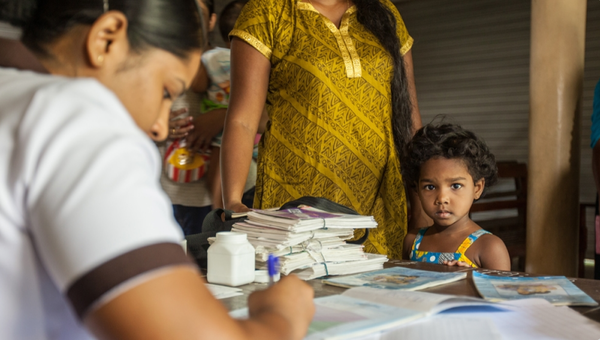
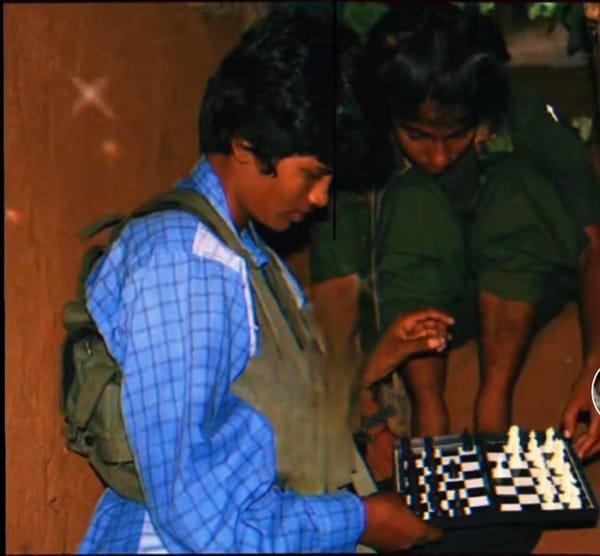
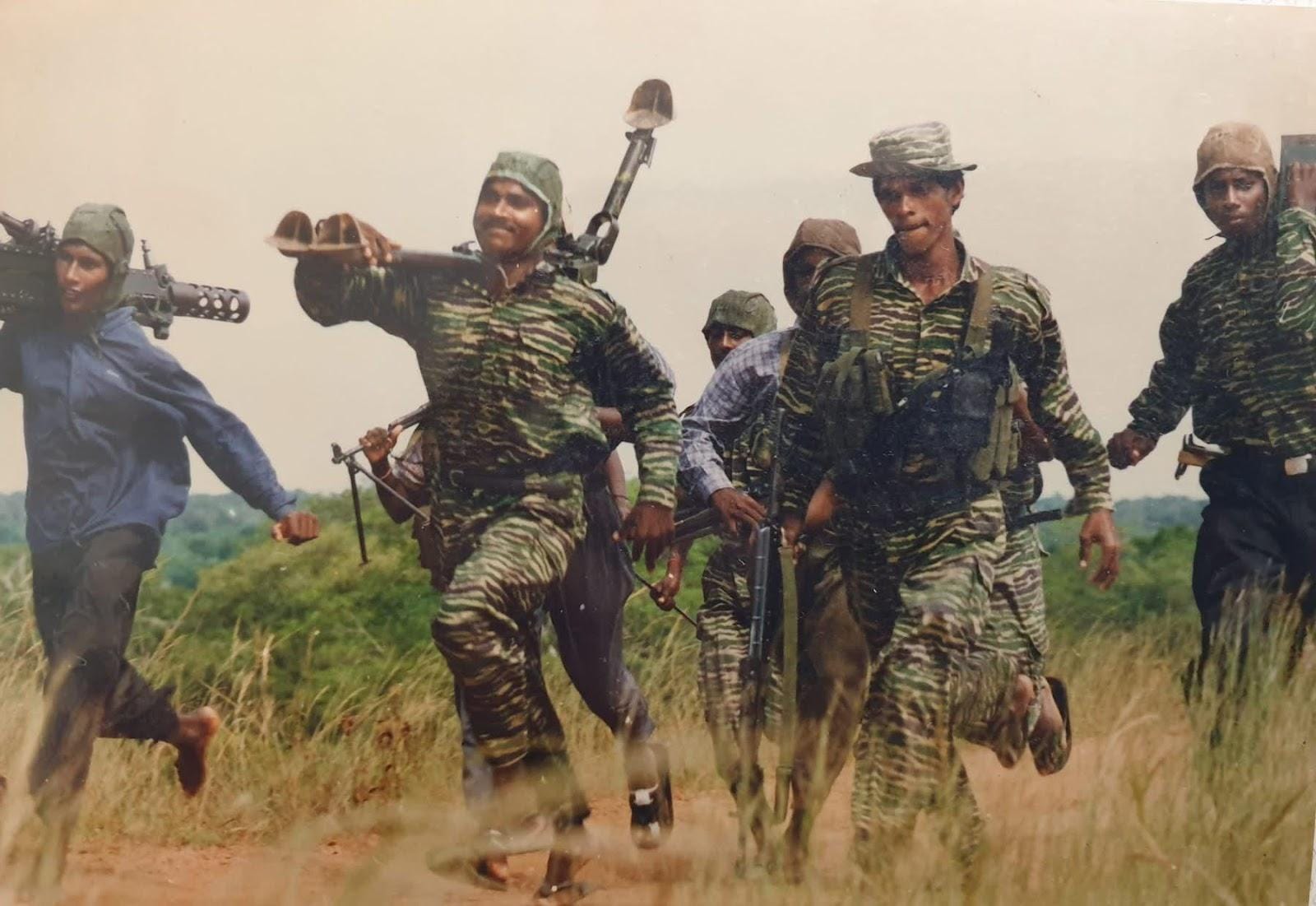
Editor’s Note: All photographs used in this article are for reference purposes and are sourced from the Jaffna Monitor photo library.