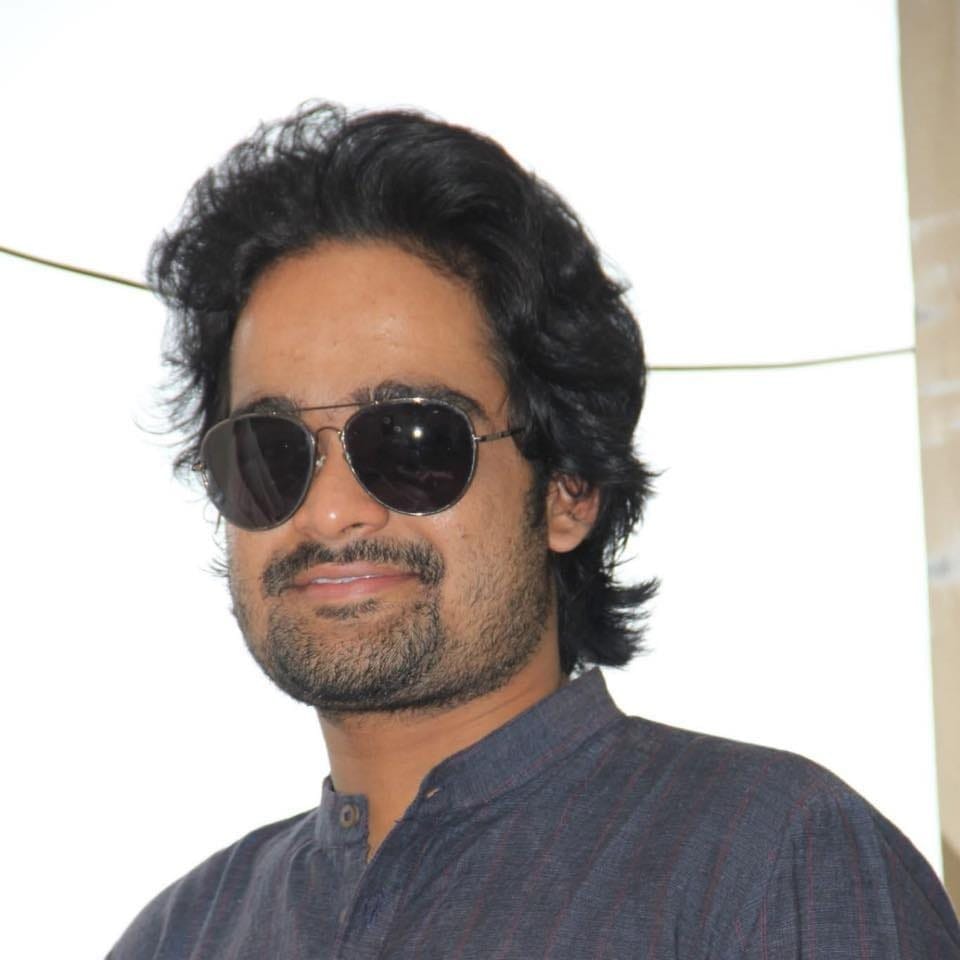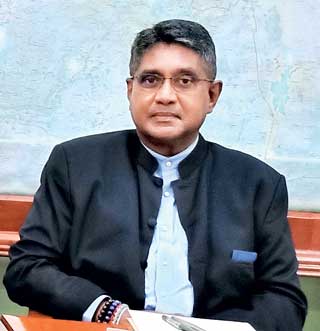

CHENNAI, India — A sitting Member of Parliament from Tamil Nadu has written to President Droupadi Murmu demanding that A.G. Perarivalan — convicted in the 1991 assassination of former Prime Minister Rajiv Gandhi and released by India’s Supreme Court in 2022 after more than three decades in custody — be barred from practicing law, days after he was enrolled as an advocate by the Bar Council of Tamil Nadu and Puducherry.
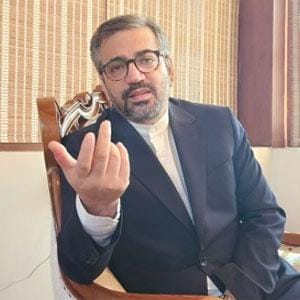
The seven-page letter, dated April 29, 2026, was written by Adv. R. Sudha, who represents the Mayiladuthurai constituency in the Lok Sabha and is a member of the Indian National Congress. A practicing lawyer herself for 26 years at the Madras High Court, she called April 27, 2026 — the date of Mr. Perarivalan's enrollment — a "Black Day in the judicial history of our great nation."
"I pen this letter not with ink, but with the blood and rage of every right-thinking lawyer and a conscientious person from every corner of this nation," Ms. Sudha wrote.
A Conviction That Defined an Era
Mr. Perarivalan, now 54, was 19 years old when he was arrested in connection with the suicide bombing carried out by the Liberation Tigers of Tamil Eelam at an election rally in Sriperumbudur, near Chennai, on May 21, 1991, that killed Mr. Gandhi and 15 others, including police personnel. Prosecutors said he had procured components — specifically, two nine-volt batteries — used in the explosive device. He maintained that he had no knowledge of their intended use.
His death sentence was confirmed by the Supreme Court in 1999. He spent much of his incarceration on death row before his sentence was commuted and, in May 2022, a three-judge bench of the Supreme Court invoked its extraordinary powers under Article 142 of the Constitution to order his release, citing what it described as inordinate and unexplained delays in the disposal of his mercy petition by the Governor under Article 161.
During his imprisonment, Mr. Perarivalan completed diploma and degree programs in computer applications and literature. After his release, he enrolled in a law course at a college in Karnataka, completing it before his registration as an advocate in April 2026.
The Legal Challenge
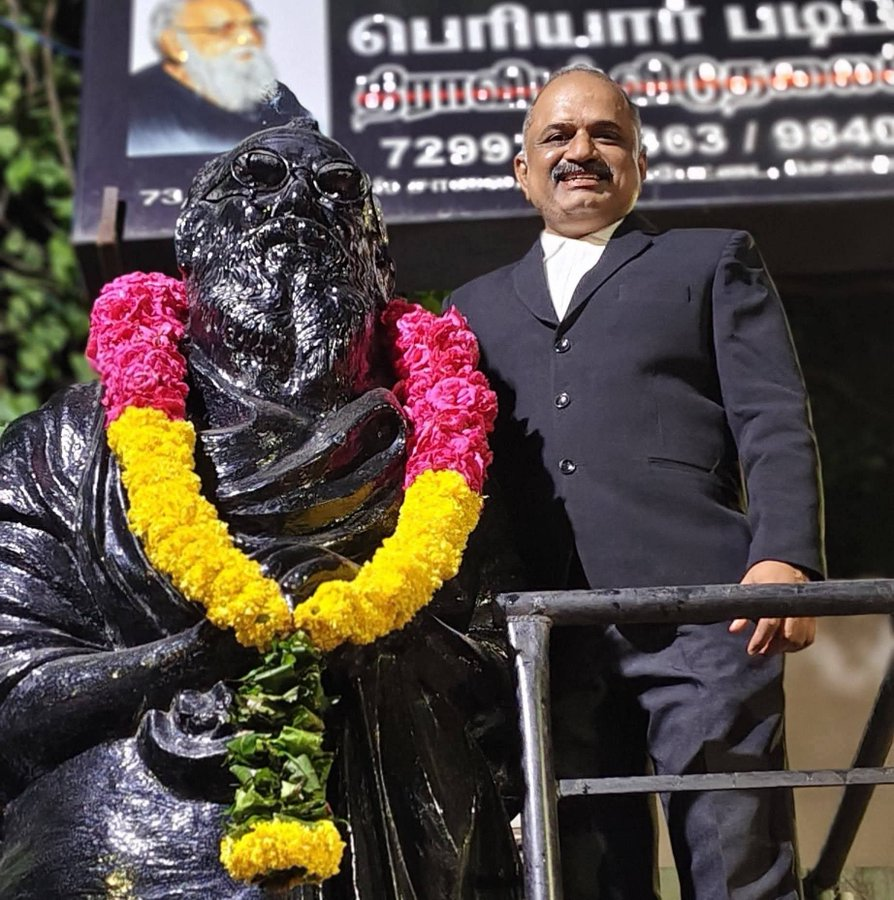
Ms. Sudha's letter raises several substantive legal objections to the enrollment.
She cited Section 24A of the Advocates Act, 1961, which disqualifies any person convicted of an offence involving moral turpitude from being enrolled as an advocate for a period of two years following release. While Mr. Perarivalan's enrollment occurred approximately four years after his release — technically beyond the statutory bar period — Ms. Sudha argued that applying the provision's letter while ignoring its spirit amounts to a subversion of the law's intent.
"Allowing the convict to be enrolled as a law student and then allowing him to be enrolled as an advocate, saying it is beyond the statutory bar period, is like cocking a snook at the prohibitory provision," she wrote.
She also raised a procedural question with significant implications: the Bar Council of Tamil Nadu and Puducherry, she contended, is currently without valid office-bearers, as elections for a new set of office-bearers have already been held and vote-counting is in progress. She questioned whether the outgoing office-bearers had the authority to conduct any enrollment ceremony on April 27.
"While the Bar Council itself is yet to be elected, how can a team which has ceased to be office-bearers conduct the enrolment function?" she asked. "What is the tearing hurry? Is it to benefit this one convict?"
Her letter further noted that a Division Bench of the Madras High Court — comprising Justice G.R. Swaminathan and Justice R. Kalaimathi — had already referred a related question, concerning the enrollment of persons with pending cases, to a larger bench. She demanded that Mr. Perarivalan's case be taken up suo motu by that larger bench, and that his enrollment be kept in abeyance pending its verdict.
Seven Demands to the President
Ms. Sudha made seven specific requests to the President, the Prime Minister, the Union Home Ministry, and other authorities. They include: suspending Mr. Perarivalan's enrollment immediately; prohibiting him from appearing before any court, tribunal, commission, or quasi-judicial proceeding; directing an inquiry into why his enrollment application was held for more than six months before being cleared in a hurried manner; and ascertaining whether the Chief Justice of the Madras High Court, Justice Sushrut Arvind Dharmadhikari, was aware at the time that Mr. Perarivalan was among those being administered the oath of enrollment.
She also cited findings of India's Law Commission, which had previously examined whether Section 24A of the Advocates Act adequately protects the integrity of the legal profession, noting that the Commission had recommended substituting the relevant provisions to better address the admission of persons convicted of serious offences.
A Question of Symbolism and Precedent
Beyond the legal objections, Ms. Sudha framed her intervention in terms of institutional symbolism. She noted that the Bar Council of Tamil Nadu and Puducherry is located approximately 50 kilometres from Sriperumbudur, where the assassination occurred — and that Mr. Perarivalan's enrollment as an officer of the court took place within the very legal system that once tried and condemned him.
"The legal profession has seen such jailed and convicted freedom fighters as V.O. Chidambaram Pillai and Chakravarthi Rajagopalachari," she wrote, invoking luminaries of India's independence movement who were also lawyers. "Allowing Perarivalan this exclusive access to state and societal resources will be disastrous as well as demoralising for youngsters entering the profession. It will be a rude shock to the families of those who were killed along with the assassination of Shri Rajiv Gandhi."
She also separately published her objections on social media in Tamil, writing that the enrollment amounted to “digging a grave for India’s sovereignty” and questioning whether the Bar Council had become complicit in what she described as a dishonor to the legal profession.
Mr. Perarivalan's enrollment drew no immediate public response from the Bar Council of Tamil Nadu and Puducherry or from the Madras High Court as of the time of publication. His supporters have long maintained that his release by the Supreme Court — after more than three decades of incarceration and a prolonged campaign led by his mother, Arputham Ammal — represents a recognition of the extraordinary circumstances of his case, including questions about the completeness of his confession as recorded by the Central Bureau of Investigation.