By M.R. Narayan Swamy
“O land that yearned for valour
O soil where Tamil pride has flourished
The land where history was born
And gave the nation its national leader (Prabhakaran)
A bronze statue of the Tamil national leader
Shall stand in the land of his birth.”
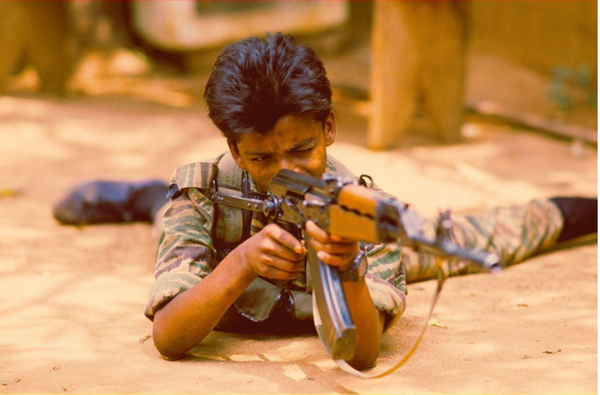
These lyrics are not from the Tamil Tigers’ liberation songs. They are from a song — believe it or not — popularized by Sri Lanka’s incumbent ruling party, whose government has now sent a young Tamil man to prison for singing a song that praised the Liberation Tigers of Tamil Eelam (LTTE).
Surprised? Here's more.
The ruling National People's Power (NPP), whose core constituent is the Janatha Vimukthi Peramuna (JVP), used many such songs at campaign rallies in Tamil-majority areas during the 2025 local government elections in an effort to appeal to Tamil sentiments and win support.
And another JVP/NPP song, went a step further:
“The ideology of the Tamil national leader is communism.
The ideology of the NPP is also communism.
Let us unite under one shared dream.”
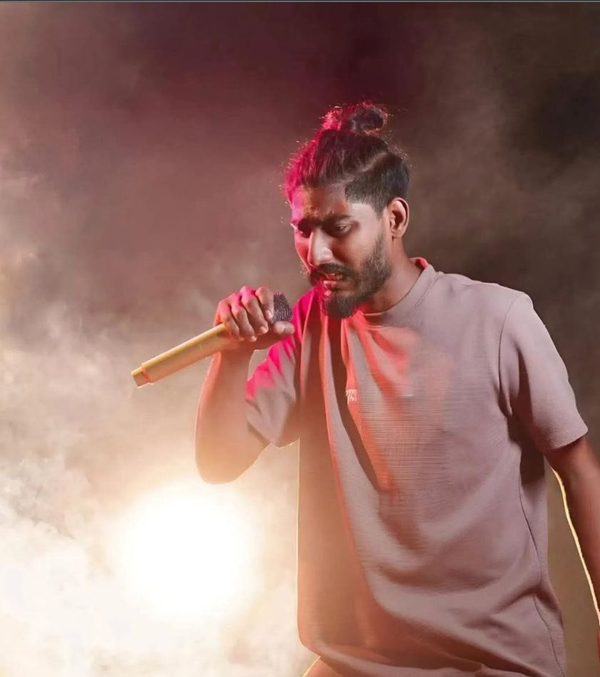
Now, fast forward to June 2 this year, when the police arrested a 24-year-old Tamil rapper, Sangeethasan Ganeskumar, better known by his stage name Hiphop Sangee, on charges of belting out a pro-LTTE song at a social event two days earlier at Chavakacheri in Jaffna.
The song, investigators say, has the potential to create disaffection among the people. The government found the charge so serious that it took Sangeethasan into custody under the draconian Prevention of Terrorism Act (PTA).
What is perhaps even more striking is that the JVP/NPP had repeatedly and explicitly promised, before its rise to power, to repeal the Prevention of Terrorism Act (PTA) — a law under which the party itself was subjected to severe repression. Enacted in 1979 by the government of J.R. Jayewardene to combat Tamil militancy, the PTA has, over the decades, been used predominantly against Tamils and, at various points, against members of the JVP as well.
Top JVP leaders, including President Anura Kumara Dissanayake, had also given public pledges when they wooed Tamil voters – and successfully at that -- that they won’t use the PTA until it is scrapped.
As Tamil activists say, it is indeed remarkable that a party like the JVP, which killed thousands of real and perceived “class enemies” during two insurrections spread over two decades, is rattled by a Tamil song that would have gone unnoticed but for the now headline-grabbing arrest and detention.
If this song did warrant such a crackdown, then, by the same logic, the PTA should also be applied — albeit belatedly — to every JVP/NPP candidate and organizer who exploited pro-LTTE lyrics and symbols during last year's local government elections in Tamil-majority areas.
Since laws are made and unmade by man, a court may uphold Sangeethasan’s arrest under the PTA – as it happened in the case of the Tamil journalist, J.S. Tissainayagam, in 2008. Tissainayagam was ultimately pardoned by President Mahinda Rajapaksa following an international outcry.
Sangeethasan, from Kilinochchi, is, of course, no Tissainayagam, who was a journalist with two decades of experience when police swooped in, and he was ultimately sentenced to 20 years in prison. So, unless there is a miracle, the young poet — who spent his birthday behind bars — can expect little legal mercy. His case is scheduled to come up for hearing on June 17.
The JVP was among the vocal political groups in support of the Sri Lankan military when it pursued a punishing war against the LTTE.
But once it won the presidential election in 2024, President Dissanayake and his colleagues moved aggressively to court the Tamil community ahead of the subsequent parliamentary elections.
The strategy, coupled with the average Tamil’s unease with established Tamil parties, gave the JVP/NPP an electoral bonanza that stunned friends and foes.
When balloting took place for local bodies in 2025, the JVP/NPP took off their gloves and went the whole hog, waving the LTTE and Prabhakaran flag while simultaneously bad-mouthing the Tamil parties – only to seek votes.
Even then, many Tamils warned that the JVP was taking Tamils for a ride.
That assessment appears to have been borne out by events. The Dissanayake government has not only failed to repeal the PTA, but has also failed to return thousands of acres of land belonging to ordinary Tamils — whose votes it successfully courted — that have been held by the military for years.
But there is widespread disquiet over the arrest of Sangeethasan. Even one of the Tamil JVP MPs, Rajeevan Jayachandramoorthy, has issued a statement that makes an oblique criticism of the poet’s detention.
Surprisingly, the other day, the police let go two sons of a former legendary LTTE singer, who was among the thousands who surrendered in 2009, after questioning them aggressively, also on charges of singing Tigers songs at a public event.
Irrespective of the legal and moral merits of the latest case, the fact is that a section of the Tamil diaspora is actively engaged in encouraging young Tamils in Sri Lanka to plunge deeper and deeper into pro-LTTE poetry. It is these singers and rappers who pay a heavy price. The pro-LTTE diaspora, as it happened during the prolonged war, remains unharmed.
Young Tamils who were not even teenagers when the war ended in 2009 and who turn lyrics praising Prabhakaran and the LTTE into memorable musical hits are invited to perform in Western cities by diaspora elements who want Sri Lanka to remain in a state of flux. These events bring the singers accolades and welcome money.
Naturally, others in Sri Lanka are induced to follow in their footsteps. None of these poets — many of whom have little personal understanding of what the LTTE achieved (and failed to achieve) — realize that pro-Tamil Tiger literature plays into the hands of an establishment that keeps whispering about a revival of the Tigers and the consequent need to maintain military camps on land belonging to Tamil people.
In that sense, the pro-LTTE diaspora is the ultimate winner. In any case, the continued arrest of Tamils under the PTA only widens the gulf between ordinary Tamil people and President Dissanayake.
This, as some JVP circles claim, is perhaps one reason behind an arrest that could have been avoided. After all, Sangeethasan too could have been interrogated and released with a warning. But someone decided to make a mountain out of a molehill.
And so, a young Tamil remains in prison under the PTA because he sang a song. Sri Lanka’s ruling revolutionaries enjoy power despite singing many more songs of the same genre. Colombo proves yet again that the PTA will remain a weapon to be selectively used against Tamils, with or without the LTTE.
Leading Tamil lawyer-cum-politician M.A. Sumanthiran, who has taken up Sangeethasan’s case, calls the JVP’s rant against the PTA when it was in the opposition and its refusal to repeal it now “a circus”.
Asked specifically about the Tamil diaspora, the former MP gives a cautious response: “I won’t directly accuse them of anything, but their influence over some of these artistes is there.
“So, that encouragement from people to whom the (Sri Lankan) law does not apply is unfortunate. They sit comfortably away and put the poor here to face the music.”