
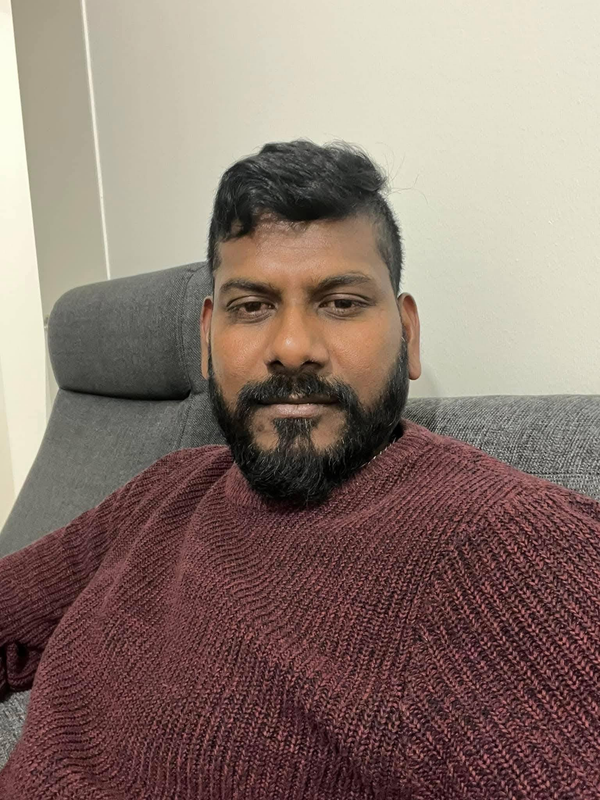
Vaithilingam Puwaneswaran, known by the nom de guerre “Kutti,” a former member of the Liberation Tigers of Tamil Eelam (LTTE) and the younger brother of senior LTTE commander Colonel Gopith, was shot and killed by French police in the northeastern Paris suburb of Bobigny on Saturday afternoon after he allegedly stabbed two neighbours and then advanced toward officers while wielding two knives, according to French authorities and community sources.
The incident unfolded at approximately 2:15 p.m. on Rue Hector-Berlioz, a residential street in Bobigny, in the Seine-Saint-Denis department — a dense, multiethnic arrondissement on the outskirts of Paris long known for its large diaspora communities. The confrontation began as a violent dispute between residents of an apartment building, which escalated rapidly when the man produced a knife and stabbed a neighbour in the shoulder.
Three officers from the Brigade anticriminalité (BAC) of Pantin were dispatched to the scene following reports of a neighbourhood altercation. Upon their arrival, the situation had already deteriorated further. Armed with two knives, the man charged toward the officers. One officer opened fire twice, striking him in the chest and hip.
Despite emergency medical treatment administered at the scene, the man succumbed to his injuries. The Bobigny Public Prosecutor's office announced that France's national police oversight body, the Inspection Générale de la Police Nationale (IGPN) — the so-called "police des polices" — had been engaged and that a formal investigation had been opened into the use of lethal force resulting in death. The two stabbed neighbours were hospitalised and were receiving treatment, according to sources familiar with the matter.
French authorities withheld the deceased's identity pending the investigation. However, sources within the Sri Lankan Tamil community in France, as well as associates who knew him personally, confirmed to Jaffna Monitor that the man was known as "Kutti" and that he was originally from Yogapuram in the Mallavi area of northern Sri Lanka's Vanni region.
He was, those sources confirmed, the younger brother of Colonel Gopith — full name Vaithilingam Chandrabalan — who served as Special Commander of the LTTE's Charles Anthony Special Regiment and was killed on 30 March 2009 during the final weeks of Sri Lanka's civil war. A third brother, Kokilan, is also known to the community.
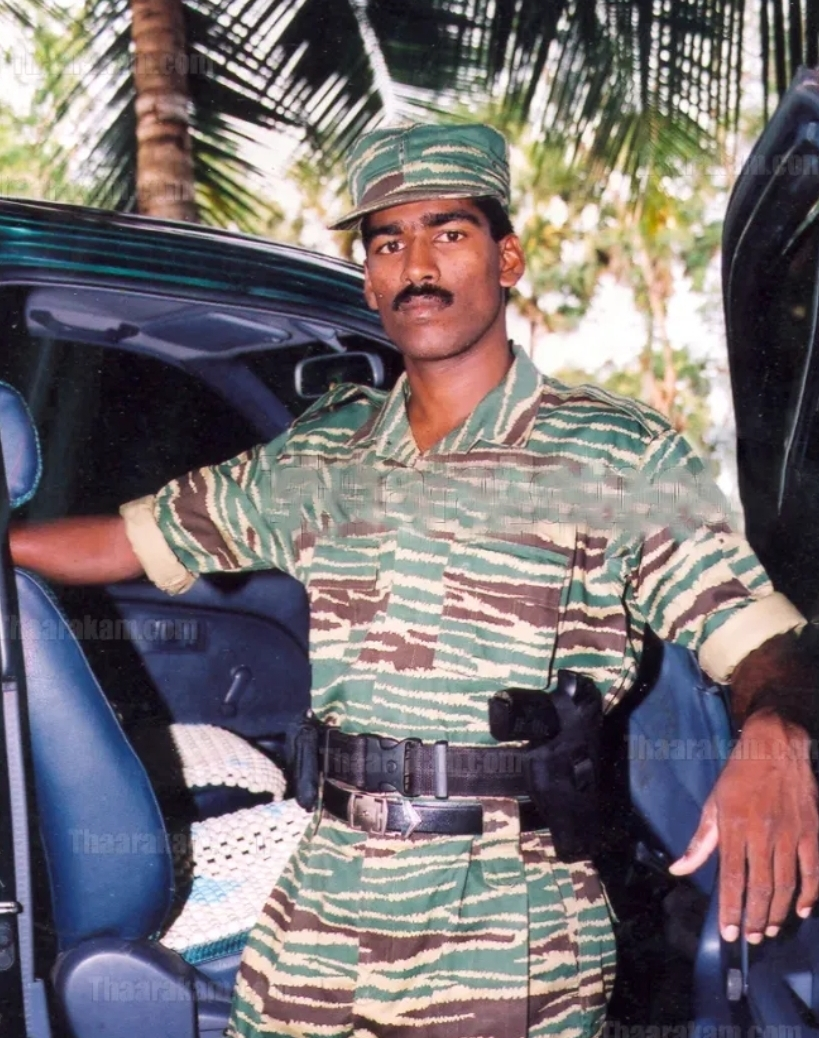
The Charles Anthony Special Regiment was the LTTE's first and oldest conventional fighting formation, established on 10 April 1991, and among the most highly trained units the Tigers fielded — with its own military academies and officer training colleges. Colonel Gopith joined the movement as a schoolboy from Mallavi at the age of fourteen and rose to become one of its senior battlefield commanders, playing significant roles in operations at Ambagamam, Kanagarayan Kulam, and across the Relentless Waves series of offensives. His death during the Ananthapuram battle in late March 2009, alongside fellow commander Amuthaab, was widely reported at the time as a demoralising blow to LTTE cadres in the war's final phase.
Kutti was himself a former LTTE member, according to multiple community sources in France who spoke to Jaffna Monitor.
The circumstances of his death have prompted difficult questions within the Tamil diaspora about the long-term psychological cost of war on those who survived it. Friends who knew Kutti in Paris described him as a quiet man. They said he had appeared to struggle in the years since the end of the conflict, and some suspected he may have been living with post-traumatic stress disorder, though no formal diagnosis has been confirmed.
Tens of thousands of Tamil war survivors and former combatants resettled across Western Europe after the LTTE's military defeat in May 2009, many carrying unaddressed trauma from years of armed conflict. Community welfare workers in France say access to culturally appropriate mental health support for this population remains severely limited.
French Media Coverage
The shooting was reported widely within hours of the incident. None of the major French outlets identified the man's Sri Lankan Tamil background, his history as a former combatant, or his connection to a prominent LTTE military figure. Coverage was framed uniformly as a police use-of-force incident arising from a neighbourhood dispute.
CNews, which broke the story from a police source at 3:35 p.m. on Saturday, reported that the man had been neutralised after threatening officers with two knives and was subsequently declared deceased. Franceinfo, the public broadcaster's digital outlet, followed at 3:50 p.m. citing the Paris Police Prefecture and the AFP wire service, reporting that the officer had been compelled to "make use of his administrative weapon, striking him in the abdomen" as the man charged toward the three officers. Police & Réalités, a specialist publication covering the French security services, provided the most granular operational account — naming the BAC unit from Pantin, identifying Rue Hector-Berlioz as the location, and reporting that one neighbour had been stabbed in the trapezius area before police arrived. The Belgian outlet L'Avenir also carried the AFP wire.
None of the French-language reporting mentioned the deceased man's nationality, his background, or any mental health context.
Reactions
The shooting drew sharply divergent responses. Within the Sri Lankan Tamil diaspora in France, many mourned Kutti's death and questioned whether lethal force had been necessary, with some raising concerns about whether officers had the tools or training to recognise and respond to a subject in acute psychological distress. On mainstream French social media, a significant portion of commentary endorsed the police action as proportionate, with discussion moving rapidly from the specifics of the incident toward broader generalisations about immigration — exposing, community members said, an undercurrent of sentiment that reliably surfaces whenever such incidents occur in the suburbs of Paris.
The IGPN investigation is ongoing. It is standard French procedure to refer all fatal police shootings to the oversight body. Jaffna Monitor contacted the Bobigny Public Prosecutor's office and the IGPN for comment; neither had responded by the time of publication.