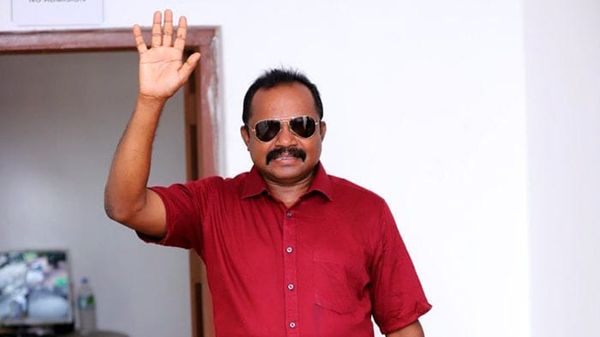
COLOMBO — Former Minister Vinayagamoorthy Muralitharan, the one-time eastern commander of the Tamil Tigers better known as Karuna Amman, has reportedly told Sri Lanka's Criminal Investigation Department that the country's former intelligence chief helped arrange and finance safe houses used by a rival Tamil paramilitary group, according to a report published by a Sinhala-language news website.
Jaffna Monitor could not independently verify the claims, as neither the Criminal Investigation Department nor Karuna Amman has commented on the reported statement.
According to the report, the statement was recorded as part of the reopened investigation into the 2019 Easter Sunday bombings, which killed 269 people. Citing investigators, it said Karuna Amman described a close working relationship between the group led by Sivanesathurai Chandrakanthan, the former Eastern Province chief minister known as Pillayan, and Maj. Gen. Suresh Sallay, the retired director of the State Intelligence Service.
Karuna Amman reportedly told investigators that the individuals who provided accommodation for Pillayan's group in the Eastern Province had been introduced by General Sallay, and that the funds used to maintain those safe houses had also been channelled through the same intermediaries. The report said Karuna Amman had produced supporting material but did not specify its nature.
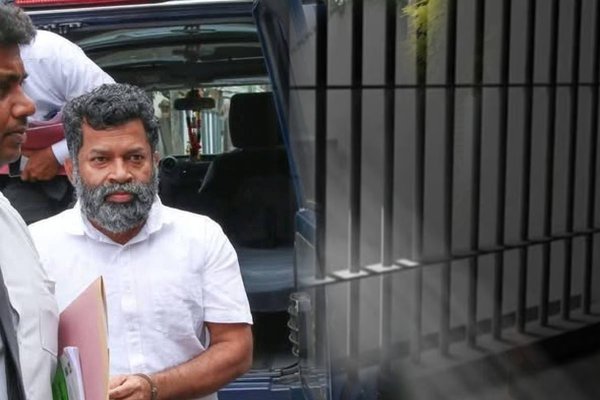
Pillayan, who was arrested in April 2025, was held for 359 days under the Prevention of Terrorism Act before being produced before a magistrate this April. He has not been charged with any offence related to the Easter bombings. The cases currently before the courts concern the 2006 disappearance of Prof. Sivasubramaniam Raveendranath, a former vice chancellor of Eastern University, and five killings in Batticaloa District in 2008. He has been remanded until July 13. As he was led from court last week, Pillayan dismissed the allegations against him, telling reporters in Tamil that they were fabricated.
General Sallay, who was arrested in February and identified by investigators as the third suspect in the Easter bombing investigation, has likewise not been charged over the attacks. He began a hunger strike in June and was hospitalized in Colombo before ending it after about three weeks. His lawyers have argued that the case is politically motivated and that the decorated intelligence officer is being humiliated. Both Sallay and Pillayan remain in custody under the Prevention of Terrorism Act — the same law under which thousands of Tamil suspects have been detained over the past four decades.
Karuna Amman and Pillayan both aligned themselves with former President Mahinda Rajapaksa, but the two men remained bitter rivals for years. Both broke away from the Liberation Tigers of Tamil Eelam during the movement's 2004 split led by Karuna Amman and became part of the Tamil Makkal Viduthalai Pulikal, which later aligned itself with the Sri Lankan state. Pillayan eventually displaced Karuna Amman as leader of the group in what former witnesses have described as an internal coup encouraged by military intelligence.
The report also said the Criminal Investigation Department had expanded its inquiry into an alleged torture facility operated by Pillayan's faction in the Welikanda area of Polonnaruwa and had recorded statements from several witnesses. Investigators were also seeking to identify individuals who allegedly supported the group's activities in Colombo, according to the report.
The line of inquiry linking the paramilitary faction, intelligence officials and the Easter Sunday suicide bombers has largely stemmed from allegations made by Hansir Azad Maulana, Pillayan's former spokesman, who is seeking asylum in Europe. His claims featured prominently in a 2023 documentary by the British broadcaster Channel 4. Investigators have said other witnesses and additional leads point in the same direction.
President Anura Kumara Dissanayake's government, which came to power promising a fresh investigation into the Easter bombings, has repeatedly argued that the attacks formed part of a conspiracy to help return the Rajapaksa family to power. While the government has advanced that theory forcefully in Parliament, prosecutors have yet to file a single Easter-related charge against any of the principal suspects currently in custody.