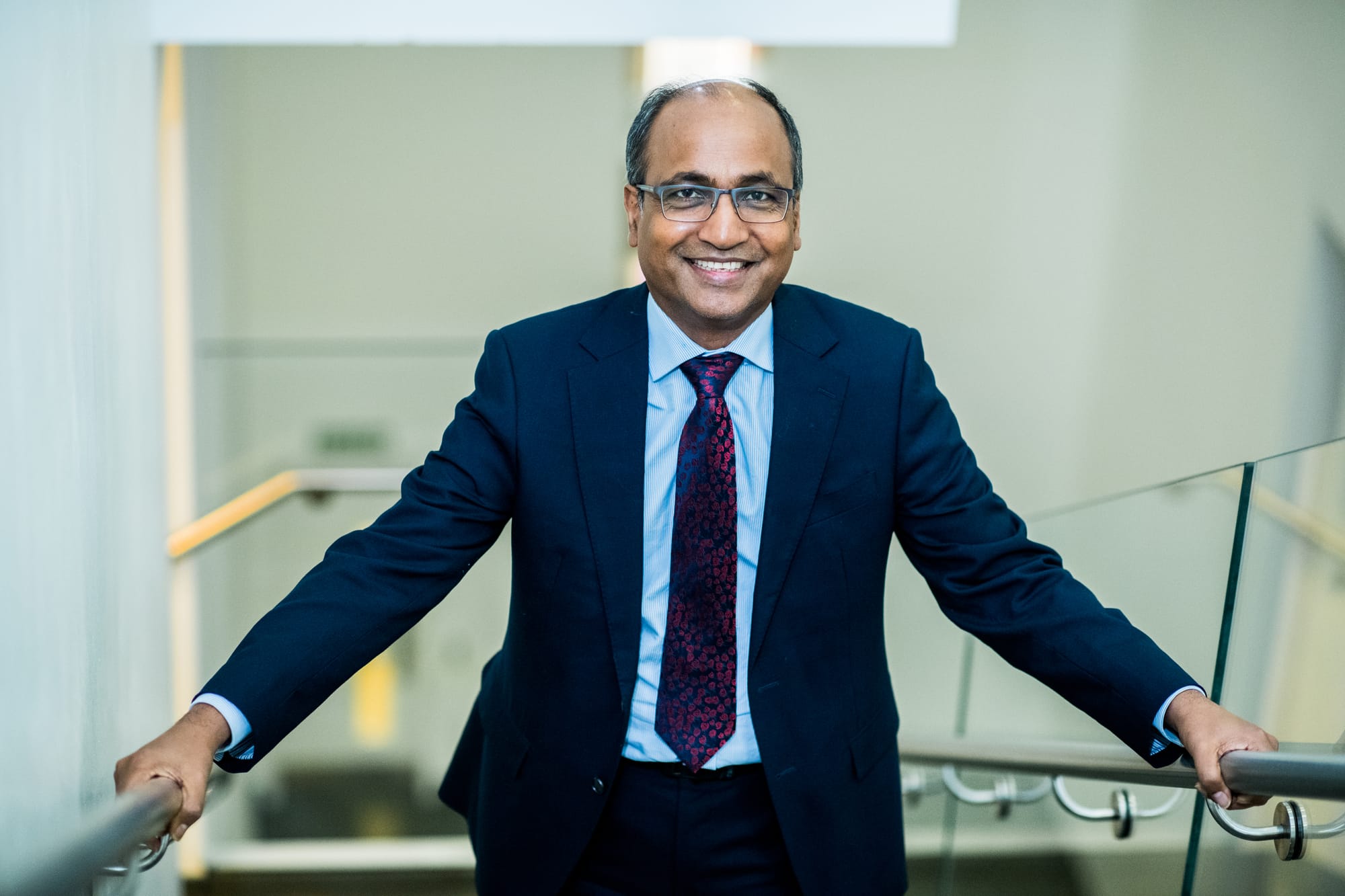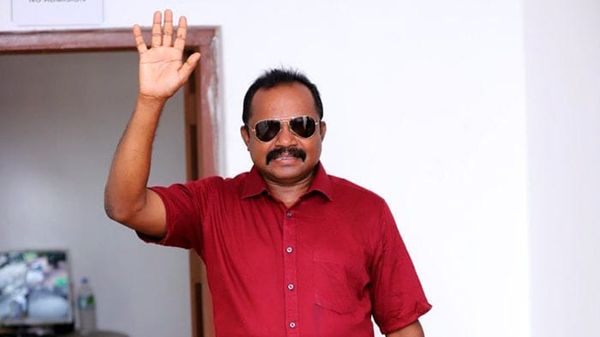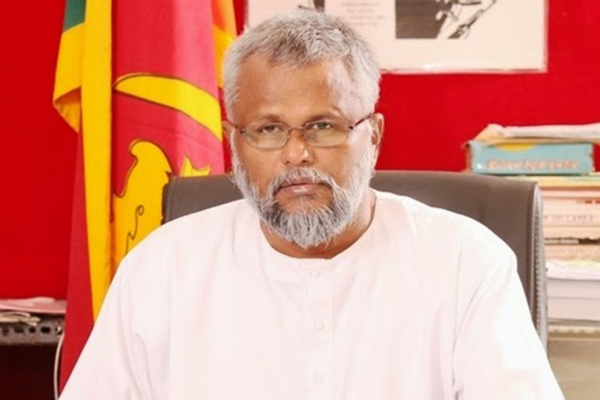
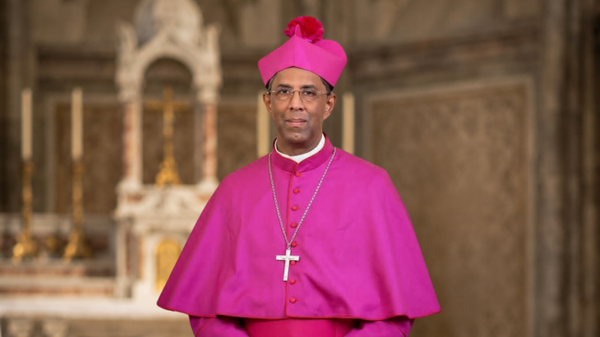
JAFFNA — The Diocese of Jaffna has a new bishop, and many within its clergy are questioning how he came to lead it. On June 29, Pope Leo XIV appointed Anton Ranjith Pillainayagam, until then the Auxiliary Bishop of Colombo and Apostolic Administrator of Batticaloa, as the next Bishop of Jaffna.
Almost immediately, northern clergy noted another aspect of the appointment. Bishop Anton Ranjith is widely regarded as a close confidant of Cardinal Malcolm Ranjith, the Archbishop of Colombo. Word of that connection spread quickly across the peninsula, deepening concerns that had little to do with his personal qualifications and much to do with what his appointment was seen to represent.
On paper, nothing was irregular. The Vatican accepted Gnanapragasam’s resignation on grounds of age, moved a serving auxiliary bishop from the titular see of Materiana to a vacant diocese, and named the outgoing man Apostolic Administrator until his successor takes canonical possession. The Apostolic Nunciature announced it in three lines.
Those three lines have reopened a wound the Catholic Church in Sri Lanka has never squarely confronted. Over the past week, in more than a dozen conversations with Jaffna Monitor, Catholic priests and lay parishioners — most speaking on condition of anonymity, citing the obedience their Church demands — described an appointment that has unsettled the clergy of the peninsula and revived an old question: who is entitled to speak for the Tamil Catholic, and to whom.
None of them questioned the new bishop’s competence. “He is well educated, he is a good priest, he is more than capable,” one senior Jaffna priest said. “The question is not whether he is worthy. The question is why, in a diocese with a dozen able sons of its own soil, Rome had to fly a shepherd up from Colombo.”
The unease is not universal. As the criticism spread, priests and prominent lay Catholics in both Jaffna and Colombo pushed back, some of them sharply, insisting that a papal appointment is a matter for faith and obedience, not grievance.
A Jaffna son, a Colombo career
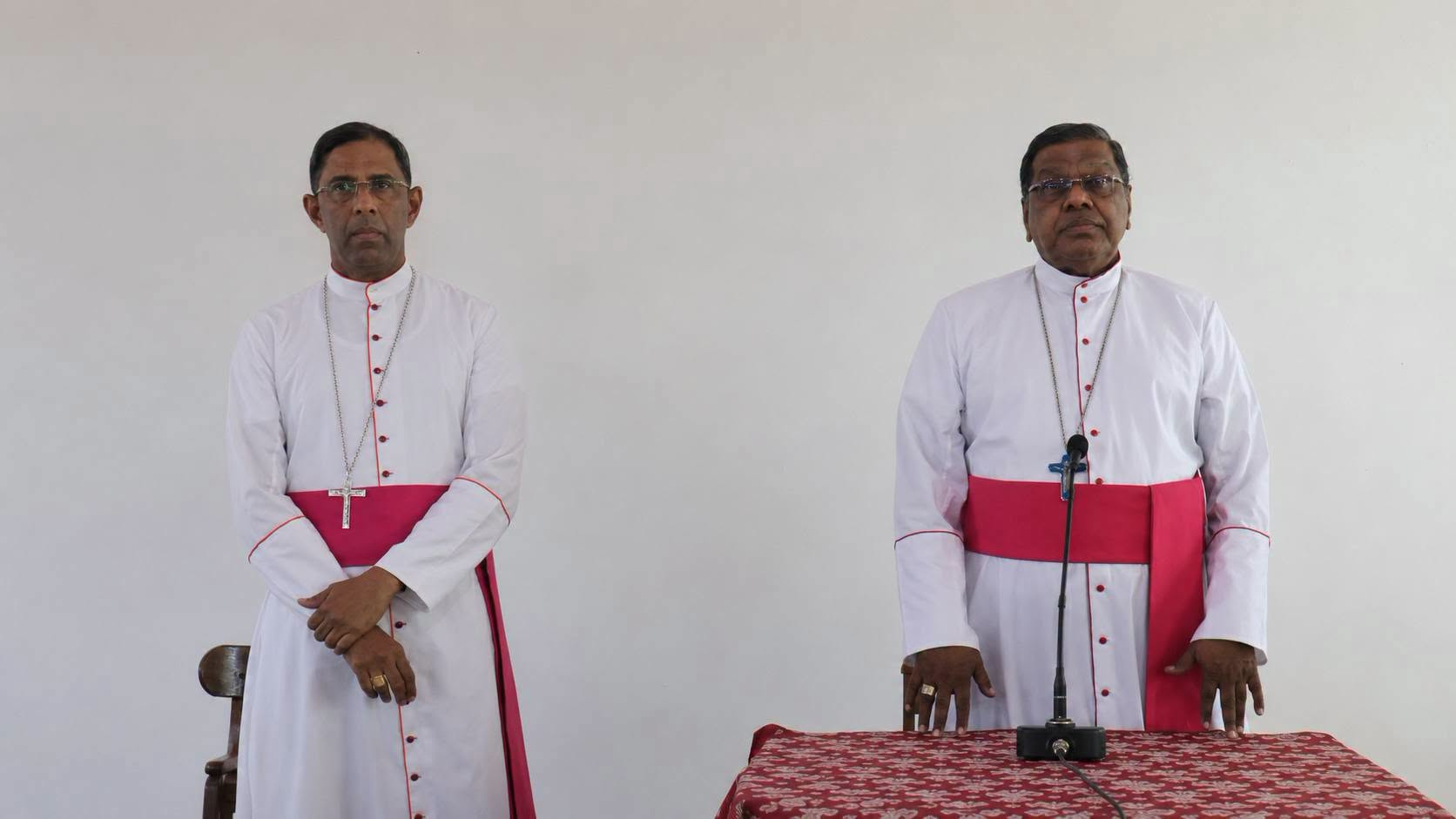
Anton Ranjith is not, by any measure, a stranger to the north.He was born on Sept. 23, 1966. In a 2020 interview with the Vatican-linked agency AsiaNews, given shortly after Pope Francis appointed him auxiliary bishop of Colombo, he said he was born in Karampon, a small island village off the Jaffna Peninsula that has produced several successive Bishops of Jaffna. He was baptised in Jaffna and belongs to Sri Lanka’s Tamil community. He has a twin brother. After his father’s death the family moved briefly to Colombo before returning north, where he attended St. Patrick’s College in Jaffna, one of the region’s most prominent Catholic schools and a training ground for much of its clergy and leadership.
From there, his path diverged from the men who have led the diocese. By his own account, the then-Bishop of Jaffna refused him permission to attend university three times; rather than give up, he and four fellow seminarians left the Jaffna seminary and enrolled at the University of Jaffna, where he earned a degree in mathematics. When he was ordained a priest in September 2000, it was not for the Diocese of Jaffna. It was for the Archdiocese of Colombo.
The rest of his career belonged to the capital. He served as vice-rector of St. Joseph’s College in Colombo, has directed the Tamil Theologate — the formation programme for Tamil-speaking priests — since 2009, and became Rector of St. Sebastian’s College, Moratuwa, in 2019. In July 2020 Pope Francis made him the third Auxiliary Bishop of Colombo, under Cardinal Ranjith, who was his principal consecrator that August at St. Lucia’s Cathedral, with Gnanapragasam among the co-consecrators. He later took on the roles of Apostolic Administrator of Batticaloa and Secretary General of the Catholic Bishops’ Conference of Sri Lanka.
The Cardinal’s shadow
The sharper anxiety concerns the man the northern clergy believe put his name forward.
Several priests told Jaffna Monitor they are convinced Cardinal Malcolm Ranjith advanced Anton Ranjith’s candidacy in Rome, using the access of a prelate who has spent decades inside the Vatican. Jaffna Monitor could not verify that, and no evidence was produced. Under Church law, appointments to dioceses are the prerogative of the Pope, who acts on confidential consultation gathered by the Apostolic Nuncio and the Vatican’s Dicastery for Bishops. The process is sealed. That makes the suspicion impossible to prove, and just as impossible to put to rest.
Others say the charge misunderstands how bishops are chosen. The names that reach the Pope, they note, are shaped first not by any archbishop but by the Pope’s own ambassador in Colombo, the Apostolic Nuncio — currently Archbishop Andrzej Józwowicz, a Polish diplomat who presented his credentials only in April. It is the Nuncio who quietly canvasses bishops, priests, religious, and trusted lay Catholics, draws up a confidential list of three names with his own assessment, and sends it to the Dicastery for Bishops, which weighs it again before any name reaches the Pope.
The consultation for Jaffna would have run largely over the past two years, a stretch in which the nunciature itself changed hands. To reduce all of that to a word from one cardinal, these Catholics say, is not only unprovable but an insult to the process and to the Holy See that runs it.
His record alarms the north as much as his connections do. For much of his tenure, Malcolm Ranjith was among the most prominent Church voices against the international accountability that the Tamils have demanded for the mass killings at the end of the war.
In 2012, when Bishop Rayappu Joseph of Mannar and other clergy petitioned the United Nations Human Rights Council for an international accountability mechanism, Ranjith declared that the Catholic Church in Sri Lanka rejected such moves, calling Western efforts “an insult on the intelligence of the people of Sri Lanka.”
In 2013, he warned that “foreigners should not tell us what to do… we are not a pack of fools.” In 2014, when Catholic bishops raised the use of cluster munitions and chemical weapons against Tamil civilians with US officials, Ranjith said the Church in Sri Lanka did not support those allegations. He has defended the constitutional primacy of Buddhism, called the country “rooted in Sinhala Buddhist traditions,” and for years was closely identified with the Rajapaksa camp.
Only after the 2019 Easter Sunday bombings, which killed more than 250 people, many of them Catholics of his own archdiocese, did he become a fierce advocate of an international investigation — a reversal his critics have not let him forget.
For the priests of Jaffna, that history is the point. “How can an associate of the cardinal who stood with the state during the war years, who denied our dead and called our demand for justice an insult, now carry our grievances to Rome and to the world?” one priest asked.
Another framed it more soberly: a bishop formed entirely within the Colombo system, however sincere, may not instinctively grasp “the sensitivity of the Tamil problem” — the disappearances, the military-held land, the mass graves, and the annual remembrances, including for the war dead, in which northern priests have long and openly taken part.
The village that keeps producing bishops
The second complaint is quieter, and it points homeward: at the departing bishop and the ground he came from.
Four men have led the Diocese of Jaffna since 1950: Jerome Emilianuspillai, its first native son; Jacob Bastiampillai Deogupillai; Thomas Savundaranayagam; and Gnanapragasam. That is the church record. What a section of the clergy say the mitre has a habit of returning to the same small, interrelated world off the Jaffna coast — to one village above all — arriving there through blood, familiarity, and a quiet word in Rome rather than the merit of the wider priesthood.
The village is Karampon. Deogupillai, who took the diocese in 1972, was born there; so was Gnanapragasam, who took it in 2015. Two bishops, four decades apart, from one settlement on Velanai island — a place so accustomed to sending its sons to the altar that the north calls it the “Little Vatican.” By the time Gnanapragasam was named, local papers counted seven bishops born there, along with a long line of priests and nuns.
To the priests who raise it, that is the grievance: a diocese spread across the peninsula and its islands, led again and again out of one tight parish. And here the two complaints meet, because Anton Ranjith was born in Karampon too.
“Not my will, but yours”
To many Catholics, none of this amounts to the scandal its critics describe. Bishops, they point out, are routinely sent to dioceses where they have no roots; that is the norm, not the exception. They cite Oswald Gomis, born in Kelaniya near Colombo and an auxiliary bishop of the capital for 28 years, whom Pope John Paul II sent in 1996 to lead the Diocese of Anuradhapura, a see to which he had no prior tie, before he returned to Colombo as its archbishop. Set against that, they argue, a Karampon-born Tamil educated in Jaffna is a far less foreign choice than many appointments the Sri Lankan Church has accepted without a murmur.
A candidate's hometown, one senior churchman familiar with the appointment process told Jaffna Monitor, is not a factor Rome considers. If several bishops have come from Karampon over the years, he said, it reflects the qualities of those individuals rather than the influence of the village itself. He added that new episcopal appointments in Sri Lanka almost invariably prompt objections, but such discontent usually subsides once the bishop begins his ministry. Nor, he said, does the Pope revisit an appointment after it has been made. "The Holy Father will not change it," he said. "That is not how the Church works."
That argument has found blunt expression online. In a Facebook comment, Andrew Nishanthan, a consultant vascular and transplant surgeon, wrote that the appointment was the work of the Holy Father, not of local politics or anyone’s preference, and that to suggest the Pope had merely acted on a request was to undermine the authority of the Church itself. He admitted he had favoured other names, including priests who had served Jaffna with distinction, but said personal expectation could not override the Pope’s decision, echoing Christ’s words in Gethsemane, “Father, not my will, but yours be done,” and warning that a divided Church leaves everyone poorer.
A longer reflection, circulated in Tamil under the name A. Arun, made the canonical case point by point. Citing the provision of Church law that reserves the appointment of bishops to the Pope, who freely appoints them or confirms those lawfully elected, it argued that the process — for all the human consultation it involves — is ultimately an act of spiritual discernment under the guidance of the Holy Spirit, not a contest won by influence. To call it lobbying, the writer said, misrepresents the faith, and invoked Catherine of Siena’s warning that to refuse obedience to the Pope is to refuse obedience to Christ.
The questions Rome has not answered
Set the personalities aside, and three structural questions remain — the ones that make this more than a parish quarrel.
The first is transparency. Even as the universal Church talks of synodality and listening to local churches, the process behind this appointment is entirely closed. The Vatican’s notice records a resignation accepted and a successor named, with a short curriculum vitae. There is no indication, and no mechanism to show, that the survivors of the war or the clergy of the conflict zone were consulted about the man who will now shepherd them.
The second is representation. The Sri Lankan Church is numerically dominated by Sinhalese Catholics, yet the regions the war devastated are Tamil. Priests in the north argue that bishops drawn from those communities are the surest guarantee that the national Church’s statements will reflect what is still lived on the ground: the militarisation, the seized land, the unrecovered dead.
The third is the unfinished moral reckoning of the war. Independent inquiries and United Nations reports have documented grave violations by the state and by the LTTE alike, and the national Church leadership has never given a full account of its own conduct in those years. Until it does, every appointment to a Tamil see becomes a proxy contest over whether the Church will side with the demand for truth or with the preference for stability.
One Jaffna priest reduced it to a sentence. “We do not say the new bishop is a bad man,” he said. “We ask one thing: will he stand with the mothers still searching for their disappeared children, or will he stand with the cardinal who stood with the state?”
No communiqué will answer that. The months ahead will: whether Bishop Anton Ranjith takes his place among the families at the remembrance days and presses the north’s case in Rome, or governs as the careful, quiet administrator his admirers describe. For now, the diocese is receiving its new bishop and watching to see which way he turns.