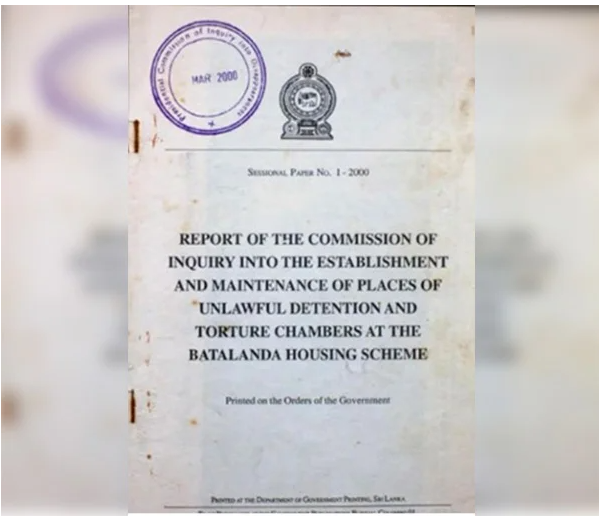
COLOMBO — One year after Sri Lanka’s Attorney General received the Batalanda Commission report — detailing torture chambers, extrajudicial killings and enforced disappearances during the government’s suppression of the Janatha Vimukthi Peramuna (JVP) insurrection — no one has been charged, no prosecutorial update has been issued, and the parliamentary debate that was promised has yet to be scheduled.
The silence that has followed, political analysts say, reflects not only legal complexity but a deeper unease within the political establishment — a recognition that any serious pursuit of accountability could expose uncomfortable truths, including the JVP’s violence and killings of innocents during the same period.
The silence has drawn pointed criticism from legal observers. “The Batalanda report went to the Attorney General a year ago. Any action?” wrote Aingkaran Kugathasan, an attorney affiliated with the Ilankai Tamil Arasu Katchi, in a post on social media, adding, “The JVP knows where the skeletons are buried. The report would expose them, so it will stay buried. The ‘people-friendly’ government is pure theatre. JVP comrades know; the rest will soon find out.”
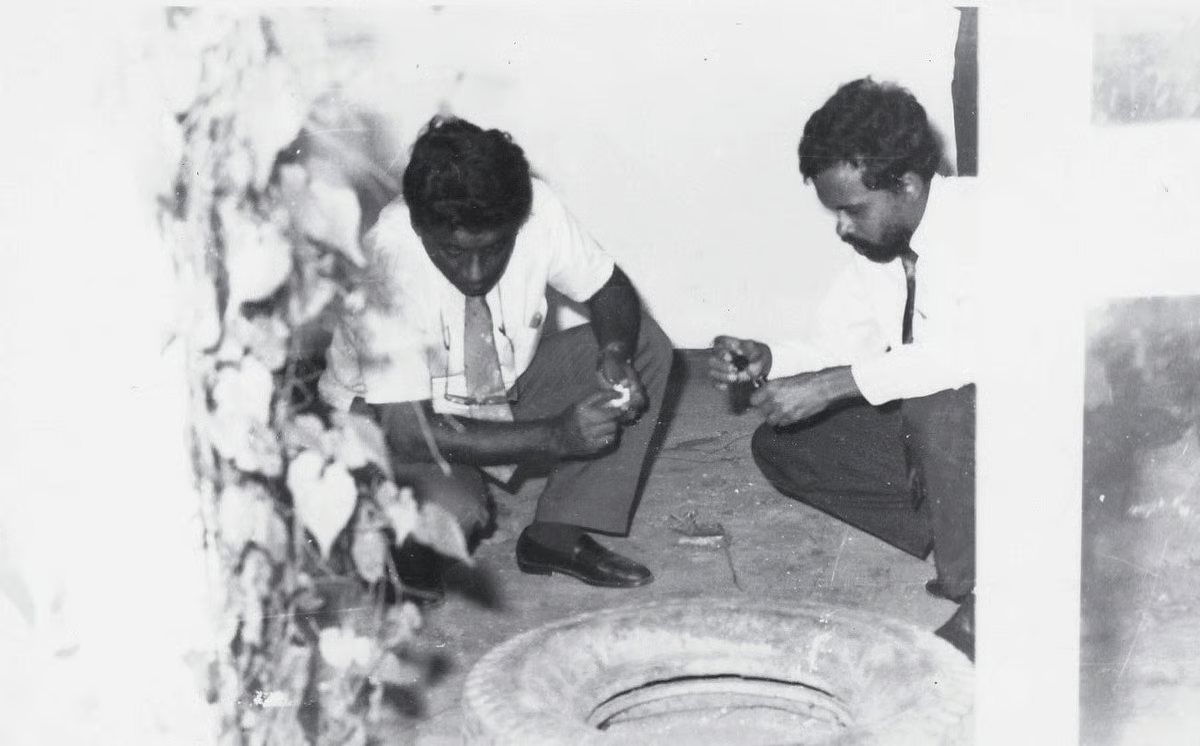
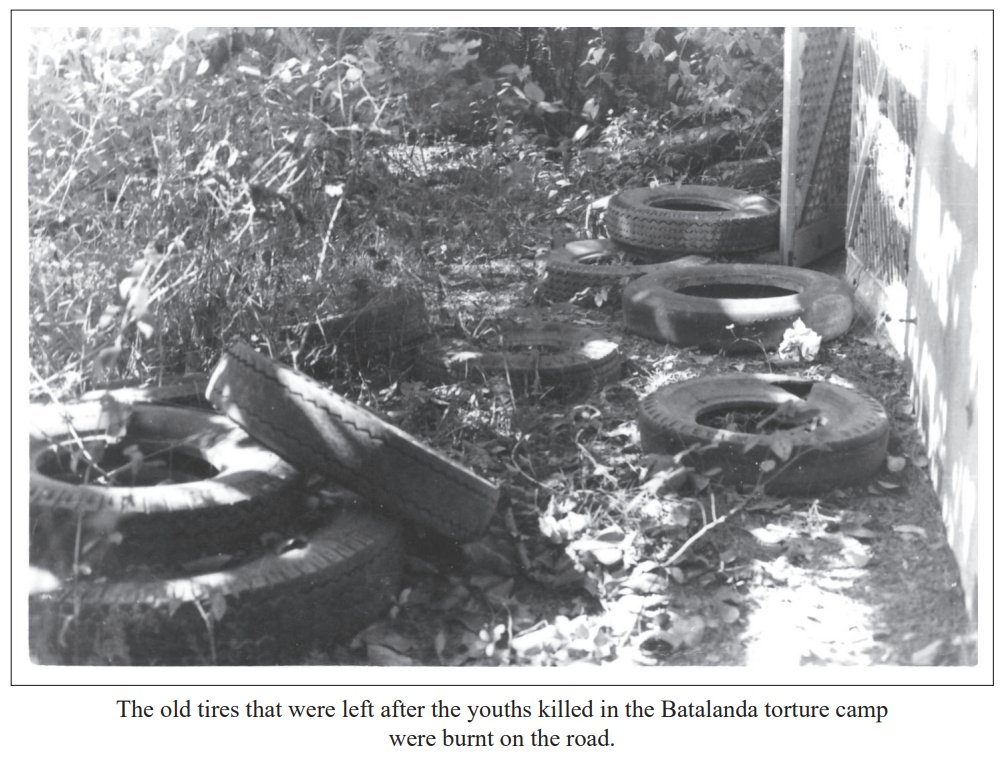
The report — compiled in 1998 after a three-year commission established by then-President Chandrika Bandaranaike Kumaratunga — documented how the Batalanda Housing Scheme in Biyagama was converted into an unofficial detention and torture site during the 1988–1990 crackdown on the Janatha Vimukthi Peramuna. The Counter Subversive Unit of the Kelaniya Police used the complex to hold, torture and kill suspected insurgents. Survivors described electric shocks, waterboarding and beatings that shattered bones. Many detainees were never seen again.
The report implicated senior police officers and, most controversially, then-Minister of Industries Ranil Wickremesinghe, finding that he had directed the allocation of the houses to police and that he "must have known" of what took place within them. It stopped short of recommending criminal prosecution, but called for further legal action.
Kumaratunga received the report in 1998, published it as a Sessional Paper in 2000 and acted on none of its findings. Wickremesinghe went on to serve as Prime Minister six times and as President from 2022 to 2024.
What Changed — and What Didn't
In an interview on Al Jazeera’s Head to Head programme in early March 2025, former President Ranil Wickremesinghe was pressed about the Batalanda Commission report. He initially denied its existence and, when challenged, argued that it lacked validity because it had not been formally tabled in Parliament.
During the exchange, a copy of the report — obtained by the International Truth and Justice Project — was held up by the former BBC correspondent Frances Harrison, bringing renewed attention to a document that had long remained in obscurity.
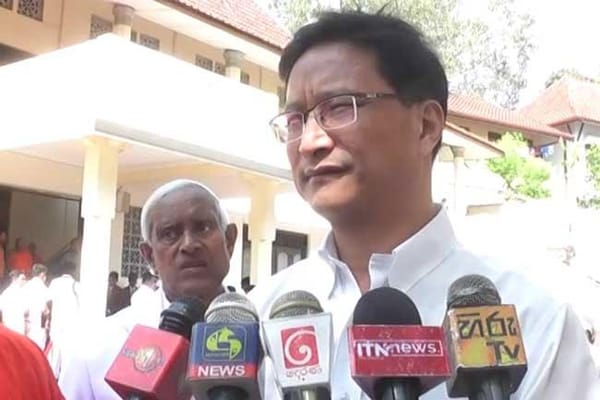
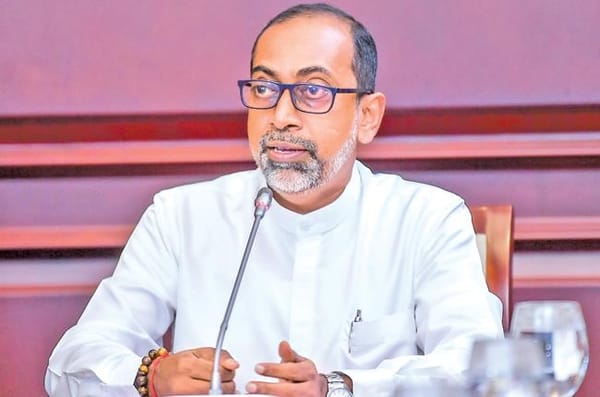
In the days and weeks that followed, the report returned to the center of political debate. Bimal Rathnayake, the Leader of the House, tabled it in Parliament on March 14, 2025, and the government indicated that it would be referred to the Attorney General for possible legal action.
During the session, several members of the ruling party appeared visibly emotional, including the Speaker, as Mr. Rathnayake read excerpts from the report detailing enforced disappearances and killings.
On April 29, 2025, the Presidential Secretariat formally handed the 208-page report to the Attorney General. By mid-May, the AG's Department had constituted a five-member legal committee, chaired by a President's Counsel, to assess whether the evidence was sufficient to initiate criminal prosecutions. The committee was asked to identify statute-barred offences and determine whether further investigations were warranted.
The committee has produced no public findings in the ten months since.
Structural Hurdles — and Political Ones
Legal analysts say the delay has both procedural and political dimensions. Under Sri Lanka’s Commissions of Inquiry Act No. 17 of 1948, bodies such as the Batalanda Commission function as fact-finding mechanisms: they may summon witnesses and receive evidence, but they do not have the authority to indict or try offenders. Any criminal prosecution arising from their findings rests with the Attorney General's Department of Sri Lanka, which exercises wide discretion over whether and when to file charges. While that discretion is not entirely unfettered, courts have recognized that no specific statutory deadline governs action in such cases, including those involving alleged state crimes.
More than three decades on, practical obstacles further complicate the task. Witnesses are difficult to trace, and any surviving evidence must meet the standards required in a criminal court — a threshold that is often hard to satisfy in cases of this age.
There is also a structural limitation specific to the Batalanda Commission. It was appointed under the 1948 law, rather than the Special Presidential Commissions of Inquiry Law No. 7 of 1978, which has in the past been used to support legislation imposing civic disabilities on individuals named in commission findings. As a result, the Batalanda report cannot, on its own, serve as a legal basis for stripping civic rights; any such move would require separate legislative or constitutional action.
“Tabling the report was procedurally significant but legally limited as far as civic-rights consequences are concerned,” said a Colombo-based constitutional lawyer, who spoke on condition of anonymity. “If the government intended to pursue that route, it could have moved quickly to establish a new special presidential commission after the referral to the Attorney General. It has not.”
The Question the Government Cannot Easily Answer
President Dissanayake leads the Janatha Vimukthi Peramuna, the party whose members were tortured at Batalanda — but also the party whose military wing killed thousands of civilians, politicians, academics and trade unionists during the same 1987–1990 period. Estimates of the total death toll from the insurrection range from 35,000 to more than 60,000, with the majority attributed to state forces and state-backed death squads, but a substantial and documented portion to the JVP itself.
JVP leader Somawansa Amarasinghe acknowledged publicly that the party killed approximately 6,000 people during that era, including Vijaya Kumaratunga, the prominent politician and entertainer who was the husband of President Chandrika Kumaratunga. The disappearances commissions convened in 1994 received 27,526 complaints and found credible evidence of responsibility in more than 1,600 cases, implicating military officers, police, politicians — and JVP actors.
The JVP has never formally apologised, acknowledged specific crimes, or engaged with any accountability mechanism for the period.
A vigorous prosecution of Batalanda — any prosecution serious enough to reach a courtroom — would open the evidentiary record of 1987 to 1990 in its entirety. That record does not only name state actors.
“The other governments — we understood,” said Priyani, whose only brother disappeared during that period and is believed to have been killed in Batalanda. “They were the perpetrators. But this government is ours. Its inaction is nauseating.”