By M.R. Narayan Swamy
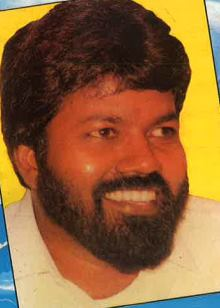
When EPRLF leader K. Pathmanabha was gunned down with 12 party colleagues (and two Indians) in Chennai in 1990, it was a clear signal that the LTTE was set to take individual terrorism to a new level even as it waged an armed struggle in Sri Lanka. Most unfortunately, the red flag was mostly ignored by the Indian state, Tamil Nadu politicians, and the larger Sri Lankan Tamil society.
Most people in the Indian establishment and among Tamil Nadu leaders viewed the cold-blooded June 19 massacre as another ill-fated fallout of the unending internecine war among Tamil militants. Despite realising the increasingly menacing nature of the Liberation Tigers of Tamil Eelam (LTTE), Indian officials saw it as one more step by the group to stamp its authority on Tamils after succeeding in forcing the Indian Army to quit Sri Lanka.
It is only when former Prime Minister Rajiv Gandhi was blown up by a suicide bomber less than a year later that the Indian state – and vast sections in Tamil Nadu – woke up to the serious perils of an exclusivist Tiger ideology. If Gandhi had not been assassinated, the LTTE would not have been outlawed in India, a move which led to long-term disastrous consequences for the Tigers.
In both incidents, the LTTE, for strategic reasons, did not claim responsibility although both were executed by its intelligence wing and had the sanction of its leader, Velupillai Prabhakaran. In Gandhi’s case, Prabhakaran and the LTTE denied their involvement more than once till the denials became self-defeating.
The Sri Lankan Tamil society, the diaspora included, was mostly so overawed by the LTTE’s successful war against the Indian Army that it could not grasp the dangers emanating from a totalitarian ideology, which treated all dissent and differences as antagonistic, to be extinguished by force. Those who actively backed the LTTE quietly applauded the deaths of Pathmanabha and others as a lesson the “traitors” deserved anyway.
Politics apart, Nabha, as the EPRLF founder and secretary general was known, did not deserve to die the way he was cut down. The massacre, like in the case of the Tamil Eelam Liberation Organisation (TELO) earlier, had a mafiosi stamp: “Look, you messed with me, so out you go!”
One of the earliest entrants into Tamil militancy, Nabha hailed from a middle-class, upper-caste family from Jaffna who was influenced by the anti-caste movement of the 1960s even as a teenager. His gravitation towards militancy was slow, becoming a part of his thinking after the violent police crackdown on the Tamil conference in Jaffna in 1974. His journey to London for higher studies led him to firmly embrace Marxist ideology. He was among the Tamils who underwent weapons training from Palestinians in the late 1970s after joining the Eelam Revolutionary Organisation of Students (EROS).
Nabha’s work with friends in Batticaloa and Amparai following the terrible cyclone of 1978 helped him and the EPRLF he founded in 1981 to establish a firm footing in eastern Sri Lanka. This served his outfit for a long time. Although his vision to work with secular leftists in Sri Lanka did not succeed, he believed firmly that India, with its anti-imperialist posture, had legitimate interests in South Asia. This wasn’t liked by all Sri Lankan Tamils, but he didn’t care; he was happy it matched the thinking of Palestinians, Sandinistas in Nicaragua, and the African National Congress.
All those Nabha interacted with found him humble, soft-spoken, a patient listener, and rooted in socialist ideas. He opposed individual terror as well as attacks on other ethnic or religious groups. This is why he denounced the massacre by the LTTE of Buddhist devotees in Anuradhapura in 1985, although the EPRLF was then in an alliance which included the Tigers, TELO and EROS. This is also why he was embarrassed when overzealous EPRLF cadres abducted an American couple in Jaffna in 1984 after branding them CIA agents.
When the LTTE almost wiped out the TELO in 1986, hundreds of fleeing TELO members took refuge with the EPRLF. The EPRLF’s armed wing was then led by Douglas Devananda (who would later break away), although it was no match for the LTTE’s firepower. The EPRLF itself came under attack from the Tigers later that year. In March 1987, the LTTE shot dead scores of EPRLF members it held as prisoners after unknown men attempted to assassinate the LTTE’s Jaffna commander, Kittu.
Although India first ignored the EPRLF and other groups in favour of the LTTE while trying to form an interim administration in Sri Lanka’s northeast after the 1987 India-Sri Lanka Accord, Nabha readily shook hands when New Delhi later turned towards his outfit after war erupted between the Indian military and the Tigers.
When Indian officials urged the ERPLF to take the lead role in Provincial Council elections, he wanted the Tamil United Liberation Front (TULF) to take that place. It is only after its leader, Appapillai Amirthalingam, refused, more because his senior colleagues did not want to offend the Tigers, that Nabha took the plunge. He argued that the Provincial Council was the first concrete political gain for the Tamils, and the opportunity should not be squandered away. Many who blasted him as an Indian stooge then are today clamouring for the same Provincial Councils!
Sri Lanka’s first and last united North-Eastern provincial administration was not allowed to succeed by the Tigers and an antagonistic President Ranasinghe Premadasa. It was also the period when the EPRLF earned a negative image after some of its cadres were accused of committing crimes, including murders of real and perceived foes.
Rajiv Gandhi’s defeat in Indian elections was the last straw. As the Indian military withdrew from the northeast, the provincial administration collapsed in chaos. Nabha and the EPRLF leadership retreated to India. That is where a LTTE killer squad found them.
After the assaults on TELO and the People’s Liberation Organisation of Tamil Eelam (PLOT), the EPRLF remained the sole challenger to the LTTE’s political hegemony since the EROS faction led by V. Balakumar had bowed to the Tigers. So, the EPRLF had to go.
Was the killing of Nabha, like that of TELO’s Sri Sabarattinam, and their supporters in such large numbers really necessary? Once the Tigers married absolute nihilism, killings over even the slightest deviation became the norm. There was no pushback from the larger Tamil society.
It is not the mass murder of rival Tamils did not generate doubts in LTTE ranks. It did, but no one dared to ask questions loudly because that would have been blasphemous and dangerous. And no questions were asked when the mass of Tamil civilians in LTTE territory were put to unbearable hardships even as it became painfully clear that Eelam War IV was going to end in a catastrophe.
In later times, the Rajiv Gandhi assassination became a burden. But the LTTE remained in half-hearted self-denials. Arrogance and self-criticism don’t go together. Assassinating VIPs in Sri Lanka became a routine; each killing turned into a fine art in the canvas of bloodletting. No one warned Prabhakaran that unsatiated murderous frenzy would one day consume the Tigers themselves, not even when his ex-deputy, Mahattaya, was tortured and executed as an alleged Indian spy along with scores of supporters.
The final denouement came when the LTTE’s long-time eastern regional commander, Karuna, revolted in 2004. Another massacre followed, this time of his armed supporters, male and female – who were LTTE loyalists until recently.
When Prabhakaran was finally gunned down with his chosen men in 2009, the LTTE was devoid of friends, anywhere, to throw a lifeline. Those who spoke in its support vocally – in Tamil Nadu and in the diaspora – could only fret and fume. Once politics and diplomacy were submerged to the politics of the gun, Tamil Eelam became a mirage. Now, even a provincial government looks like a struggle. Yet, in 1987, it was offered on a platter – not to Nabha but to Prabhakaran. What an irony, what a tragedy.