By M.R. Narayan Swamy
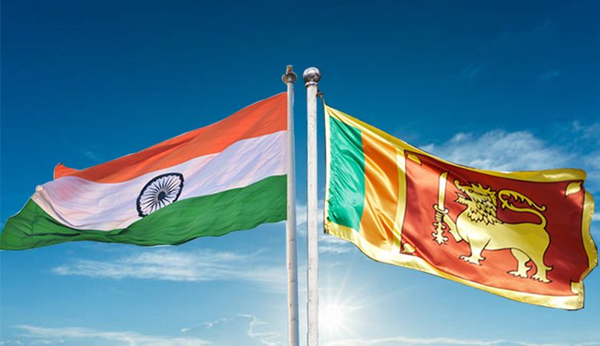
A long time ago, numerous homes in Sri Lanka’s Tamil region proudly displayed framed photographs of Mahatma Gandhi and Jawaharlal Nehru. August 15, India’s Independence Day, was also celebrated. To Tamils at large, India was as much their motherland as it was to Indians.
As Tamil militancy transformed into a full-blown insurgency in the 1980s, most Tamils fleeing Sri Lanka were relieved to take refuge first in India, thanks to geographical proximity, even if their final destination was the West.
This is why ordinary Tamils voiced such joy when India signed a pact with Sri Lanka in 1987 to end years of a Tamil separatist campaign.
The Tamil community received its first rude shock when Indian soldiers often ran amok during the long and bloody war against the Tamil Tigers. After former Prime Minister Rajiv Gandhi was assassinated in 1991, Sri Lankan Tamils saw a side of India that appeared hostile, even in Tamil Nadu, where they had always felt most at home.
As it gradually lost Tamil Nadu as its strategic backyard, the Liberation Tigers of Tamil Eelam (LTTE) began courting the West. The group opened offices in several countries, where it could mobilize support freely and raise funds for the war in Sri Lanka.
The LTTE may be history now, but Tamil political leaders and activists in Sri Lanka say they actively lobby Western countries and Japan, and that their focus is no longer solely on India.
This is more so for parties in the Tamil-majority Northern Province and the multi-racial Eastern Province, where the separatist war raged for more than a quarter century. Chinese diplomats, too, are in the game.
Tamil activists make it clear that they are not ignoring India, nor will they ever do so. But India, too, has changed its priorities in recent years, and so have global political realities.
A Tamil leader who has dealt with officials in New Delhi since the 1980s said many Tamils feel neglected by India because of the way the South Asian giant has softened its stance on developments in Sri Lanka that adversely affect Tamils.
“We still have great affinity for India and its people,” the source, who requested anonymity, told Jaffna Monitor. “No, India hasn’t given up on the Tamil community, but we can sense that it is not the same anymore.”
After years of active intervention in Tamil affairs, India took a drastic hands-off approach after the LTTE killed Rajiv Gandhi. But it played a key, even if covert, role in the later Norway-driven peace process.
Western countries have always taken a keen interest in Tamil affairs – frequently hosting think tanks and activists from Sri Lanka -- but interactions between their diplomats and Tamil representatives have become more pronounced and visible.
After a terrible cyclone battered Sri Lanka in November 2025, leaders of the Indian Tamil community living in the central hills and surrounding areas alleged neglect and discrimination in relief and rehabilitation.
When they realised that Colombo was not listening to their concerns, they vocally took up the complaints with diplomats from Canada, Japan, France, India, the EU, Switzerland, the US, and Australia.
This wasn’t about ignoring India, whose shadow always looms large on Sri Lanka and which provides special assistance for development activities in areas populated by the Tamil community.
“All the other countries are also development partners of Sri Lanka. They had to be told their assistance was not reaching our people,” a community leader said. “This was a way of putting pressure on the government.”
Also recently, Shanakyan Rasamanickam met EU representatives in Brussels and expressed concern over the state of freedom of expression, democracy, governance, as well as human rights in Sri Lanka.
A former Tamil MP said he had stopped visiting New Delhi. “I used to regularly go there earlier. No more. I am fed up.”
But he added that he visits India for personal reasons, including pilgrimages.
According to him, he and some others earlier felt happy talking to Indian leaders and officials as they seemed to be concerned about the grievances of Sri Lanka’s Tamil community.
“This does not seem to be so anymore,” he said. “It looks as if India is more worried now about bilateral relations (with Colombo) rather than Tamil issues. Maybe China is a reason. I will be happy if I am wrong.”
A few Tamil leaders accused Indian diplomats of playing favourites when prominent dignitaries fly into Colombo from New Delhi.
“Sometimes we are called to meet them, sometimes we are not invited, and we don’t know why,” said another ex-Tamil MP. “All this creates needless confusion in our minds and amongst our supporters.”
Two Tamil leaders from Jaffna complained that it had become difficult to get appointments in New Delhi. “It wasn’t like this earlier,” said one of them.
A section of Tamil political leaders who remain sympathetic to the ideology of the vanquished LTTE keep their distance from India, except when interacting with their counterparts in Tamil Nadu, the Indian state separated from Sri Lanka by a narrow strip of sea and once a hub for Tamil militant groups.
There is tremendous disquiet over the way India has kept hanging for long decades the citizenship request of thousands of Sri Lankan Tamil refugees living in Tamil Nadu.
Recently, when the Indian High Commission in Colombo hosted a farewell for a senior diplomat, only five Tamil politicians – three of them from one party – attended. “This would not have been the case earlier,” one attendee said.
About a month ago, a section of the Eelam People’s Revolutionary Liberation Front (EPRLF), which for long was staunchly pro-India, met Chinese diplomats in the eastern town of Batticaloa.
There are also Tamils who say that the distance between them and Indian officialdom is only natural for more than one reason, and that all the blame cannot be laid at India’s door.
A Tamil leader from Trincomalee said, “India is fed up with some Tamil leaders. The Indians say Tamil leaders fight with one another all the time instead of coming up with concrete proposals on issues of Tamil devolution.
“The Tamil parties only seem interested in Provincial Council elections. Once and if these are held and if they win, they will only be bothered about power,” he added. “The Indians find this short-sighted.”
But most Tamil activists admitted that nothing tangible can happen for the Tamils in Sri Lanka without India’s support and nod.
“The LTTE itself realised this towards the end,” said one of the former MPs. “If only (LTTE chief Velupillai) Prabhakaran had not antagonized India by killing Rajiv Gandhi, who knows our history may have taken a different turn.”
Even when the Norway-led peace process was underway in Sri Lanka, Western countries, as well as Japan, kept as close contact with New Delhi as they did with Colombo.
Of course, there were occasions when some Western countries tried to quietly bypass India.
Last year, the Swiss Embassy in Colombo tried to organise a meeting of Sri Lankan Tamils. It was called off following widespread criticism that the Swiss were encouraging a narrow stream within the Tamil leadership.