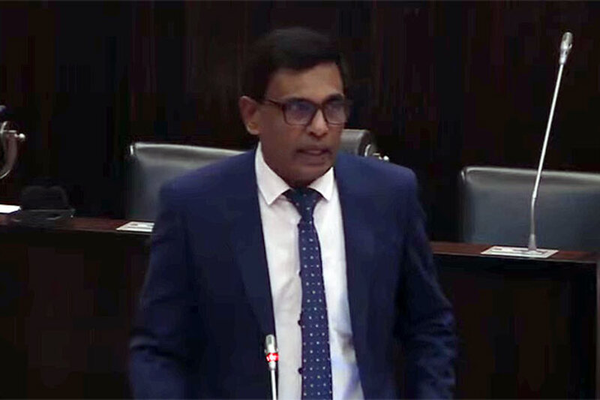
COLOMBO — Sri Lanka’s public security minister accused the country’s detained former intelligence chief on Wednesday of trying to bury evidence in the Easter Sunday bombing investigation, telling Parliament that retired Maj. Gen. Suresh Sallay had refused to surrender the passwords to an iPhone and a laptop seized by investigators.
In a special statement to Parliament, the minister, Ananda Wijepala, said investigators had confiscated a “modern Apple mobile phone” from Mr. Sallay at the time of his arrest and recovered a laptop during a search of his residence. The former intelligence chief, he said, has so far declined to provide access to either device or to permit their forensic analysis, “thereby attempting to hide the truth.”
But the minister said the refusal would not shield Mr. Sallay from scrutiny. “Through other scientific and telephone evidence, his connection to this conspiracy and its preparations has been very clearly established,” Mr. Wijepala told Parliament, according to the official record of his statement. He went further, declaring that investigators had found that Mr. Sallay had “conspired with and strategically directed Islamic extremists” in the lead-up to the attacks. The investigation, the minister said, had also concluded that Mr. Sallay identified a Catholic church as a target — the strongest official allegation to date linking the former intelligence chief to the planning and direction of the bombings.
The statement was the government’s most detailed public accounting yet of the chain of events that has placed Mr. Sallay — who led the State Intelligence Service under former President Gotabaya Rajapaksa — in Ward 42 of the National Hospital of Colombo, where the minister said he is being treated under heavy security and the close supervision of psychiatrists, physicians and nutrition specialists for the effects of a hunger strike now nearing its sixth day.
A week of legal setbacks
Mr. Wijepala said Mr. Sallay’s conduct changed markedly after the Colombo Fort Magistrate’s Court, on June 3, imposed an overseas travel ban on Mr. Rajapaksa based on statements from the witness Azad Maulana, and extended for another 90 days the detention order permitting investigators to continue questioning Mr. Sallay.
“It was only after these legal measures were taken that Suresh Sallay completely changed his approach to the investigation,” the minister said. “Beginning on the night of June 5, he deliberately commenced a hunger strike aimed at obstructing the investigation. He has also refused food brought to him by relatives.”
After Mr. Sallay’s blood sugar levels dropped, police doctors recommended hospitalization, and he was admitted to the National Hospital under heavy guard on June 7, Mr. Wijepala said.
The June 3 orders, issued by Fort Magistrate Pasan Amarasena, marked the first time Mr. Rajapaksa has been directly drawn into the Easter Sunday case. The travel restrictions also cover two former military intelligence figures — Maj. Gen. Chula Kodituwakku, a former director of Military Intelligence, and Maj. Gen. Ruwan Kulatunga, who once headed the National Intelligence Bureau. Detectives told the magistrate that the three men’s departure from the country would obstruct the continuing investigation, though the Criminal Investigation Department stopped short of naming the former president a suspect.
‘No luxury facilities’
The minister coupled the medical account with a political broadside. Suspects detained over the Easter Sunday attacks could not expect “luxury facilities” in custody, he said, and the government would not abandon its investigations because of hunger strikes or other forms of pressure. He accused “bankrupt political parties” of politicizing the case through a protest fast outside the Colombo Fort Railway Station. That demonstration, held in support of Mr. Sallay, was called off later in the day after the Fort Magistrate’s Court ordered an independent psychiatric evaluation into allegations that he had been tortured in detention.
Those allegations have been pressed most forcefully by Mr. Sallay’s own family. His wife, Manori Sallay, has written to the Inspector General of Police, Priyantha Weerasuriya, alleging that her husband was subjected to “torture, cruel, inhuman and degrading treatment” in custody. The Human Rights Commission of Sri Lanka has recorded statements from Mr. Sallay and visited him in hospital, and has summoned the investigating officers to appear before it.
“The Easter Sunday attack claimed the lives of 278 innocent civilians and injured more than 500 others,” Mr. Wijepala said. “Justice must be delivered to the victims. All those connected to this conspiracy will be brought before the courts and held accountable.”
Allegations under privilege — and the Pillayan precedent
Critics, including opposition lawmakers and legal commentators, note that Mr. Wijepala’s most damaging assertions, against Mr. Sallay, as against others before him, have been delivered from the floor of Parliament, where members enjoy absolute privilege and cannot be sued for defamation. The chamber, they argue, has become a venue for pronouncing guilt without the burden of proof, leaving the accused with no legal recourse to test in court allegations the government has yet to bring before one.
On April 8, 2025, the C.I.D. arrested the former state minister Sivanesathurai Chandrakanthan, widely known as Pillayan, at his party headquarters in Batticaloa. Two days later, Mr. Wijepala told Parliament: “There is substantial information linking him to the Easter Sunday Terror Attacks, suggesting his involvement. The investigations are ongoing. We will never allow any crime to be covered up, nor will we permit any criminal to roam free.”
In July 2025, during an adjournment debate, the minister sharpened the claim, telling lawmakers that Mr. Chandrakanthan — who was in remand custody at Batticaloa Prison at the time of the 2019 bombings — had advance knowledge of them. “We have evidence to prove that he had prior knowledge of the attacks,” Mr. Wijepala declared.
Yet when Mr. Chandrakanthan was finally produced before the Mount Lavinia Magistrate on April 2, 2026, after 359 days in detention under the Prevention of Terrorism Act without being brought before a court, no Easter Sunday charges were filed against him. The case the C.I.D. placed before the magistrate concerned only the 2006 abduction and murder of Prof. Sivasubramaniam Raveendranath, the vice chancellor of Eastern University, who vanished in Colombo at the height of the war.
The case against the former spy chief
Mr. Sallay, a close aide to former Defense Secretary and later President Gotabaya Rajapaksa, headed Sri Lanka’s Military Intelligence during the final phase of the civil war and was appointed director of the State Intelligence Service after Mr. Rajapaksa won the presidency in 2019.
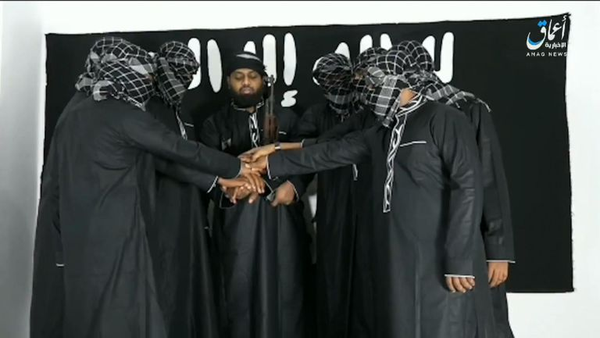
He was arrested by the Criminal Investigation Department on Feb. 25 in the Colombo suburb of Peliyagoda and is held under the Prevention of Terrorism Act on allegations of conspiracy and aiding and abetting the coordinated Easter Sunday suicide bombings of April 21, 2019, which struck three churches and three luxury hotels, killing more than 260 people. Mr. Sallay has denied all allegations. His arrest marked a dramatic reversal in a case in which he had previously appeared as the first witness for the prosecution.
The allegations against Mr. Sallay echo claims first aired internationally in 2023, when Channel 4 in Britain broadcast testimony from Azad Maulana, a whistleblower and asylum seeker, alleging links between the former intelligence chief and the Islamist bombers and suggesting that elements within the security establishment had allowed the attacks to proceed in order to influence the 2019 presidential election in Mr. Rajapaksa’s favor. Mr. Sallay has repeatedly rejected the allegations, maintaining that he was in India undergoing military training at the time of the attacks.
Mr. Wijepala concluded his statement by broadening the focus beyond Easter Sunday. Inquiries were also underway, he said, into alleged abuses of public funds, the killing and disappearance of journalists, and other unresolved crimes of previous administrations — investigations he pledged would proceed without political interference until those responsible were brought before the courts.
It was a sweeping promise, delivered from the one podium in the country where promises carry no legal consequence. And so the Easter Sunday investigation arrives at its essential question — one now posed, with a certain weary irony, in Colombo’s legal circles: when the charge sheet against Mr. Sallay finally reaches a courtroom, will it concern Easter Sunday at all? Or will a year of thunderous parliamentary certainty quietly resolve itself, as it did with Pillayan, into a different crime from a different decade?