

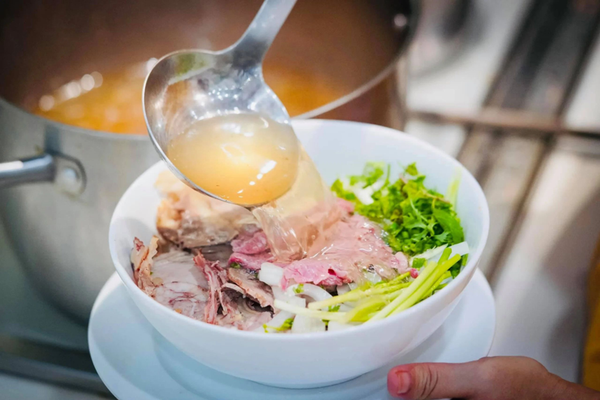
“If one morning dish were chosen to represent three cities across Viet Nam's three regions, Hanoi would be Phở, Hue would be Bún bò giò heo, and Ho Chi Minh City would be Hủ tiếu” - Professor Trần Quốc Vượng
Deeply rooted in Viet Nam's rice-farming civilisation and passed down through centuries, phở (noodle soup) has travelled with the Vietnamese people across five continents and earned its place among the world's most beloved dishes. Though the dish has evolved and taken on countless variations over time, the secret to a truly authentic, richly flavoured bowl remains a story full of meaning. The journey of phở is, at its heart, the journey of preserving and celebrating the very soul of Vietnamese culinary culture.
Where did phở come from?
The origins of phở remain a subject of debate, with no single account yet confirmed. According to writer and researcher Nguyễn Ngọc Tiến, who has dedicated considerable time to tracing the history of Hanoi's phở, there are four prevailing theories.
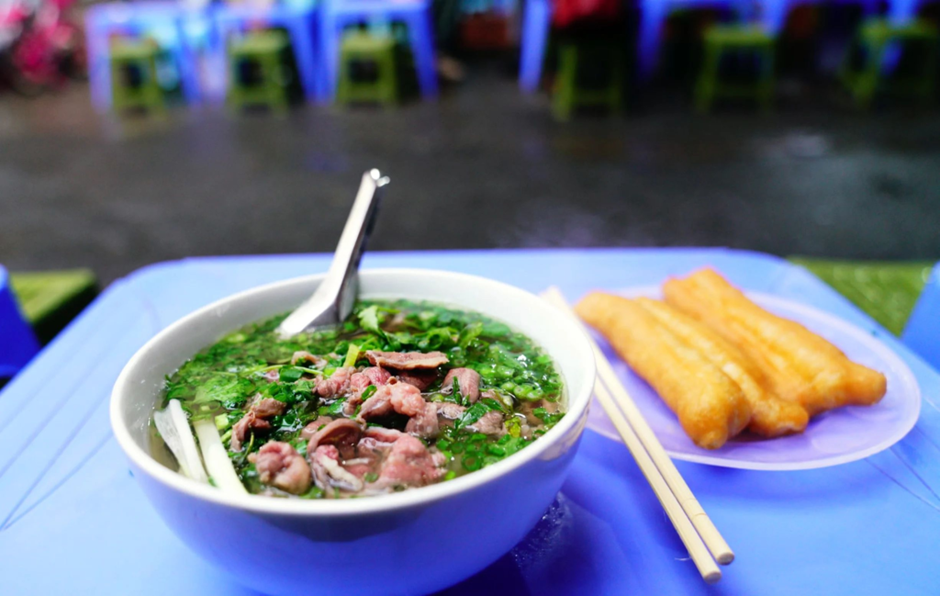
The first traces phở to a dish called bún xáo trâu, rice noodles served in a broth made from simmered buffalo bones, topped with spring onions, rice paddy herb, and a small amount of buffalo meat. This dish was sold along the banks of the Red River to dockworkers and porters. Over time, the seller replaced the rice noodles with thinly sliced steamed rice rolls, then swapped buffalo meat for beef, which was cheaper and more abundant as the French were raising large herds of cattle in Ba Vi. The rice rolls were later made thicker, gradually taking the form of the flat rice noodles used in phở today.
The second theory links phở to the French beef stew pot-au-feu, the word feu meaning “fire”, said to have originated around 1894 at the De Lanessan Hospital, now Military Hospital 108, where cooks prepared the dish to nourish wounded French soldiers. However, this theory is not considered fully convincing, as pot-au-feu is cooked with root vegetables such as carrots and turnips, making it quite different from phở.
The third theory places the origins of phở in Van Cu village, Nam Dinh, in the late 19th century. Nam Dinh was then home to Viet Nam's first textile factories, and locals from Van Cu are said to have sold a dish of softened rice paper cut into strips, simmered in bone broth with beef, to factory workers. This theory, however, does not explain how the name “phở” came about.
The fourth theory suggests that phở derived from ngưu nhục phấn, a Cantonese dish of rice noodles served with beef in a broth seasoned with Chinese medicinal herbs. Street vendors selling this dish were said to call out “phấn ơ”, which over time was corrupted in pronunciation to “phở”.
Researcher Nguyễn Ngọc Tiến concludes that phở most likely emerged in the late 19th century, evolving from a humble working-class food sold along the riverbank into a refined dish shaped by the tastes and creativity of Hanoi's middle class.
The many varieties of phở
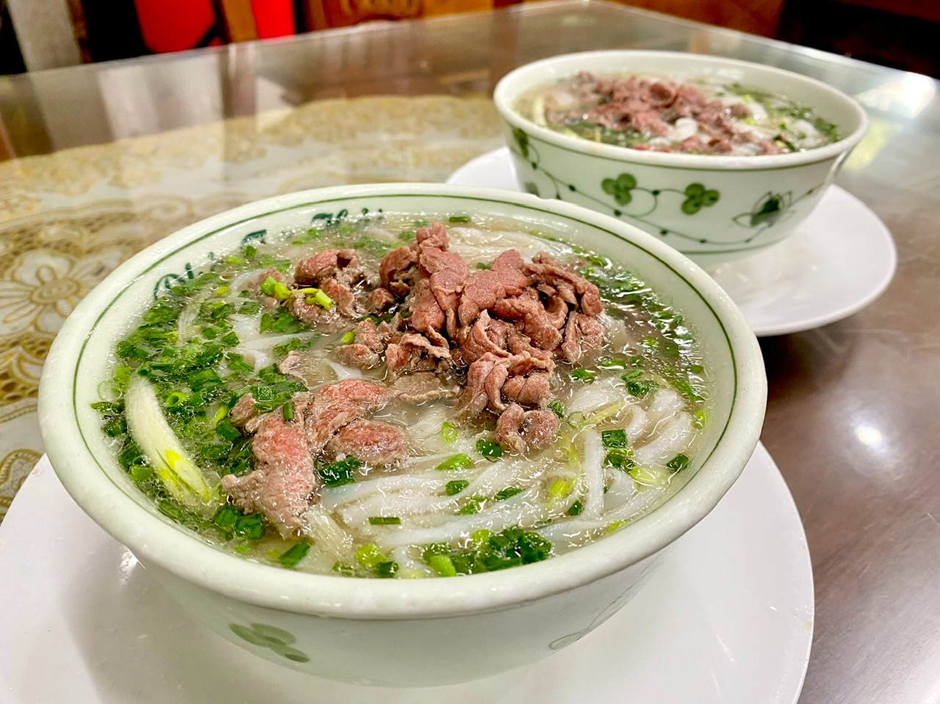
Originally, phở was served only with beef in varieties such as well-done brisket, shank and fatty cuts, before the addition of phở tái (rare beef phở). During the resistance war against France from 1947 to 1954, Hanoians who fled the city brought their phở-making traditions with them. In conditions where beef was scarce and reserved for draught purposes, phở gà (chicken phở) was born as a practical alternative, coming in many forms including whole chopped chicken, deboned chicken, sliced chicken fillet, drumstick, and various other cuts.
A bowl of phở bò (beef phở)
As Vietnamese society developed, so did the range of phở. Today, the dish is broadly divided into two categories: phở nước (soup-based phở), which includes phở bò (beef phở), phở gà (chicken phở) and phở sốt vang (red-wine braised beef phở); and phở khô (dry phở), which encompasses phở xào (stir-fried phở), phở chiên phồng (puffed fried phở), phở rán (pan-fried phở) and phở cuốn (phở rolls).
Regional tastes have also shaped the dish in distinct ways. In southern Viet Nam, the broth tends to be sweeter, and bowls are served with an array of fresh garnishes including bean sprouts, Thai basil, sawtooth coriander and thinly sliced onion, alongside beef balls, hoisin sauce and chilli sauce. In mountainous regions, phở takes on local flavours entirely, with notable examples being the phở chua (sour phở) of Lang Son and the phở vịt (duck phở) of Cao Bang.
Phở beyond Viet Nam's borders
Following the Vietnamese diaspora, phở has spread across the globe, becoming a shared symbol of Vietnamese cuisine wherever Vietnamese communities have settled, from Paris's 13th arrondissement to cities across the United States, Japan and the Czech Republic.
In September 2007, “phở” was officially entered into the Shorter Oxford English Dictionary, becoming a proper noun in one of the world's most authoritative references in the English language. Since 2011, phở has consistently featured on CNN's list of the 50 best foods in the world alongside gỏi cuốn (fresh spring rolls). In August 2022, phở was also named among the top 50 best street foods in Asia by CNN.
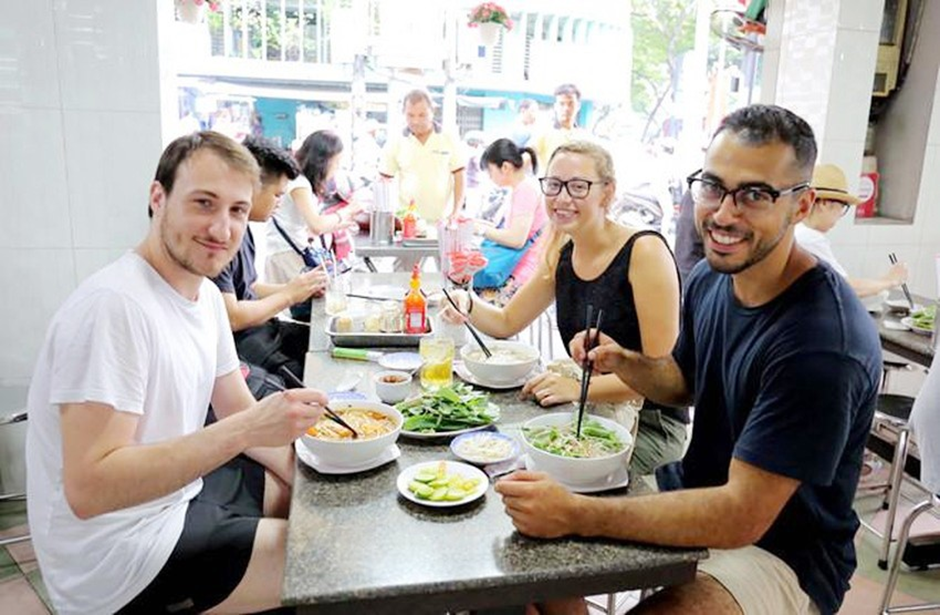
Back home in Viet Nam, phở remains the go-to choice for millions, whether for breakfast, a meal between mealtimes, or simply a craving for something hot and comforting. In Ninh Binh province (formerly Nam Dinh), entire villages such as Van Cu and Giao Cu have kept the craft of phở-making alive across generations, with families carrying their recipes across the country and around the world.
With direct flights between Viet Nam and Sri Lanka set to launch from August 2026, a steaming bowl of phở, Viet Nam's most iconic dish, is now closer than ever for Sri Lankan travellers making their first journey to Viet Nam.