

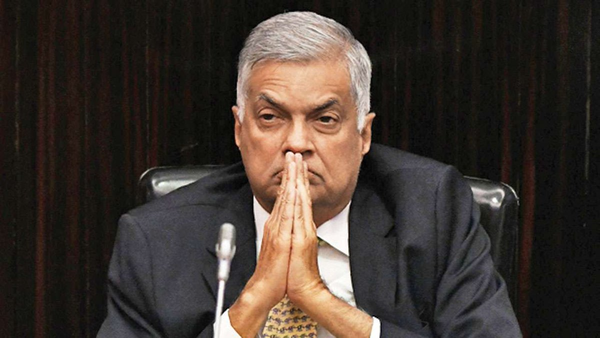
Sri Lanka’s former President Ranil Wickremesinghe issued a strongly worded statement this week on the unfolding crisis in Nepal. He condemned the police shootings in Kathmandu, the killing of the former Prime Minister’s wife, and the burning of Parliament and court buildings by Gen-Z protestors. He also warned of the role of American-owned social media platforms like Google and Facebook in destabilizing governments.
Most strikingly, Wickremesinghe ended his statement by invoking the Buddha:
“Nepal, the birthplace of the Buddha, is a unique country for Sri Lanka. Such barbaric acts cannot be tolerated in such a country. The Buddha preached to gather in harmony, discuss in harmony, and disperse in harmony. I hope that the current government in Nepal will take the ‘Satta Aparihaniya Dhamma’ preached by the Buddha as a model.”
For an outsider unfamiliar with Sri Lanka’s history, such words might suggest that the island is — or was — a Buddhist utopia where compassion, dialogue, and non-violence guided governance. Reading Wickremesinghe’s moral lecture, one might imagine a country without riots, pogroms, or mass killings — only peace and love.
The reality could not be further from that picture.
Ranil’s Record: Part of Every Regime
Critics have pointed out that, like every major politician in Sri Lanka, Ranil Wickremesinghe was part of successive governments that brutalised Tamils. He served as Minister of Education during the infamous July 1983 pogrom — far worse in scale and horror than anything Nepal is experiencing today — when thousands of Tamils were massacred, displaced, and stripped of their livelihoods in state-enabled violence.
His political career continued through other blood-soaked chapters. As Prime Minister in the 1990s and again in the 2000s, he presided over administrations during which mass killings, enforced disappearances, and widespread rights violations against Tamils became routine.
Even after the war ended in 2009, Wickremesinghe returned to power as Prime Minister (2015–2019) without advancing credible investigations into wartime atrocities, despite international commitments. Later, as President, he again failed to deliver justice. Instead, his government shielded the military establishment from accountability — leaving families of the disappeared and survivors of violence without answers, and without hope.
Preaching Abroad, Forgetting at Home
Against this backdrop, Wickremesinghe’s sermon to Nepal about Buddhist values of harmony is jarring. For communities that bore the brunt of Sri Lanka’s state-sponsored violence, his words sound hollow.
What Ranil Wickremesinghe forgot in his statement on Nepal is the truth at home: Sri Lanka has long betrayed the very Buddhist principles of compassion and harmony it claims to uphold.
Note: Opinion pieces appearing in Jaffna Monitor represent solely the views of their respective authors and should not be construed as reflecting the editorial position of the magazine.