

The War That Reached the Temple Gates: Father of LTTE Brigadier Vithusha Passes Away in Jaffna

The War That Reached the Temple Gates: Father of LTTE Brigadier Vithusha Passes Away in Jaffna


Share this post

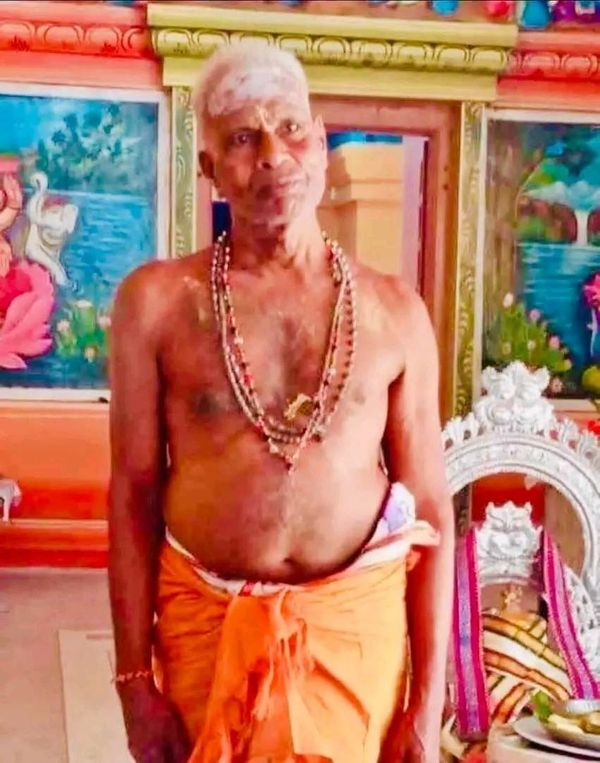
Kanthiah Kurukkal, father of late LTTE commander Brigadier Vithusha and fallen cadre Vithushan, passed away in Jaffna this week.

Hailing from a respected Tamil Brahmin family in Kappoothu, Karaveddy, Kanthiah Kurukkal lost both his daughter and son to the armed struggle. His passing has rekindled reflections on how the war reached even the most traditional families — those once devoted entirely to temple service and religious life.

Born in the Vadamarachchi region, Kanthiah Kurukkal was known for his disciplined and spiritual upbringing of his children. Yet, amid the violence and discrimination faced by Tamils during the early 1980s, both his children were drawn to the Liberation Tigers of Tamil Eelam (LTTE).

His daughter, Brigadier Vithusha, joined the movement after witnessing atrocities such as the 1985 Kumudini boat massacre. She rose through the ranks to command the LTTE’s Malathi Regiment, one of its two major women’s wings — the other led by Brigadier Thurka, commander of the Sothiya Regiment.
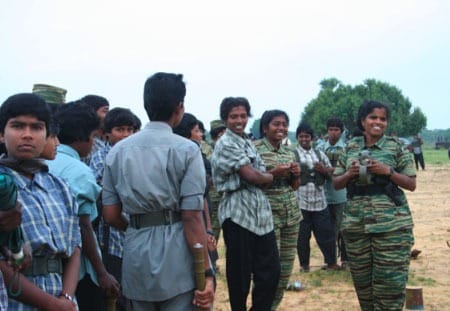
Brigadier Vithusha (right), commander of the LTTE’s Malathi Regiment, seen with her female fighters.

Kanthiah Kurukkal’s son, Vithushan, was killed in combat in 1999. A decade later, Vithusha was killed during the war’s final phase in April 2009, in what became famously known as the Battle of Aanandapuram — the LTTE’s last major attempt to fight back against the advancing Sri Lankan Army.

The Battle of Aanandapuram ended in a crushing defeat for the LTTE. The organization lost several of its top commanders, including Brigadier Manivannan, Brigadier Thurka, Brigadier Theepan, Brigadier Aathavan, Brigadier Kadafi, and many others — along with nearly 800 fighters.

It was widely seen as the LTTE’s final stand. LTTE leader Velupillai Prabhakaran was reportedly present in the area during the early stages of the battle but, after much persuasion from his senior commanders, left for the Mullivaikkal region on March 28, 2009.

A former LTTE commander told Jaffna Monitor that while Prabhakaran remained in the war zone, “the fighters’ morale was unshaken.” However, he added, “within six days of his departure, the battle was over.”

LTTE sources also state that Theepan, Vithusha, Thurka, and several other senior commanders were instructed to withdraw to Mullivaikkal, but they refused to retreat. Choosing instead to fight to the end, they remained in the Aanandapuram region, where they were ultimately killed in action.

Locals in Karaveddy remember Kanthiah Kurukkal as “the father of two maveerar (martyrs)” — a man who bore his immense grief with quiet dignity. His funeral rites were conducted in accordance with Brahmin and Tamil traditions at his son’s residence in Ponnaalai.

Many see Kanthiah Kurukkal’s life as a reflection of how the struggle for Tamil dignity and equality transcended caste and class — turning even families rooted in temple service into symbols of courage, loss, and endurance in Sri Lanka’s long and painful history of war.


Share this post

Be the first to know

Join our community and get notified about upcoming stories

Subscribing...
You've been subscribed!
Something went wrong
Why Tamil Politics Cannot Be a Pensioner's Hobby
A cut-out portrait of Judge M. Ilancheliyan from his farewell ceremony.

Why Tamil Politics Cannot Be a Pensioner's Hobby

If you trace the arc of Tamil political leadership from Independence to today, one pattern repeats with stubborn persistence: our fate has been decided almost exclusively by lawyers. From Sir Ponnambalam Ramanathan and G.G. Ponnambalam to Thanthai Chelva and Amirthalingam, and now to Sumanthiran and Gajendrakumar—the legal profession has monopolized Tamil political space for more than a century. Nothing personal against lawyers. But their craft is built on argument, narrative construction, and


Kaniyan Pungundran

Kaniyan Pungundran

Jaffna Swami
Picture produced using GPT-4 https://chat.openai.com

Jaffna Swami

Translated from the original Tamil short story yāḻppānaccāmi  (யாழ்ப்பாணச் சாமி)  by Shobasakthi. The original story is available at his website. If you have any questions or feedback, please contact ez.iniyavan@gmail.com. This story is not about the Aruḷampalam Swami who was immortalized in song by the great Tamil poet Bharathiyār, calling him the eye of the world and the enlightened vessel that delivers sinners from their suffering. I am about to tell you the story of a different Jaffna Swami


Eḻuttukkiṉiyavaṉ

Eḻuttukkiṉiyavaṉ

WE ARE SORRY

WE ARE SORRY

Editorial Thirty-Five Years of Silence, Thirty-Five Years of Shame On October 30, 1990 — thirty-five years ago — the Liberation Tigers of Tamil Eelam, with we Tamils as mute spectators, committed an atrocity that erased whatever moral or ethical ground our struggle once stood upon. In an orchestrated act of ethnic cleansing — not in scale, but in spirit comparable to the mass expulsion of the Rohingya from Myanmar; reminiscent of the 1948 Palestinian Nakba; echoing the forced displacement of


Kaniyan Pungundran

Kaniyan Pungundran

No Minority Politician Can Solve Ethnic Issues Without the Trust of the Majority: Faiszer Musthapha
Faiszer Musthapha

No Minority Politician Can Solve Ethnic Issues Without the Trust of the Majority: Faiszer Musthapha

At Jaffna Monitor, we believe that meaningful conversations about ethnic representation, national unity, and pluralistic governance are essential for Sri Lanka’s democratic future. For decades, ethnic politics has shaped — and often fractured — the country’s political landscape and the fate of its people. Yet critical questions remain unanswered: What is the most effective path for minority communities to secure their rights and interests? Should minority leaders work within majority-led nationa


Jaffna Monitor

Jaffna Monitor