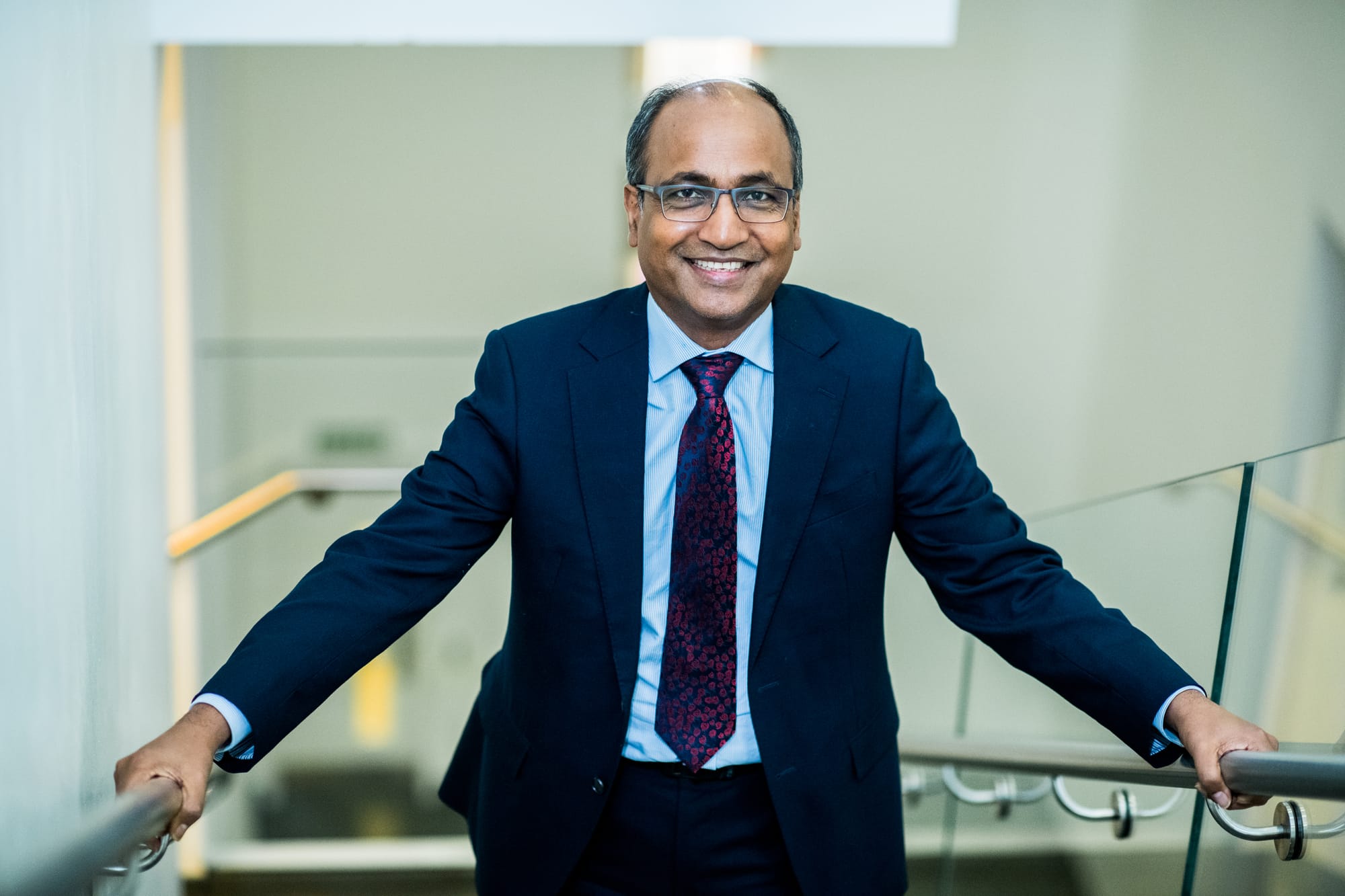
Professor Mahesh Nirmalan MD, FRCA, PhD, FFICM
University of Manchester, UK
Sri Lanka, is a nation shaped by paradoxes at every level. In 1819 missionary and future Bishop of Calcutta Reginald Heber captured this paradox in his poem as
“What though the spicy breezes
Blow soft o'er Ceylon's isle,
Though every prospect pleases,
And only man is vile”
Despite the colonial prejudices that are evident in the above words, the verse does capture the paradoxes of Sri Lanka which stand true to this day. The aspersion Heber casts on the native Sri Lankan, can be argued to be true of all human societies in general – divided, tribal, self-centred and potentially capable of extreme violence and cruelty to the ‘other’. As a small island located at the crossroads of major maritime trade routes and regional rivalries it has considerable geopolitical significance disproportionate to its size. It is also a society marked by significant internal divisions - linguistic, religious, and cultural, which boiled over as a 30-year war that influenced its political and developmental trajectories. In this context, understanding the challenges of governance and guiding it towards sustainable development, requires a vision beyond simple linear economics. The country’s trajectory will clearly be determined by the interaction of geopolitical pressures - regional and beyond, internal fragmentation, development dependency, diaspora dynamics, and the search for sovereign economic pathways. At the heart of these challenges lies a deeper question on whether Sri Lanka can align its diverse identities into a shared national vision sufficient to withstand external pressures from an increasingly contested world willing to exploit internal fault lines.
Sri Lanka’s strategic location in the Indian Ocean has always defined its external reality. Situated along critical maritime routes linking East Asia, the Middle East, and Europe, it occupies a position of disproportionate importance in global trade and security. This draws Sri Lanka into the gravitational pull of two major powers: India and China which holds the country as a ‘prisoner of geography’. China’s infrastructure investments while promising economic opportunities will carry concerns relating to debt-traps and long-term strategic influence. India, driven by geographical proximity and historical ties, remains invested in Sri Lanka’s stability and wary of competing influence from China. Both powers have - and are willing to deploy, the necessary tools to exacerbate or ameliorate internal differences in order to pull the country in directions that are beneficial to their Regional aspirations. If one adds to this already complex milieu the American interests in curtailing the influence of China in the region, the foreign policy challenges increase many fold over. Sri Lanka must therefore engage with these three powers while fiercely preserving its sovereignty. This external constraint inevitably shapes internal policy choices, linking development decisions to geopolitical considerations.
If geography defines Sri Lanka’s external environment, its internal challenges stem from the country’s post-independence political evolution. The early years of independence offered promise, but this gradually gave way to a majoritarian political model that privileged some segments of society. Policies such as the ‘Sinhala Only Act’ making Sinhala as the sole official language of the country altered the trajectory of the state, marginalising Tamil-speaking communities and embedding identity politics into the socio-political fabric.
This marginalisation - by design, was aided and abetted by some members of the academic and professional class who went that ‘extra mile’ of distorting history to deny Tamil and Hinduism their due place in the cultural and historical tapestry of the country. The adoration of Lord Shiva as the lord of Koneswaram (Trincomalee) and Ketheeswaram (Mannar) by the Saivite saints - Sambanthar and Sundarar, from the 7th and 8th centuries AD is well documented and is beyond dispute. Furthermore, historical and archaeological findings clearly demonstrated the presence of Tamil and Hinduism as an integral part of ancient Sri Lanka. These groups however painted a version of history through a largely mono-ethnic angle: an interpretation of history where a pristine native culture was contaminated by periodic Tamil invasions from South India who had to be fought away. Such sentiments were carefully propagated by including these discourses into text books such as Kumarodhaya 2 - a Sinhala text book used in primary schools. This mindset and the consequent narratives provided the ammunition to a very parochial and orthodox Tamil Leadership, influenced by the concurrently evolving ‘Dravidian politics’ of South India, to launch their own brand of identity politics. They in turn articulated a version of history that clearly demarcated the Sinhala and Tamil societies into polarised socio-cultural-political and geographical spaces. These divisive discourses sadly distorted a truly inclusive Sri Lankan history that prevailed in the island nation for over two millennia and progressively escalated into an overt conflict that culminated in a prolonged civil war that left lasting scars across generations.

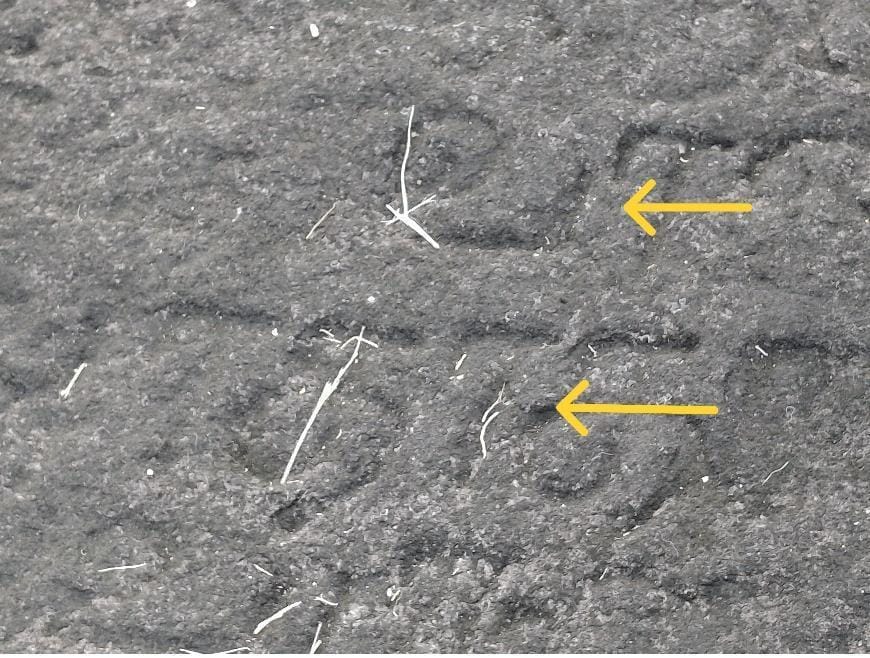
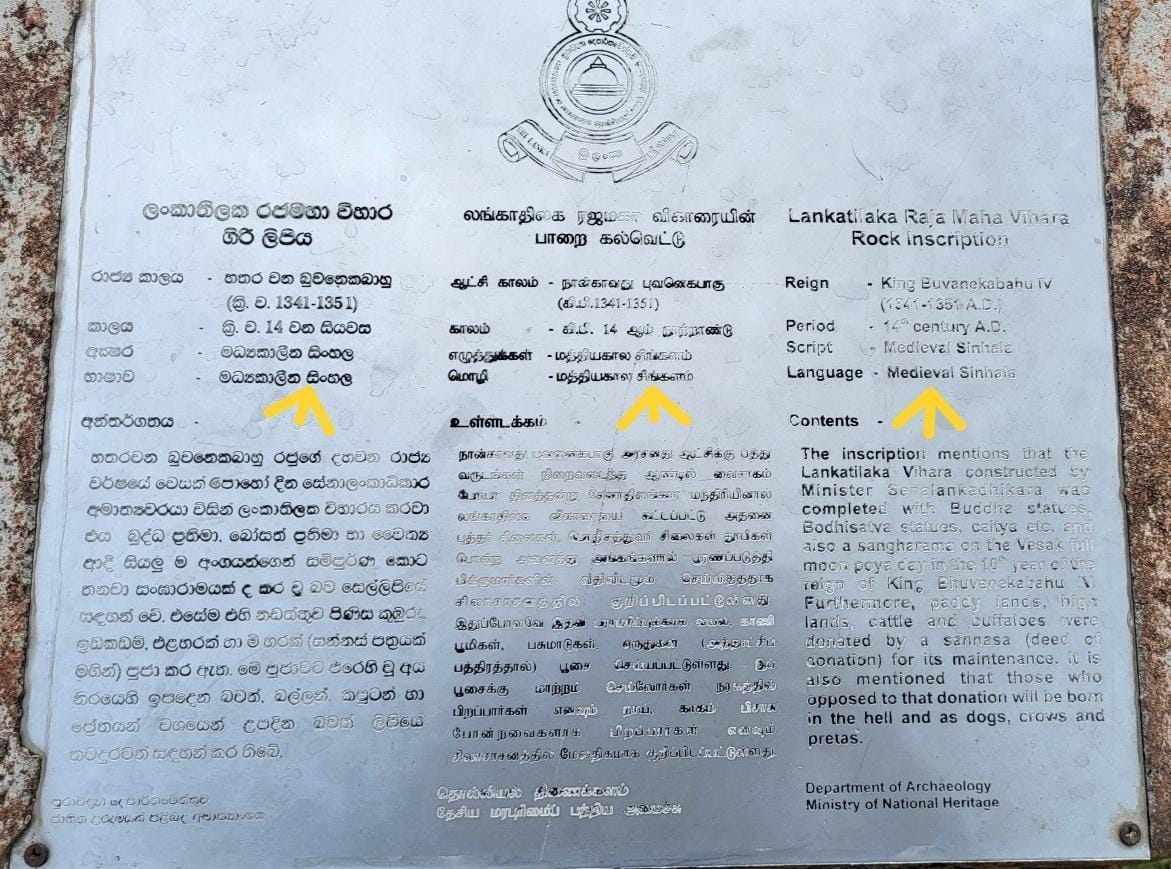

Even after the end of the war in 2009, reconciliation has remained incomplete and mistakes of the past only partially rectified. Governance continues to operate within a context shaped by identity-based politics, mutual mistrust with pseudo-academics with an ethno-nationalistic agenda still in key positions. This has had a lasting impact on development as creating the institutional trust and policy continuity needed for long-term progress is nearly impossible in a fragmented society. Indeed, internal divisions have been among the most significant constraints on Sri Lanka’s development over the past 75 years.
It is in this context that the economic crisis of 2022 needs to be seen. This financial meltdown was clearly the culmination of several systemic failures - fiscal mismanagement, dependence on external borrowing and a fragile governance structure that systematically exacerbated internal differences for short term political gains. The crisis exposed the limitations of a development model overly reliant on external inputs and insufficiently grounded in domestic resilience and inclusive nation-building. What was most striking was the use of carefully cultivated internal differences being deployed to mask systematic corruption of the ruling elite by presenting a narrative of “You are poor because they exploited us” – an endeavour in which a small but vociferous group from the professional and academic class acted as collaborators.
Recovery has since been pursued through external assistance, particularly through IMF-supported reforms aimed at stabilisation. While necessary, these measures come with significant trade-offs. Fiscal consolidation and structural reforms often impose social costs, particularly on vulnerable populations. Developmental projects vital for economic recovery - such as the development of the Trincomalee oil storage tank farms or the Colombo Port City, have been delayed as the developmental partners were evaluated through the ‘ethnic prism’ rather than the merits (or demerits) of such partners for long term sustainable economic benefits. This highlights the central dilemma of how Sri Lanka can rebuild its economy and control its development priorities? Development assistance has long been central to Sri Lanka’s progress. Yet the politics of aid, in whatever form is rarely neutral. In fact, aid and fiscal assistance is very much an extension of foreign policy of the powerful countries that has been brought to sharp focus in the post-Trump era we currently live in. Aid carries conditions, explicit or implicit, that shape policy direction. Whether through IMF programmes or bilateral agreements, external financing influences the scope of economic decision-making. Though it can provide immediate and much needed relief it constrains long-term autonomy and independent decisions that are needed for sustained development. More fundamentally, aid can foster dependency and weaken domestic resource mobilisation, distort development priorities, and align national policy with external interests.
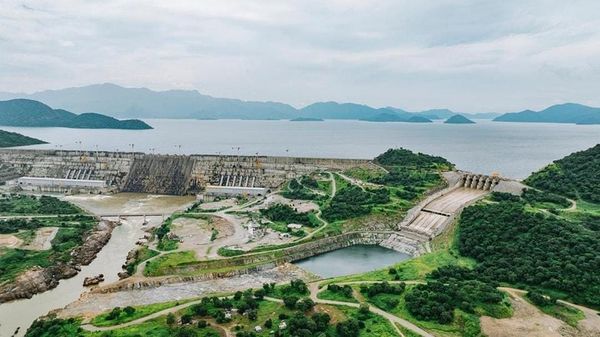
Several countries in Sub-Saharan Africa too face significant challenges in raising capital for vital developmental projects amidst internal fractures - along tribal lines, and external threats. How some of these low-income countries are navigating these challenges is therefore an interesting comparator. In this context, Ethiopia’s experience with the recently concluded Grand Ethiopian Renaissance Dam (GERD) is provocative. Faced with limited external support, Ethiopia mobilised domestic resources - through bonds, state financing, and widespread public contributions - to build a transformative national project. This model was not merely financial; it was symbolic. It fostered a sense of national ownership, collective responsibility, and developmental sovereignty – and the surge of emotions and pride amongst Ethiopians at the launch event was palpable and infectious across the entire African continent.
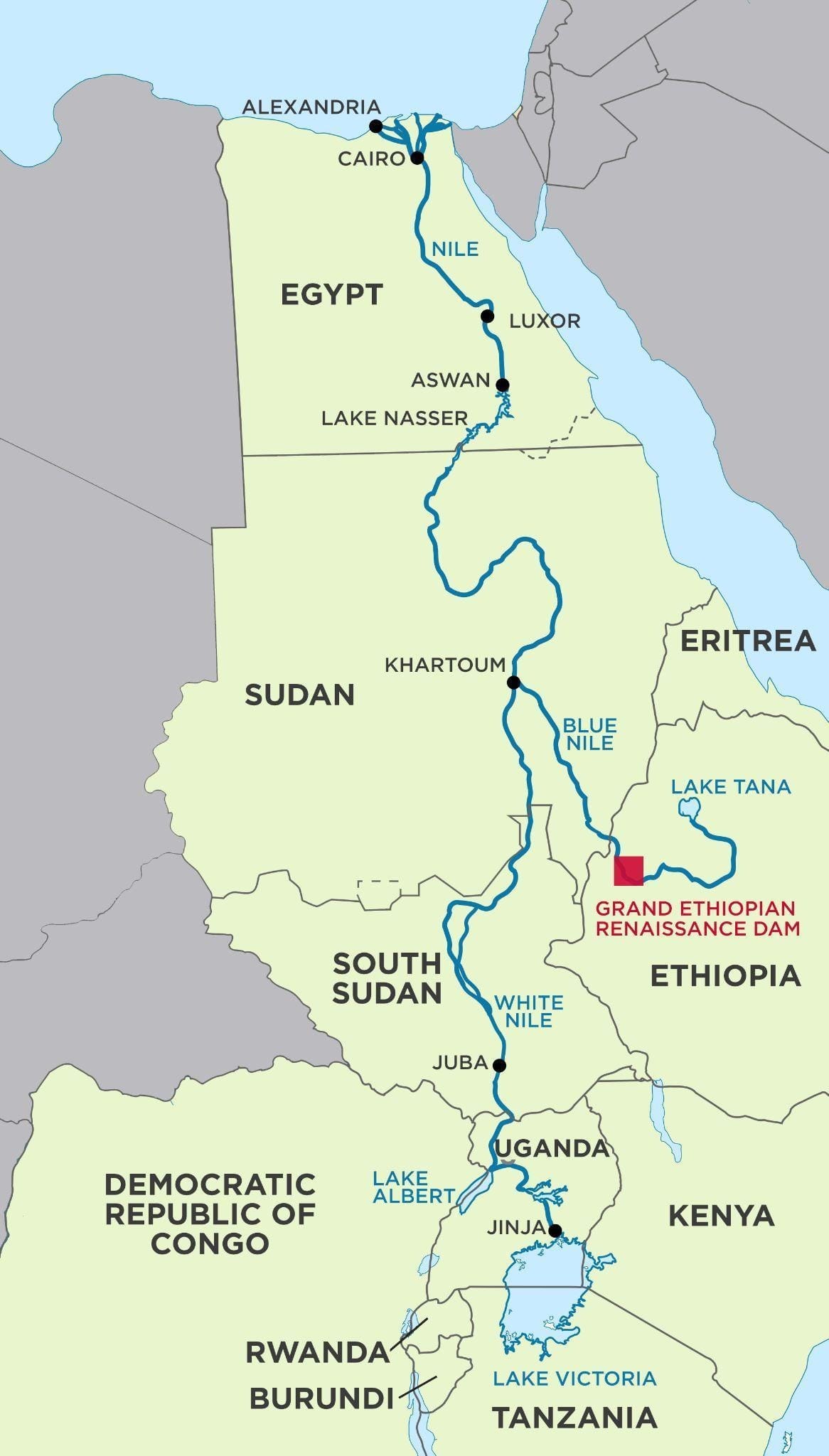
Figure 6: The Nile Basin Map. The origins of River Nile in Ethiopia (The Blue Nile) and in Uganda (White Nile). These two tributaries merge in Sudan to form the main Nile river that flows through Sudan and Egypt. Plans to build a dam across the Nile to meet the water/power needs of Ethiopia had been thwarted by powerful countries based on the fear that such a project would seriously affect the viability of Egypt. (Source: www.atlanticcouncil.org)
For Sri Lanka, the lesson is not that external aid should be abandoned, but that true sustainability requires internal alignment - of state, society, and diaspora. It should be built through building a covenant between the state and ALL sections of society. In this context, the Sri Lankan diaspora in general and the Tamil diaspora in particular has special relevance. If handled correctly and with strategic vision – which is inclusive as well as firm, this group can become one of the country’s most significant strategic assets. Highly educated and globally connected, it carries financial, intellectual, and institutional capital that could meaningfully contribute to national development. Yet diaspora engagement is complex. It is shaped by historical memory of conflict, displacement, and exclusion. This memory, while legitimate, can sometimes limit engagement with the present realities of Sri Lanka. The diaspora therefore can be both a bridge and a barrier. It can enable development through investment and expertise, but it can also reinforce divisions if engagement is driven primarily by past grievances. The challenge to the current and future governments lie in reorienting diaspora engagement towards a future-focused partnership grounded in trust and inclusivity.
At the core of Sri Lanka’s internal divisions lies a deeper civilisational paradox. The island’s two major religious traditions, Buddhism and Hinduism - are often presented as markers of division. Yet philosophically and historically, they are profoundly interconnected. Both traditions share concepts of dharma, karma, compassion, and transcendence. Both have coexisted for centuries, influencing each other’s practices, rituals, and ethical frameworks. In many respects, they are not opposites, but two sides of the same coin within a shared civilisational and philosophical continuum. This insight opens a powerful pathway forward. Reconciliation in Sri Lanka has often been framed in political or constitutional terms - power-sharing arrangements, institutional reforms, international mechanisms of accountability. While these undoubtedly remain important, they are insufficient on their own. Sustainable peace requires a deeper cultural and philosophical accommodation. Building bridges between Buddhism and Hinduism offers such a possibility. It allows reconciliation to be grounded not in abstract frameworks imposed by external agencies, but in cultural narratives that are familiar, legitimate, and authentic to Sri Lanka itself.
Crucially, however this approach must avoid assimilation or dominance or changing historical realities with a ‘post truth’ narrative. Neither tradition can subsume the other. The objective is not homogenisation as advocated by the school of ‘Jatika Chintanaya’, but mutual recognition - an understanding that these identities can coexist without threat. This form of cultural reconciliation could provide a foundation for rebuilding trust, particularly in regions where historical grievances remain strong. It offers a way of addressing identity not as a zero-sum contest, but as a shared inheritance. In doing so, it aligns with broader principles that are needed for sustainable development - social cohesion and collective purpose.
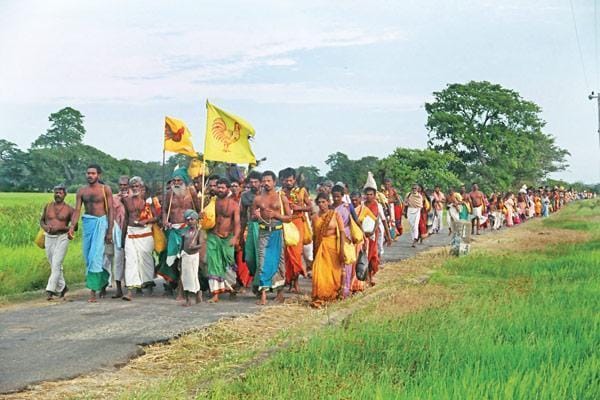
Sri Lanka’s future therefore lies in aligning its internal and external realities into a coherent framework for development. These need to happen simultaneously rather than sequentially as they form parts of a mutually inter-dependent matrix.
This requires several paradigm shifts:
From dependency to agency: reducing reliance on external assistance while engaging it strategically.
From division to inclusion: building a political culture that recognises and respects diversity.
From diaspora fragmentation/alienation to partnership: harnessing global Sri Lankan networks as collaborators in development.
From technocratic solutions to cultural grounding: recognising that reconciliation must be rooted in shared civilisational values.
The Ethiopian example illustrates the power of national ownership and the diaspora illustrates the potential of transnational engagement. The Buddhism - Hinduism continuum illustrates the depth of Sri Lanka’s own cultural resources for reconciliation. These are not separate strands but are interconnected components of a broad based transformation that forms the pre-condition for any political settlement to take hold and become sustainable. Sri Lanka’s challenge therefore is a deeper task of aligning a divided society, an exposed economy, and a contested geopolitical position into a sustainable and coherent national project.
External aid will continue to play a role, geopolitical pressures will remain and diaspora engagement will be a double-edged sword. But none of these, in isolation, will determine Sri Lanka’s future. The decisive factor will be whether the country can draw upon its own internal resources - its institutions, its people, and its cultural traditions to create a shared vision of development. In this context, the recognition that Buddhism and Hinduism represent not opposing forces but complementary strands of a shared civilisational heritage may offer one of the most powerful tools for healing. The building of bridges between Buddhism and Hinduism will not automatically include Islam and Christianity which are important and inalienable components of this complex equation. Rather, it would demonstrate that identity is not a zero-sum contest and create the conditions for a more inclusive dialogue involving all segments of the Sri Lankan society. In the final analysis, sustainable development in Sri Lanka is not only about infrastructure, investment, or policy. It is about trust - between all segments of society, between state and society, and between the past and the future. Only when that trust is rebuilt can Sri Lanka move from a position of constraint to one of confidence - charting its own path in a complex and contested world.
The views expressed in this article are that of the author alone and do not represent the views of the University of Manchester on the subject.