COLOMBO, Sri Lanka — For decades, allegations that Sri Lanka's security forces were implicated in murder, abduction, and torture were, in the country's mainstream politics, largely dismissed as a Tamil grievance. Raised by victims in the north and east and by the families of the disappeared, they found little sympathy within the Sinhala-majority political establishment that has governed the country since independence.
This week, the man who now leads that establishment — and serves as commander-in-chief of the security forces — bluntly acknowledged that members of the security forces had committed grave crimes.
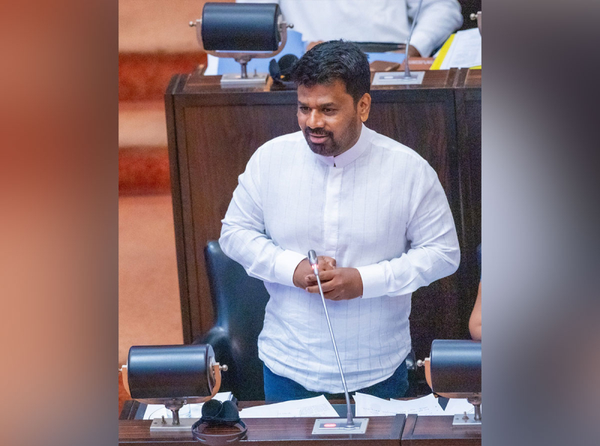
Addressing Parliament recently, President Anura Kumara Dissanayake acknowledged that members of the security forces had been involved in a series of grave crimes — among them the 2019 Easter Sunday bombings, the 2009 assassination of the newspaper editor Lasantha Wickrematunga, and the abductions and assaults of the journalists Keith Noyahr and Poddala Jayantha.
Yet Tamil political observers say that, while the admission was significant, it was also selective. The crimes Mr. Dissanayake chose to acknowledge were those committed largely in the south: the killing of a Colombo newspaper editor, the abduction of two journalists, and the failures surrounding the Easter Sunday attacks, whose victims were predominantly Catholic and Christian. He made no mention of the security forces' long record of alleged abuses in the Tamil-majority north and east — the enforced disappearances, the white-van abductions, and the killings that victims' families have spent years trying to bring before the courts.
Nor did he address allegations of grave violations committed during the final months of the war against the Liberation Tigers of Tamil Eelam, when thousands of Tamil civilians were killed.
Still, they said, it marked the first time that a truth long resisted by Sri Lanka's Sinhala political mainstream had been acknowledged from within its own ranks — even if only in part.
The clearest measure of the government’s intent came in Mr. Dissanayake’s disclosure that investigators would travel to Australia to record a statement from Mr. Noyahr, the former associate editor of The Nation, who was bundled into a white van in 2008, tortured, and later resettled there.
The abduction is widely believed to have been carried out by a military intelligence unit then operating under the Defense Ministry, which was headed by Gotabaya Rajapaksa, who went on to become president.
Political observers said the president's decision to single out the killing of Lasantha Wickrematunga and the abduction of Keith Noyahr was both a significant acknowledgment and a calculated political choice.
With the long-promised prosecutions over the 2019 Easter Sunday bombings facing legal and evidentiary hurdles, some analysts believe the government may also seek to pursue former President Gotabaya Rajapaksa over alleged crimes committed during the years he oversaw Sri Lanka's security apparatus.
According to a senior government source familiar with the administration's thinking, the Easter bombings are not the only avenue under consideration. If prosecutors are unable to build a viable case against Mr. Rajapaksa over the Easter attacks, investigators could instead rely on earlier cases, including the killing of Mr. Wickrematunga and the abduction of Mr. Noyahr, the source said.
"The government remains determined to prosecute Gotabaya Rajapaksa," the source told Jaffna Monitor, speaking on condition of anonymity because they were not authorized to discuss internal deliberations publicly. "If the Easter case does not succeed, these earlier cases could provide another legal basis to proceed against him."
The former intelligence chief Suresh Sallay is already in custody, accused of orchestrating the Easter bombings — an attack that killed more than 260 people — allegedly to engineer Mr. Rajapaksa’s return to power. The killing of Mr. Wickrematunga and the assaults on the two journalists all took place while the Rajapaksa brothers held power.
Mr. Wickrematunga, the editor of The Sunday Leader and an unflinching critic of those in power, was shot dead on a Colombo street in January 2009. Anticipating his own death, he had written an editorial that his paper published after the murder, under the haunting headline, “And Then They Came for Me.” No one has been convicted.
Mr. Noyahr was seized in May 2008, a year to the month before the military crushed the Tigers. Mr. Jayantha, who campaigned for press freedom as general secretary of the Sri Lanka Working Journalists’ Association, was beaten and dumped in a pit with severe head and leg injuries in June 2009; his attackers shaved part of his head and beard. Both men later fled the country, Mr. Jayantha settling in the United States. None of those responsible for the attacks on the three journalists have been arrested or convicted.
Mr. Dissanayake also rose to the defense of senior investigators now under fire from the opposition, naming Shani Abeysekera, the director of the Criminal Investigation Department; Ravi Seneviratne, the secretary of the Ministry of Public Security; and Dileepa Peiris, a deputy solicitor general. “Is the opposition telling us not to take action against wrongdoers?” he asked.
Mr. Abeysekera has drawn criticism over the arrest of Mr. Sallay; detractors note that he led the C.I.D. when the Easter attacks occurred and failed to act on Indian intelligence warnings of an imminent strike.
Analysts say the government’s broader objective is to trace the attacks back to the Rajapaksa brothers and, in doing so, to hollow out their Sri Lanka Podujana Peramuna, the party routed in the 2024 elections but now maneuvering for a revival.