By M.R. Narayan Swamy
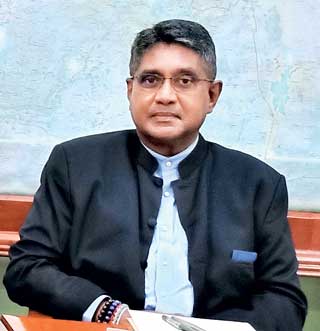
A Sri Lankan Tamil man in penury staged an emotive protest in Tamil Nadu demanding that he be sent back to his country, at a time when Indian Vice President CP Radhakrishnan was discussing in Colombo the fate of thousands of Tamil refugees from the island nation in India.
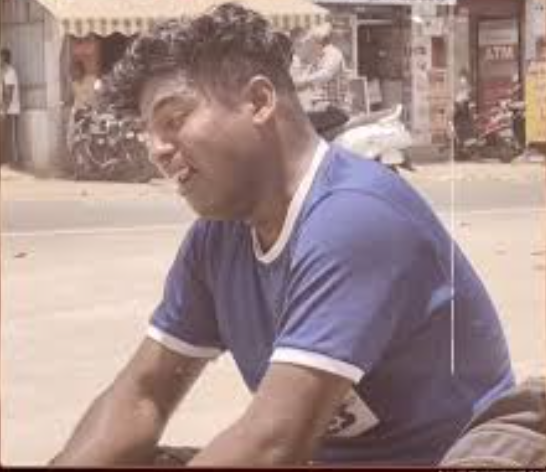
Policemen took away the weeping man shortly after he told the media and curious bystanders that he decided to squat outside the office of the Collector in Mayiladuthurai district on Sunday because he had no job and no income, and he had nothing to look forward to.
“I am 37 years old, and I am broken,” said the man amid tears. Wearing dark trousers and a deep blue T-shirt, he said he had no earnings, he was not getting any work, and he did not have a home despite spending 25 years in India.
“If I sleep on the pavement, policemen come and thrash me,” he said. “Is it a crime to sleep on the pavement? They let even beggars sleep, but they don’t let me sleep (on the pavement).”
The short video of his protest triggered a mini storm in Sri Lanka, from where tens of thousands of Tamils have fled since the 1983 anti-Tamil pogrom, giving birth ultimately to a powerful Sri Lankan Tamil diaspora.
The crisis also sent thousands to Tamil Nadu after dangerous sea crossings. While many took off to the West at the first opportunity, thousands remained in India, where they are now estimated to number some 89,000.
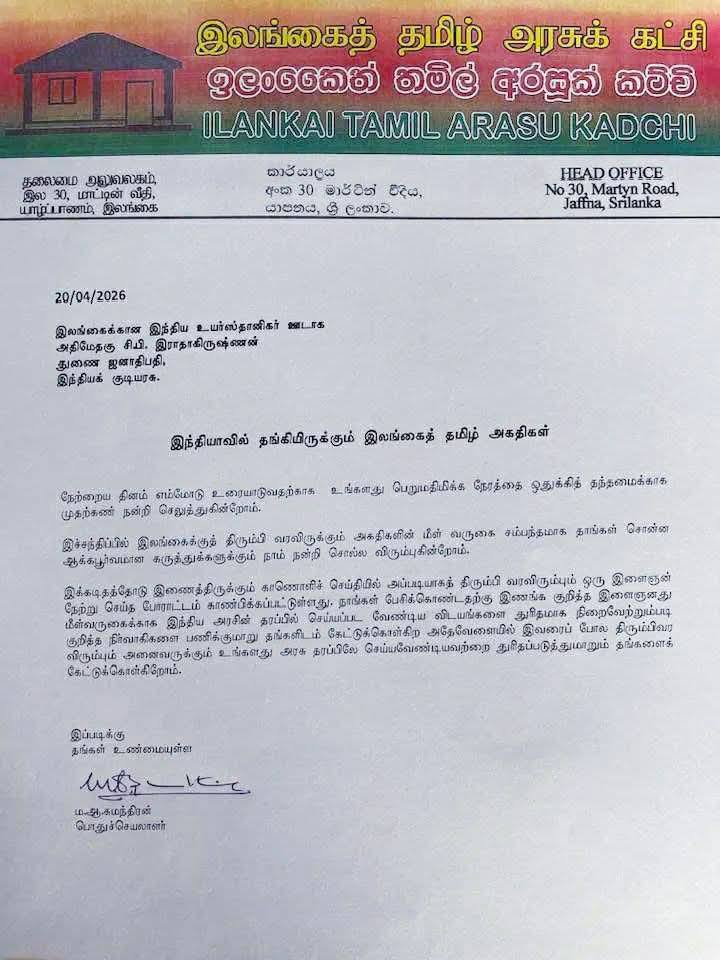
Even before Radhakrishnan ended his two-day visit to Sri Lanka on Monday, Ilankai Tamil Arasu Katchi (ITAK) leader MA Sumanthiran shot off a letter to the vice-president pointing out the Sri Lankan man’s agony in Tamil Nadu.
He urged Radhakrishnan to speed up efforts to send back to Sri Lanka all those Tamils who had taken refuge in India and who want to return.
Indian authorities have not released the man's identity or clarified his current status. He, too, did not give his name to those who witnessed his protest.
The India-based Organisation for Eelam Refugees Rehabilitation (OfERR), meanwhile, said on Monday that the man was not a resident of any of the 105 camps set up for refugees and functional in 29 districts of Tamil Nadu.
According to S. Sooriyakumary, one of the founders of OfERR, the man was seemingly widely travelled in India and spoke, besides Tamil, Marathi, and Hindi too.
She quoted her sources as saying that he had come to India by boat at a young age and did not remember his father or mother. The man reportedly lived near Colombo before reaching Tamil Nadu.
The OfERR provides assistance to an estimated 58,000 inmates in the refugee camps in Tamil Nadu. She said her organisation would not be taking up this man’s case because of its unusual background.
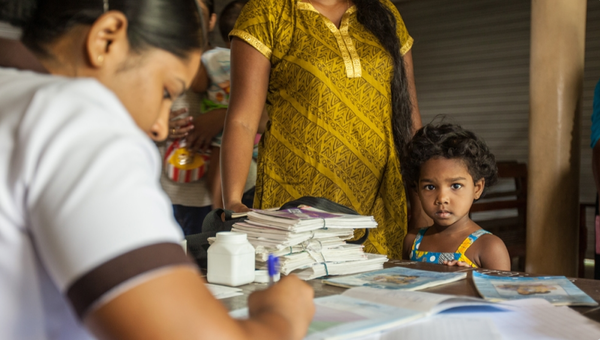
Tamil sources say the man’s plight has again thrown light on the enormous suffering Tamil refugees from Sri Lanka continue to endure in India, with no sign of when their lives will improve.
Tamil Nadu Chief Minister M.K. Stalin has pressed the central Indian government to provide the refugees with Indian citizenship or some travel document, underlining that thousands of them were born in India and have no links to Sri Lanka.
Some of the refugees who spoke to this writer recently said that while the central and Tamil Nadu governments provide them with some subsidy to live on, their lives are marked by hardship.
At the same time, some among the younger generation have been able to pursue education in Tamil Nadu with government assistance and have found livelihoods in various vocations.
Yet, economic adversity continues to hold many of them back. The man who protested in Mayiladuthurai is one such case — all of them victims of a brutal ethnic conflict they neither asked for nor took part in.