At around 11:30 on the night of May 7, Kapila Chandrasena telephoned his domestic worker at his Barnes Place home in Colombo. He gave her a list: nightclothes, medicines, and two pairs of spectacles. Then he called again and added a fourth item — a blue cloth belt he kept beneath his sarong and used for exercise. He told her to pack everything into a bag and have it ready. Two men arrived by vehicle and took it away.
The following morning, at approximately 7:35 a.m., that same room at the Pedris Place, Kollupitiya residence of former Sri Lankan cricket captain Aravinda de Silva was opened with a master key. Inside, Attorney-at-Law Priyantha Upali Amarasinghe saw an empty, crumpled bed, a blue stool turned toward a door, a body slumped near it, and, hanging from the top of the door frame, what he described to Fort Magistrate Pasan Amarasekara as a dark green tie, part of which was also wound around the neck of Kapila Chandrasena.
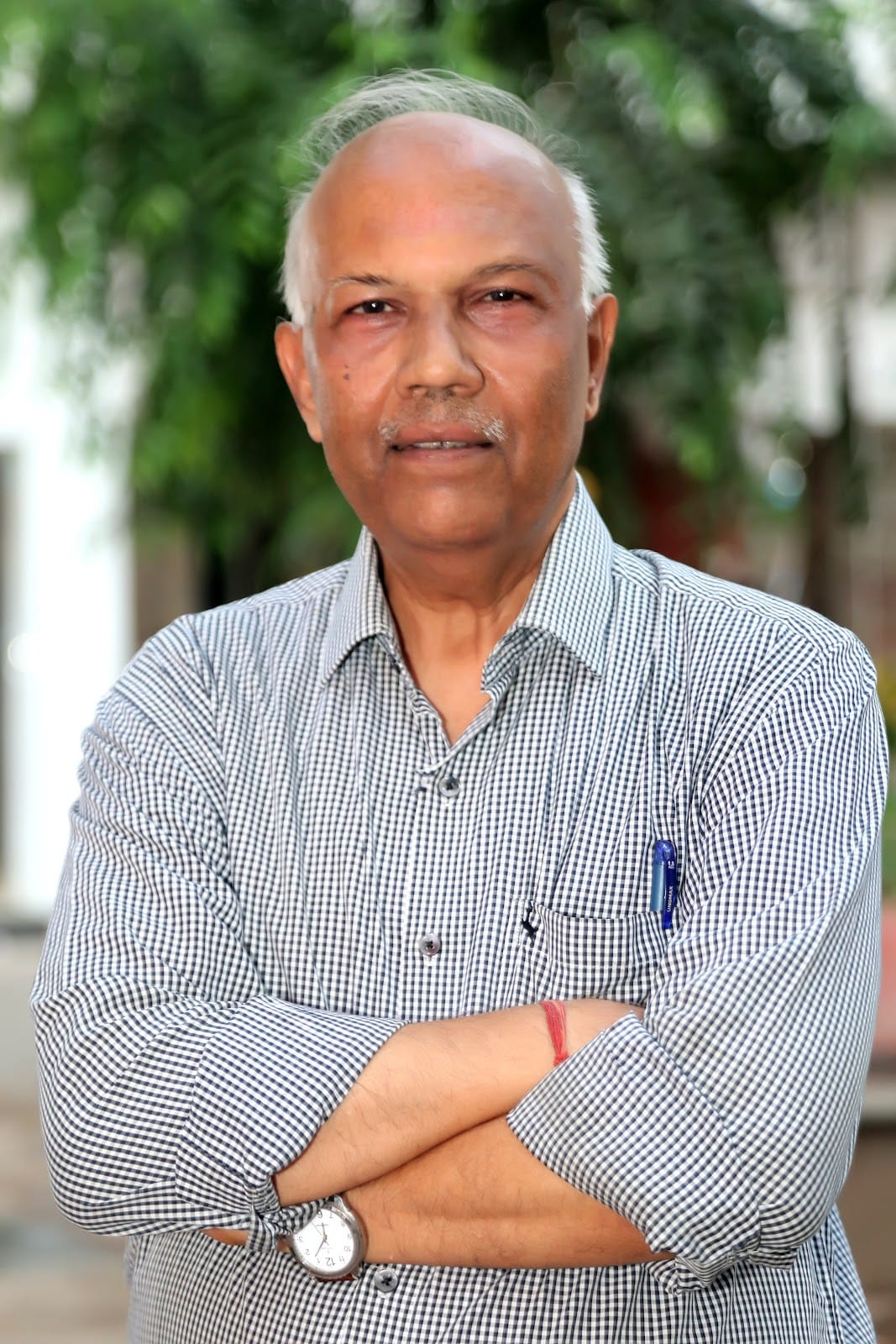
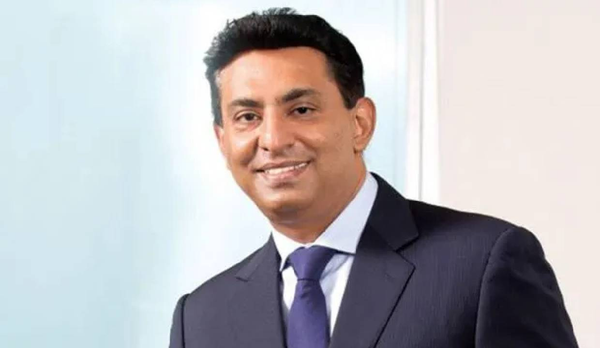
Mr. Chandrasena, 58, the former chief executive of SriLankan Airlines who had been fighting bribery charges tied to a multibillion-dollar Airbus procurement scandal, was dead.
The object he had specifically requested be sent to him the night before, a blue exercise belt, was not the same as the object later found around his neck, a dark green tie. Investigators have asked the Government Analyst to examine both items and determine what connection, if any, exists between them.
That question, along with an operational security camera system at the residence that had stored no footage for a prolonged period, a locked iPhone 16 Pro Max that police have been unable to access, and a chronology in which CID officers arrived at Mr. Chandrasena’s Barnes Place home at 7:25 a.m. on the same morning his body was discovered, has placed the inquest at the center of an intensifying forensic inquiry into one of Sri Lanka’s most significant corruption cases.
THE NIGHT BEFORE: THREE PHONE CALLS, A PACKED BAG
The testimony of the domestic workers who appeared before the court on May 14 established the most precise account yet of Mr. Chandrasena's movements and communications in the hours before his death.
Manathunga Mudiyanselage Somadasa, a male domestic worker at the Barnes Place residence, told the magistrate that no visitors had come to the house at any point between Mr. Chandrasena's return home on bail on May 6 and his departure for Mr. de Silva's residence the following day.
Another household employee, Subrahim Pramila, provided detailed testimony about the phone calls. She told the court that Mr. Chandrasena had returned home at around 5 p.m. on May 6 — one day after being released on bail following 54 days in remand. He asked after the household staff and the dogs, said he was physically exhausted, and went to sleep.
The next afternoon, May 7, he departed by car. Later that evening, a driver sent by Mr. de Silva returned the vehicle to Barnes Place and handed her the key. Then, at around 11:30 p.m., Mr. Chandrasena telephoned.
He asked her to prepare nightclothes. In a second call, he added two pairs of spectacles, medicines, and the blue exercise belt — specifying that it was beneath his sarong. He asked for a vehicle to collect everything.
Two men arrived and collected the bag. During his calls, she testified, Mr. Chandrasena had also told her to iron a white outfit: “I have to go to court tomorrow.”
When she called him the following morning at 6:40 a.m., because he had not returned and she knew he was due in court, there was no answer.
INSIDE THE ROOM: WHAT THE LAWYER SAW
Attorney Priyantha Upali Amarasinghe had arrived at the Pedris Place residence at around 7:15 a.m., dispatched there the previous evening by President's Counsel Rienzie Arsecularatne. A motion had been prepared in P.C. Arsecularatne's chambers to seek the recall of the arrest warrant that had been issued against Mr. Chandrasena. File it in the morning, P.C. Arsecularatne had told him at around 9:30 p.m., and keep the case down until I arrive.
A second call came at around 11:00 p.m. — this time from Mr. de Silva himself. Mr. Chandrasena was with him, Mr. de Silva said. He was frightened. He kept raising a section of the law and asking whether he would be remanded.
When Mr. Amarasinghe arrived the next morning, Mr. de Silva informed him that Mr. Chandrasena was not responding to calls. He and Mr. de Silva, along with members of the household, went upstairs. Attempts to open the bedroom door failed. A master key was used.
Mr. Amarasinghe was the first to enter. He testified in detail before the magistrate: the bed was empty, the sheets crumpled. On the left side was a door, and something hung from its upper frame. He described it as appearing to be a dark green tie. A blue stool was positioned facing the door. Near it, slumped, was a person. Part of the cloth hung from the door was also wound around the neck.
He told the magistrate: “This was my first experience of something like this, and I was frightened.” He told Mr. de Silva to call a doctor immediately.
Mr. de Silva's wife, Priyangi Anushka Wijenayake — whose sister, Priyanka Neomali Wijenayake, is Mr. Chandrasena's wife — was near the door when Mr. Amarasinghe entered. He came out and asked her to call for an ambulance. She told the court she had taken just one step into the room.
THE DOCTOR'S FINDINGS: AN ESTIMATE OF TIME
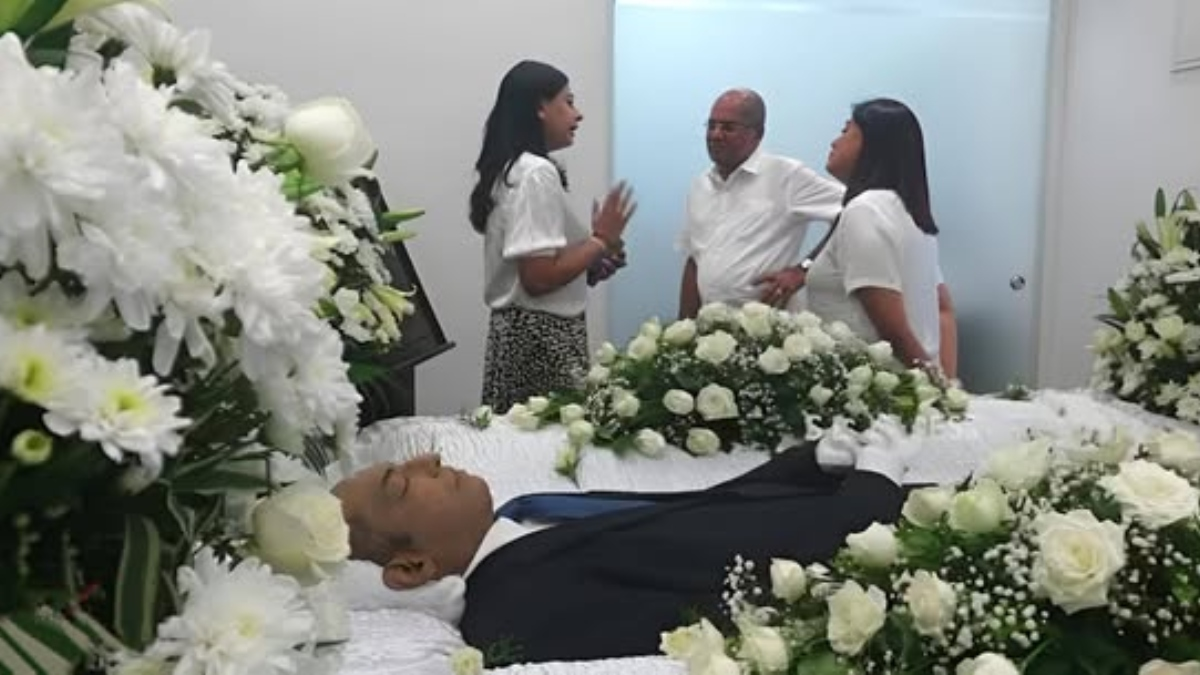
Dr. Yashoda Lakshani Liyanage, a physician attached to a private hospital, arrived at the residence at around 7:50 a.m. after the hospital's emergency unit received a call for assistance. A person identifying himself as a lawyer led her to the room.
She found an empty bed. Near a door on the left side of the room, a chair had been placed facing it, and a body was slumped near the chair, one side of the face pressed against it. She examined for signs of life: breathing had stopped, there was no pulse. When she lifted the right arm, she found it partially stiff. The right pupil was dilated and fixed. A piece of cloth was tightly compressed around the neck.
Her clinical assessment: Mr. Chandrasena was already dead at the time of examination. Asked by investigators how long before her arrival the death may have occurred, she estimated approximately one to two hours — placing the time of death at between approximately 5:50 a.m. and 6:50 a.m. on May 8.
THE CAMERA THAT WAS ON BUT NOT RECORDING
Among the most significant disclosures of the May 14 proceedings was information about the CCTV security system installed at the Pedris Place residence.
Presenting a progress report to Fort Magistrate Amarasekara, officers of the Colombo Crimes Division stated that although the CCTV camera system at the residence had been operational, forensic examination had established that no footage had been recorded or stored — and that this had been the case for a prolonged period prior to the death. No usable internal surveillance footage from the property was available for investigators to review.
The disclosure drew pointed attention from the court. When the magistrate asked directly whether all CCTV footage from the residence had been obtained, investigators confirmed there was none. They had, however, secured footage from CCTV systems installed at two neighbouring properties, covering front and side-angle recordings of the relevant period from May 6 to May 8.
Police have also confirmed that there is only one entrance to the residence.
A LOCKED PHONE, AND A MYSTERY CARD
The Colombo Crimes Division separately informed the court that on May 12, investigators had obtained a search warrant and searched a residence in Hyde Park registered in the name of Mr. Chandrasena's wife. The search yielded two laptop computers and several documents, all taken into custody as case productions.
Mr. Chandrasena's mobile phone — described by investigators as an iPhone 16 Pro Max — remains locked. Facial recognition has failed, and investigators have sought directions from the court to have the device examined by a specialist institution. Investigators believe it contains material relevant to the inquiry.
A bank card discovered inside the cover of the phone at the scene has separately prompted investigation, following an order by the Colombo Chief Magistrate's Court.
Investigators have further confirmed that no visible damage was found on the upper surface of the door in the room where Mr. Chandrasena was found, though fibre samples were collected from the scene. The blue exercise belt that had been packed and sent to the residence, and the dark green tie described by the lawyer who entered the room, have both been forwarded to the Government Analyst, along with unidentified medication, blood and urine samples, and tissue recovered during the post-mortem. Fingerprints from the post-mortem examination have been sent to the state fingerprint analyst.
The five-member panel of judicial medical officers that conducted the post-mortem, led by Colombo Chief Judicial Medical Officer Dr. Sriyantha Amarathna, has not yet issued its final report. The full cause of death remains pending toxicology results.
OFFICERS AT BARNES PLACE THAT MORNING
The warrant that precipitated Mr. Chandrasena's final hours had been issued the evening of May 7 by Colombo Chief Magistrate Asanga S. Bodharagama, after prosecutors from Sri Lanka's Commission to Investigate Allegations of Bribery or Corruption, known as CIABOC, alleged that he had violated his bail conditions by arranging fraudulent sureties following his release on May 5.
Mr. Chandrasena had been released on a cash bail of Rs. 500,000, with three surety bail bonds of Rs. 1 million each. When two of the guarantors were found to have been paid individuals with no genuine connection to him, the Keselwatta Police arrested them. Both were remanded. CIABOC then sought revocation of Mr. Chandrasena's bail, and the warrant was issued.
Officers went to the Barnes Place residence that evening but found it empty. According to a person familiar with the matter, Mr. Chandrasena had already gone to Mr. de Silva's residence.
The following morning, at 7:25 a.m., ten minutes after Attorney Amarasinghe arrived at Pedris Place, five individuals identifying themselves as CID officers arrived at the Barnes Place residence with a search warrant. The domestic worker, Ms. Pramila, told the court they asked whether Mr. Chandrasena was inside and warned her not to lie. They left at approximately 8:15 a.m.
By then, the doctor had already been at Pedris Place for twenty-five minutes.