

COLOMBO, March 6 — In the final days before it was destroyed by a United States submarine in the Indian Ocean, the Iranian frigate IRIS Dena was sailing toward Sri Lanka in response to what sources say was a diplomatic invitation extended weeks earlier by Sri Lankan authorities during a multinational naval gathering in India.
The IRIS Dena, a domestically built Moudge-class frigate commissioned into the Iranian Navy in 2021, was part of the country’s Southern Fleet.
The vessel was torpedoed south of Sri Lanka on March 4, killing dozens of sailors in what analysts describe as one of the most significant naval strikes in the Indian Ocean since the Second World War. The attack unexpectedly drew Sri Lanka into the widening confrontation between Washington and Tehran.
But details emerging from multiple sources familiar with naval communications in Iran, India and Sri Lanka suggest the ship’s final movements may have been shaped not only by the escalating United States–Iran confrontation, but also by a sudden shift in Sri Lanka’s diplomatic posture — one that left the vessel waiting in open waters for nearly eleven hours.
From Fleet Diplomacy to an Unfinished Port Call
The IRIS Dena had taken part in MILAN 2026, a multinational naval exercise and fleet review hosted by India in the port city of Visakhapatnam from February 15 to 25. The event brought together warships from dozens of countries for joint drills, maritime seminars, and ceremonial displays, part of India’s effort to deepen naval cooperation across the Indo-Pacific.
During the gathering, Sri Lankan naval representatives invited the Iranian frigate to make a courtesy port call in Sri Lanka following the exercise, according to three sources familiar with the exchanges at the event, including one who said they had personally seen the invitation.
Courtesy port calls are a routine feature of multinational naval gatherings and are generally viewed as gestures of goodwill among participating navies.
“They invited us to come to Sri Lanka,” said one source with direct knowledge of the communications involving the Iranian vessel. “We were already at sea and on our way. Then suddenly we received a message telling us not to proceed.”
The source, who spoke on condition of anonymity because of the sensitivity of ongoing diplomatic contacts between Sri Lanka and Iran, said the reversal was communicated after the IRIS Dena had already departed Visakhapatnam and begun sailing across the Bay of Bengal.
War Changes the Equation
The regional context had shifted rapidly. On February 28, Israeli airstrikes killed Iran’s Supreme Leader Ali Khamenei, triggering a sharp escalation in tensions between Iran and the United States.
Governments across the region began reassessing their positions.
Sri Lanka — located along one of the world’s busiest maritime trade routes and a frequent host of naval visits from multiple powers — found itself in a particularly delicate position.
According to two sources with knowledge of internal discussions within the Sri Lankan government, officials concluded that allowing the Iranian warship to berth at a Sri Lankan port amid the escalating confrontation carried significant diplomatic risk.
The IRIS Dena was instructed not to proceed.
By that point, the ship was already committed to its course.
“When the message came telling us not to proceed, we had no option but to remain in international waters and wait,” the source familiar with the vessel’s communications said.
The ship held its position approximately 40 nautical miles south of the port of Galle for nearly eleven hours while awaiting further instructions.
“That delay left the vessel exposed,” said a second source, a regional maritime affairs analyst familiar with the episode. “Once they were told not to proceed, the ship was effectively sitting in open water without a port to enter.”
The Attack
On March 4, a United States submarine fired a torpedo at the IRIS Dena, sinking the frigate in waters south of Sri Lanka. U.S. officials later said the strike was part of a broader campaign targeting Iranian naval assets.
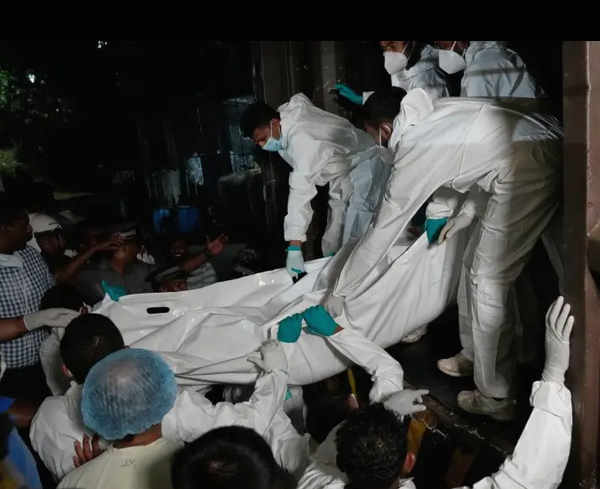
Sri Lankan naval units responded to the vessel’s distress signal and launched a rescue operation. Survivors were brought ashore and treated at hospitals in Galle, while dozens of bodies were later recovered from the sea.
Divergent Accounts
Sri Lanka’s government has not provided a detailed public timeline of the communications exchanged with the Iranian vessel in the hours before the attack.
Officials in Colombo have suggested that the Iranian warship may have sought emergency refuge in Sri Lanka after it became unsafe for the vessel to return to Iran amid the escalating conflict.
That version was echoed in part by Anura Kumara Dissanayake, the President of Sri Lanka, who told reporters on Wednesday that Iran had formally requested permission earlier in the month for naval vessels to visit Sri Lanka.
“On the 26th of last month, Iran requested permission from our Ministry of Foreign Affairs for three naval vessels to enter our port between March 9 and March 13,” the president said. “The visit was described as an effort to enhance cooperation.”
Mr. Dissanayake added that Sri Lankan authorities later determined the vessels were positioned near, but outside, Sri Lanka’s national maritime zone.
However, several sources familiar with the naval communications surrounding the IRIS Dena dispute the suggestion that the vessel was seeking emergency refuge. They say the ship was instead responding to a courtesy port call invitation extended during the multinational naval gathering in Visakhapatnam.
Sri Lankan officials have not clarified whether the vessel’s approach toward Sri Lanka was connected to the earlier diplomatic invitation or to the later request described by the president.
A Perceived Betrayal
According to sources familiar with Iranian government and military perspectives, the episode has been interpreted in Tehran as a betrayal. Sri Lankan authorities have not publicly addressed that characterization.
The Cost of Neutrality
Sri Lanka has long sought to balance its relationships with major powers, maintaining ties with the United States, India, China, and other partners.
But analysts say the episode illustrates how quickly that policy of neutrality can be tested when geopolitical tensions spill into the Indian Ocean.
Sri Lanka’s government has yet to provide a full public account of the communications exchanged with the IRIS Dena in the hours before the attack. Until a full timeline is released, questions are likely to persist over whether the vessel had been encouraged to approach Sri Lanka — and why it was ultimately denied entry — leaving the episode one of the most contentious diplomatic mysteries in the Indian Ocean this year.