

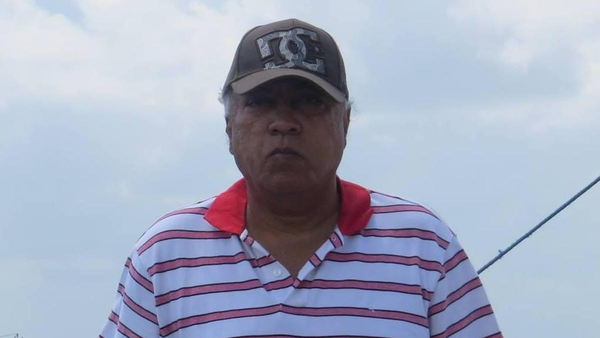
The Editor, Jaffna Monitor
I read M.R. Narayan Swamy’s tribute to D.B.S. Jeyaraj with the respect it deserves. It was a moving remembrance of a journalist whose life and work were genuinely heroic. Precisely for that reason, it would be a disservice to his memory to allow two significant historical inaccuracies to pass without correction.
On the reasons for his exile
Narayan Swamy writes that LTTE extremists “forced” Jeyaraj into exile. That is not entirely accurate, and we know this because Jeyaraj himself documented the circumstances in meticulous detail in a series published in the Daily Mirror in 2023.
In October 1987, Jeyaraj was arrested by the Sri Lankan Criminal Investigation Department and detained on the notorious fourth floor of the Police Secretariat in Colombo. His offence was not sympathy for militancy, but reporting inconvenient truths about the war then unfolding between the Indian Peace Keeping Force and the LTTE. He had also published an exclusive interview with LTTE deputy leader Mahattaya that contradicted the optimistic narrative then being promoted by the Indian High Commission.
The arrest was not the work of Tamil nationalists. It was an act of the Sri Lankan state, carried out amid unmistakable Indian diplomatic pressure. In Jeyaraj’s own account, Indian High Commissioner J.N. Dixit had “contacted JR on your matter” the very night the newspaper carrying the interview was published.
Jeyaraj was released only after N. Ram intervened personally with President J. R. Jayewardene, foreign correspondents publicly questioned the president at an international press conference, and a solidarity campaign was mounted across Tamil Nadu.
He subsequently left Sri Lanka in 1988 to attend Harvard University and moved to Canada in 1989. The reason was not LTTE intimidation. The Toronto car park attack occurred years later, long after he had settled there.
He left because the Sri Lankan state, acting under intense Indian diplomatic pressure, had made it unmistakably clear that a journalist who reported honestly on Jaffna could no longer safely remain in his own country.
It was only after he was already living in Toronto that LTTE supporters attacked him in a car park, leaving him seriously injured. That was a separate chapter of persecution, inflicted upon him in exile because he continued to write independently and critically.
Collapsing this chronology erases the role of state power, and of Indian diplomatic influence, in driving one of Sri Lanka’s finest journalists from his homeland. That erasure does a double disservice: it misrepresents Jeyaraj’s lived experience and obscures the broader pattern through which journalists were intimidated, detained, and silenced during that period.
On “getting into the bad books of Dixit”
Narayan Swamy notes, without elaboration, that the Mahattaya interview got Jeyaraj “into the bad books” of Ambassador Dixit. That phrasing is too mild, and in its mildness risks obscuring the gravity of what followed.
Dixit’s displeasure was not merely diplomatic irritation. According to Jeyaraj’s own account, it was followed by his arrest and detention on the fourth floor. Colleagues warned him that the Indian High Commission was “fuming.” Dixit had personally telephoned President Jayewardene. Within days, Jeyaraj was in custody.
To suffer such consequences for reporting the truth, for telling readers what was actually happening in Jaffna while official briefings painted “sunshine stories,” was an act of moral courage of the highest order.
Jeyaraj understood the risks perfectly well. He had been warned by colleagues, friends, and senior journalists who knew exactly what Indian diplomatic displeasure could mean in Colombo in 1987. He published the stories anyway.
That it cost him his freedom, however briefly, and ultimately his country, speaks to the price some journalists paid simply for refusing to look away.
None of this diminishes the warmth or sincerity of Narayan Swamy’s tribute. D.B.S. Jeyaraj was, as he rightly writes, a complete journalist, perhaps the last of his kind.
The best way to honour him now is to ensure that his story is told accurately and in full.
Yours faithfully,
K.S. Lakshmi
Editor’s Note: Jaffna Monitor welcomes further correspondence on D.B.S. Jeyaraj’s life, work and legacy, whether in agreement or disagreement with the views expressed above. He was a journalist who believed that no account of events, including his own, should go unchallenged. We believe that is the most fitting way to remember him.