By: A. Jathindra
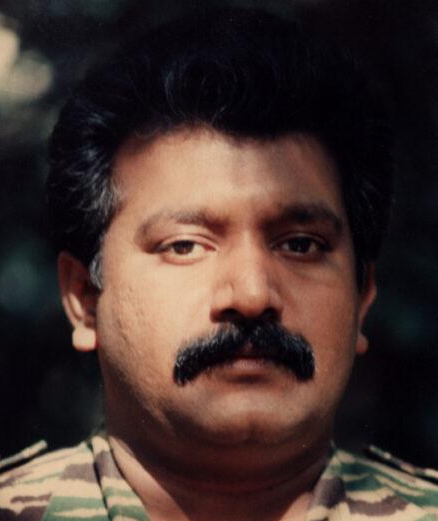
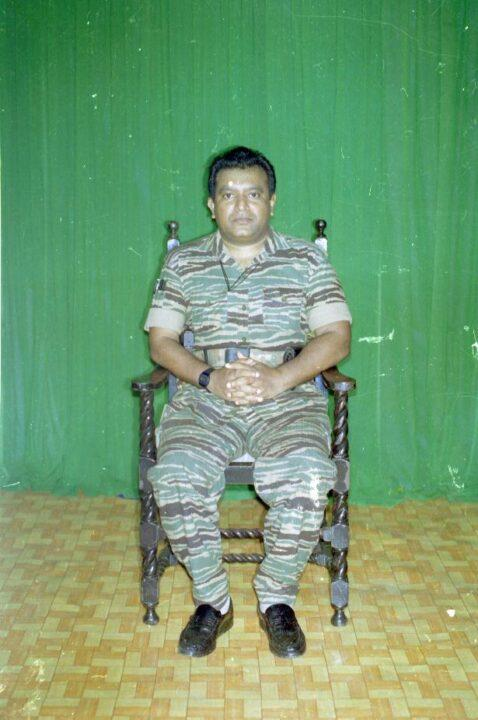
Thiruvengadam Velupillai Prabhakaran was a man who held Eelam Tamil politics under his control for nearly three decades. There has been no other figure in history who exercised such complete dominance over Eelam Tamil politics through the force of his own personality and authority.
If the Eelam Tamil people could ever have achieved their highest political aspirations, it should have been possible during the period in which he lived and led — but that did not happen. And if responsibility for that failure can be attributed to any one individual, then Prabhakaran’s name inevitably remains at the center of it — because everything revolved around him.
He was the victory — and he was the defeat.
It is difficult to believe that he would have anticipated such an outcome — but as a military strategist and a man who had witnessed victories across many battlefronts, he may, at least in the final stages of the war, have sensed what was coming. Following the fall of Kilinochchi, it is hard to believe that the commanders of the Liberation Tigers did not experience a similar fear. In the end, everything came to an end as though a film had abruptly concluded.
In a world of power where legitimacy is determined only through victory, the voices of the defeated carry little weight. The language of power is singular — if possible, emerge victorious; if not, surrender — otherwise, perish. This has always been the history of global power politics.
As I noted in an earlier article, Prabhakaran’s final war was one that should not have been lost — but he lost it. And to lose a war that should not have been lost is, ultimately, destruction.
In 2015, in remembrance of K.P. Aravindan — one of the pioneers of the EROS movement who lived and died in France — I wrote an article in which I recorded a few lines that I believe are relevant to repeat here. A struggle ends constructively only when those who began it also choose to end it. But when a struggle initiated by one party is brought to an end by another, it inevitably concludes in catastrophe.
The responsibility of bringing Prabhakaran’s struggle to an end rested with him alone. But in failing to carry out that responsibility, his struggle was ultimately brought to an end by his enemies.
As a student of politics, I have never supported the tendency to place blame on others or constantly fault external actors — because others will always remain others. They will inevitably view everything through the prism of their own interests. Judged according to the logic of power politics, there is nothing inherently wrong in that — because if our own interests matter most to us, then naturally their interests will matter most to them. How, then, can that be considered wrong?
For that reason, there is little benefit in pointing fingers at anyone. We ourselves must think for our own future — and act accordingly.
As long as Prabhakaran was alive, he remained firmly committed to the idea of an independent strength for the Eelam Tamils. He believed that military strength was the true strength of the Tamil people. Viewed through the logic of power politics and the broader course of world political history, it is difficult to argue that Prabhakaran’s thinking was entirely misplaced.
There is a well-known observation about diplomacy, attributed to Frederick the Great of Prussia (1712–1786): diplomacy without arms is like music without instruments. Similarly, British Prime Minister Winston Churchill once remarked that diplomacy without power is like a sermon without a text.
What these statements suggest is that politics is not merely about speeches, intellect, or philosophy — it is ultimately about power. Without power, even the greatest intellectual ability has little practical value. It was through armed strength that the Liberation Tigers were able to speak with confidence in Oslo. This was also the basis on which Anton Balasingham argued that disarmament was beyond negotiation, because weapons constituted the power of the Tamil people.
Viewed in this context, Prabhakaran’s era can be understood as one in which he measured, interpreted, and acted upon everything through the prism of power. In that sense, Prabhakaran may be described as a Stalinist in outlook.
Following the death of Lenin, the person expected to fill his place was the charismatic intellectual Leon Trotsky. But that did not happen — because Trotsky believed that ideas were what moved history forward, and therefore underestimated Stalin. Stalin, on the other hand, believed that control and power were what drove history.
Prabhakaran believed in much the same way — he was firmly convinced that Eelam Tamil political history could be shaped only by keeping the entirety of power within his own grip. It was on that basis that he planned everything.
Sentiment cannot help in maintaining control over power. Nor can moral tales of virtue and sin. Even after systematically pushing Trotsky out of the Soviet power structure, Stalin did not wish to leave him alive. Trotsky, who had taken refuge in Mexico, was eventually assassinated by a Stalinist agent.
But before a world ultimately shaped by larger power structures, the limitations of the military strength of a small armed movement were severe — and it was the failure to fully grasp this reality that gave rise to all the complications. The greatest mistake was the inability to transform existing military strength into a lasting political force.
It is difficult to believe that Prabhakaran failed to understand this entirely. A man who understood military strategy, who without the backing of any state built a formidable military structure using only his own conviction and the faith of those who believed in him, could not have been someone incapable of recognizing such realities so easily. Yet, despite all of that, everything unfolded as it did.
Perhaps he had become trapped by his own convictions and experiences, imprisoning himself in a position from which he could no longer turn back. We can now do little more than speculate about what he truly thought. But history records that it was he himself who wrote the final chapter of the empire he had built.
Last year, after considerable difficulty and amid numerous challenges, those who still held respect for him carried out a final tribute in his memory. That should perhaps have happened long ago — because had it happened earlier, it might have prevented his name from continuing to be used as a tool for the self-serving political interests of others.
The value of a person’s actions during their lifetime is ultimately measured by the kind of impact they continue to have after they are gone. Viewed from this perspective, the manner in which Prabhakaran’s name has been used over the past seventeen years, and the things carried out in his name, have in no way preserved him with dignity or respect — rather, they have often amounted to a form of disrespect toward him. He has, in many instances, been turned into a tool serving the business and personal interests of certain individuals.
Why did this happen? And why does it continue even now? The writer of this article does not have a clear answer. There is, of course, an easy explanation often offered — that intelligence agencies are behind all these developments. But if that argument is taken to its logical conclusion, one would also have to conclude that even Seeman in Tamil Nadu is being directed by some intelligence agency.
It is not my intention to find comfort in such conspiracy theories, nor do I support a politics built around them. Because such politics eventually turns against even those who promote it — much like the label “traitor,” which today returns like a boomerang to strike everyone alike.
If one closely observes the present political paralysis and the condition of those regarded today as the leaders of the Eelam Tamils, it becomes clear that Eelam Tamil politics has fundamentally lost its vitality. Today, Eelam Tamil politics resembles sugarcane stripped of its juice — nothing more than dry residue. The inability to navigate the post-2009 period, and the failure to arrive at a common understanding of how it should have been handled, lie at the root of everything.
A people who made immense sacrifices, a people who carried out operations that even astonished their adversaries, have today reached a point where Eelam Tamil politics can be dismissed as little more than a spectacle of absurdity. The political consciousness of a people can often be measured by the quality of those who represent them. Viewed in that light, there is hardly any need to further explain the current state of Eelam Tamil political consciousness.
When one examines the political developments of the past seventeen years and their negligible outcomes, one conclusion stands out clearly: just as it is true that Prabhakaran, the leader of the Liberation Tigers, was defeated, it is equally true that those who rejected him and denounced him during his lifetime have also failed. Because in the seventeen years since his death, no one has succeeded in creating a new political direction within Tamil politics.
If Prabhakaran was wrong and you were right, then should not a new political chapter have been written? If that did not happen, then it simply means you were unable to do so. Likewise, those who continue to claim admiration for Prabhakaran while using his name as political capital should either have carried forward his path or, at the very least, succeeded in transforming democratic politics into some meaningful measure of political strength. But none of that happened.
Viewed in that sense, the period following Prabhakaran’s death has only extended and reinforced the reality that we were, ultimately, a defeated people.
Will we recover from this?
Editor’s Note: Translated from Tamil by Jaffna Monitor.