April 24, 2026
COLOMBO, Sri Lanka — Measles, a disease Sri Lanka declared eliminated six years ago, has reappeared, with health authorities confirming this week that two children in the Colombo District have contracted the virus — the first reported cases since January and a sign that the island’s immunization shield may be weakening.
The Ministry of Health said laboratory analysis conducted in India determined that at least one of the infections was imported.
Sri Lanka was certified measles-free by the World Health Organization in 2019, becoming the fifth country in its South-East Asia Region to achieve the milestone — a success built on decades of near-universal childhood vaccination and a highly disciplined disease surveillance system. Maintaining that status, officials now acknowledge, has grown increasingly challenging.
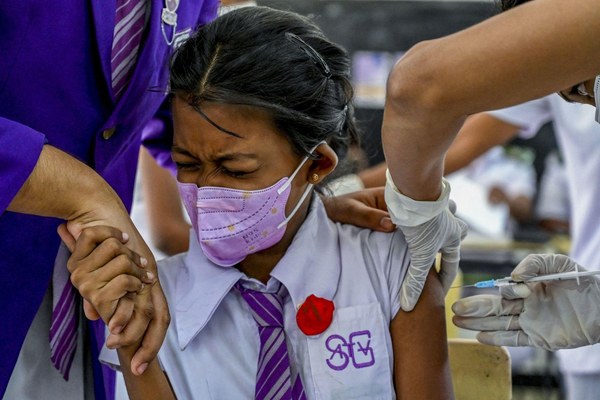
The country’s defenses were tested once before. A 2023 outbreak resulted in more than 1,000 cases, largely among unvaccinated populations and concentrated in the Western Province. In response, the Health Ministry launched nationwide catch-up immunization campaigns in January and again in November 2024 to close immunity gaps.
The two cases detected this week are the first since that recovery, renewing concerns among public health officials that even small lapses in vaccination coverage could allow the virus to regain a foothold.
A COVERAGE RATE THAT USED TO HOLD
For years, Sri Lanka kept measles at bay through vaccination coverage of roughly 95 percent, the threshold epidemiologists consider necessary for herd immunity. That margin has narrowed. Disruptions from the Covid-19 pandemic interrupted routine schedules, and pockets of hesitancy — fuelled in part by social media misinformation — have emerged in urban and semi-urban neighborhoods.
Migrant workers and communities living at the margins of the health system have remained undervaccinated, creating clusters of susceptibility that officials say are difficult to map in real time.
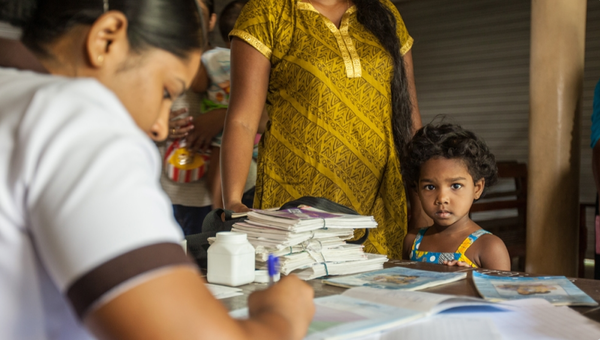
In response, the Health Ministry launched a nationwide catch-up campaign last year, offering the combined measles, mumps, and rubella vaccine to children aged nine months to 15 years who had missed one or both doses. Officials reiterated on Thursday that a single dose is not considered sufficient protection.
AN UNFORGIVING PATHOGEN
Measles is among the most contagious diseases known to medicine. As many as nine in 10 unvaccinated people exposed to the virus will fall ill. It spreads through airborne droplets from coughing and sneezing and can linger in the air for up to two hours after an infected person has left the room — a characteristic that makes schools, buses, and clinics especially vulnerable.
The early symptoms — fever, cough, runny nose, red and watery eyes — are easily mistaken for a common cold, allowing the virus to spread for days before the distinctive rash appears.
Complications develop in up to a third of cases, particularly among young children and people with compromised immunity. They include pneumonia, encephalitis, and severe dehydration, any of which can require hospitalization.
WHY RECOVERY IS NOT THE END OF THE STORY
Public health specialists are at pains to dispel the notion that measles is a routine childhood illness that children simply outgrow. Research published in recent years has shown that the virus can induce what immunologists call “immune amnesia,” erasing the body’s learned defenses against other pathogens and leaving survivors vulnerable to secondary infections for months, sometimes years.
A rarer but devastating consequence is subacute sclerosing panencephalitis, a degenerative brain disorder that can appear years after the initial infection — overwhelmingly in those infected as infants — and is almost invariably fatal.
STRAIN ON A STRETCHED SYSTEM
Even a limited cluster of cases could test Sri Lanka’s pediatric wards, which have absorbed successive shocks since the economic crisis of 2022 reduced the state’s capacity to import medicines and maintain equipment. Health authorities said they had intensified surveillance across Colombo and its outskirts, begun contact tracing, isolated confirmed cases, and dispatched targeted vaccination teams.
Officials indicated that tighter measures — reinforced vaccination checks at school entry and screening at Bandaranaike International Airport among them — would be considered if additional infections surfaced.
A GLOBAL BACKSLIDE
Sri Lanka’s setback is not unique. Measles has been resurgent worldwide since 2023, with outbreaks documented from Punjab to Romania to the Democratic Republic of Congo. The WHO and UNICEF have warned that a generation of children who missed doses during the pandemic now constitutes a combustible reservoir for the virus.
Countries that once celebrated elimination — including Britain and several Latin American nations — have since seen that status threatened or revoked. Epidemiologists describe the current moment as one of the most perilous for measles control in a generation.
A NARROW WINDOW
For Sri Lanka, the reappearance of measles is less an indictment of its health system than a reminder of how fragile even its most hard-won public health gains can be. The country’s immunization program remains, by most measures, among the most effective in South Asia. But preserving that standing, officials acknowledge, will require not only vaccines, but renewed public trust and sustained vigilance.
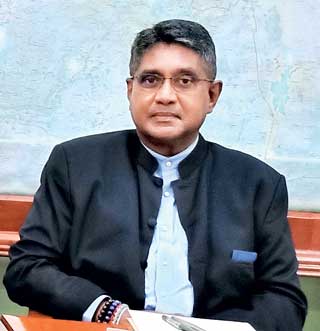
“The virus exploits every gap,” said Dr. Athula Liyanapathirana of the Epidemiology Unit. “If we act early, we can prevent this from becoming an outbreak. If we delay, the consequences could be far more serious.”