
By M.R. Narayan Swamy
Ex-Tamil Tiger N could not restrain himself when he saw a group of diaspora Tamils visit a rehabilitation centre to see for themselves how former combatants who had fought the Sri Lankan military were being treated by the government.
The visitors came with Selvarasa Pathmanathan, alias Kumaran Pathmanathan, alias KP, a senior member of the Liberation Tigers of Tamil Eelam (LTTE) who had been captured in Malaysia just before the war ended in 2009.
“You came in big vehicles to (LTTE-held) Vanni when we were in bunkers and did not even speak to us,” N blasted away. “You poured money only as long as we fought. Now you give us nothing because we don’t fight anymore, right?”
There was all-round embarrassment at the rehabilitation centre at Poonthottam in Vavuniya district. The accusation was true and stinging. N went on.
“We fought this government for years, but they are looking after us and helping us to get on our feet. What have you done to rebuild our lives? You have not given us even a mosquito net!”
By the time N finished, the diaspora Tamils who had been ferried in two buses were in moral trauma. A few amongst them shed tears. A few mumbled they would make up for lost time and contribute monetarily to the rehabilitation of the former LTTE fighters.
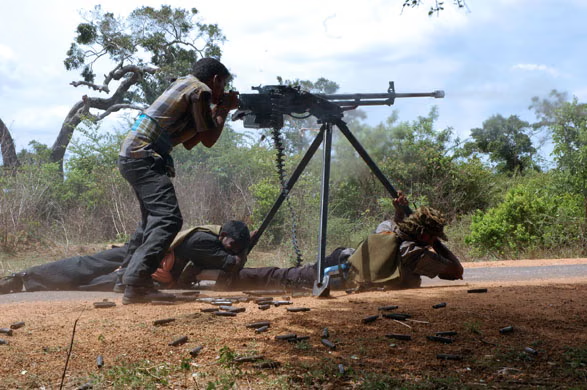
But nothing happened after they returned to their homes in the West. Barring a few exceptions, the Tamil diaspora largely turned its back on the nearly 12,000 Tamil Tigers who gave up or captured in 2009, despite having massively funded the Tigers during a quarter century of one of the world's bloodiest conflicts.
Sri Lankan officials recall this incident to underline why the country has seen no revival of the once lethal LTTE in the 17 long years since the war ended, although everything is not honky dory in the north and east, the earlier war theatre.
“Even today, the LTTE diaspora will give money for separatist activities, propaganda, or acts of violence but not for charity,” said a professional volunteer who was closely associated with the sweeping rehabilitation programme run by Colombo after the war.
A retired military official added that it has become a sore point that the Tamil diaspora in the West still spends heavily on politics both in Sri Lanka and in their adopted countries, but not to help the former insurgents find a new life.
“(Former president) Mahinda Rajapaksa and (his brother and later president) Gotabaya Rajapaksa may be accused of war crimes, but they did a fine job when it came to rehabilitating the mass of LTTE cadres,” the official said.
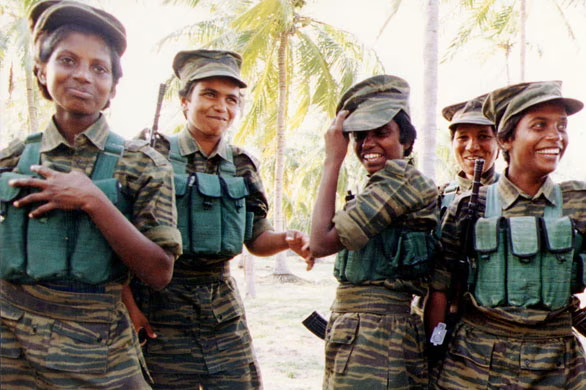
The volunteer professional recalls that the bulk of LTTE guerrillas, male and female, taken into custody in 2009 shuddered just thinking what could happen to them in captivity. Would they be tortured? Would they be killed?
While some seniors in the LTTE hierarchy faced the judicial process, others went into rehabilitation camps after a mandatory prison term and learnt, over time, a variety of vocational skills.
More importantly, the overwhelmingly Sinhalese staff at the camps surprised the former Tigers by engaging them in a friendly manner and treating them as equals, ensuring that they would never be made to feel as outsiders or “terrorists”.
In contrast, the vocal pro-LTTE diaspora, stunned by the Tigers’ military defeat, loudly clamoured for the closure of the rehabilitation centres, dubbing them de facto prisons and insisting on the immediate release of LTTE members.
Most international NGOs, particularly those with earlier links with the LTTE (and Colombo), were upset because they were kept away from the rehabilitation process.
Simultaneously, the Tamil diaspora put enormous pressure on a handful of Western bodies that provided assistance to the Sri Lankan government.
The World Food Programme (WFP), which supplied food for the Tigers in the camps, suddenly pulled out in December 2009, just ahead of Christmas.
Having anticipated this, the government immediately roped in the military, which agreed to share its rations with the former LTTE guerrillas.
This, the volunteer professional said, was a crucial turning point.
“When the ex-Tigers realised what had happened, many of them were shocked,” the source told Jaffna Monitor. “The fact that a military they had fought so bitterly all these years was giving them their ration was too much.
“And many were disgusted that the Tamil diaspora had played a major role in the WFP decision not to supply them food.”
Both retired military officers and Tamil sources said the diaspora felt personally defeated when the LTTE brass, including its founder Velupillai Prabhakaran, went down, ending one of the world’s longest-running insurgencies.
Worse, in contrast to repeated LTTE assertions that its members would kill themselves with cyanide rather than be taken prisoner, a whopping 12,000 cadres and close sympathisers surrendered wholesale to the military or were captured. Many tried to merge with the tens of thousands of Tamil civilians displaced by the fighting.
In the eyes of the pro-LTTE diaspora, this was downright treachery. This is the reason the diaspora ideologues never talk about the mass surrender and refuse to help those who once fought for Tamil Eelam.
The diaspora’s largely negative outlook is a key reason why former LTTE guerrillas, despite suffering enormously on livelihood issues even today, accuse Tamils settled in foreign countries of letting them down.
“All said and done, these boys and girls fought for Eelam. The diaspora lived peacefully in the West and only sent money (to the LTTE). It is the young here who fought and died,” said a Tamil man in Kilinochchi who had a brother in the Tigers.
“Once the war ended, the diaspora abruptly shut the money tap,” he said. “Yes, they give money to temples and churches, to friends and relatives, and to some select ex-Tigers.
The rank and file of the Tigers have been forgotten. They lead pathetic lives today. Some work as laborers, some drive auto-rickshaws, some run small shops, and others do odd jobs for a living. Many are plagued by injuries and illnesses. A few are blind. Will anyone who sees their condition ever want to fight for Eelam again?
This Tamil source, however, is one of those who is not enamoured of the rehabilitation program the government put together.
“I feel the rehabilitation was a big cage, certainly better than a prison,” he told Jaffna Monitor. “They did teach some useful things. But once the Tigers returned to their villages and towns, there was no concrete help. They were left to fend for themselves.”
This, the source said, was a great disservice done to the ex-fighters.
The objective of rehabilitation was to prepare former cadres to rebuild their lives through employment or self-employment.
In reality, very few received meaningful post-release support. Many struggled to convert the vocational training they had received into sustainable livelihoods.
“Forget the government. If only every ex-Tiger had been adopted by three or four diaspora Tamils, these people would have come up in life,” he said. “But the diaspora shuns them. Perhaps, the diaspora wants the war to go on and on.”
Other Tamil sources said a small section of the diaspora does help the former guerrillas.
“But this is a small group. For all practical purposes, the fighters have been dumped,” said another Tamil source. “It is shocking, but at times the ex-fighters are told on their face by their neighbours: ‘Why didn’t you also die?’”
Another thing happened in 2009. Many financially well-off LTTE members, particularly those with friends or relatives abroad, escaped from Manik Farm in the country’s north, where thousands were interned. They never underwent the detention, rehabilitation or reintegration process.
These escapes were facilitated by corrupt military personnel and others in exchange for large sums of money.
Several ex-Tigers said that before entering the rehabilitation hubs, almost every former LTTE cadre was taken to military camps where they were thrashed and brutally interrogated for days.
Although the government presented the rehabilitation as a success, a small number of supposedly rehabilitated cadres later attempted to revive militant activities with assistance from pro-LTTE networks abroad.
All those attempts failed, largely because there was no Prabhakaran-like figure to unite or lead them. But the incidents raised disturbing questions about the programme's long-term effectiveness.
While the rehabilitation programme itself may have had value, there was little structured support once the cadres were released.
Many received no financial assistance, access to credit, employment opportunities, or practical support to establish businesses based on the vocational skills they had acquired during rehabilitation.
That, along with the diaspora's lack of concern, is the main reason the bulk of former fighters continue to suffer.