By Nilantha Ilangamuwa
Never forget: the Iran–Iraq war raged for eight brutal years. Iran survived. Saddam Hussein, once courted by the West for strategic gain, was dragged from his hideout near Tikrit and executed after a deeply flawed Iraqi tribunal. Today, Trump toys with another reckless scheme to destabilise Iran, a continuation of his “decapitation project,” even as Tehran struggles with fractures demanding the immediate redesigning and re‑engineering of its governing structure in the style of Deng Xiaoping. This is no anomaly. History punishes the Blackwater; chaos haunts every land where outsiders play king, and the curse never forgives.
In 1911, Winston Churchill faced a choice historians seldom recount in detail. Britain’s Royal Navy, historically reliant on Welsh coal, was being converted to oil. In his archives, he acknowledged that committing “the Navy irrevocably to oil was indeed ‘to take arms against a sea of troubles’,” as Daniel Yergin writes in The Prize. The decision was strategic, not technical. Coal had once been the backbone of the empire; oil became the artery. This pivot ensured Britain’s military and industrial capacity would be dependent on foreign reserves. Within decades, that reliance would drag Persia, the Arabian Peninsula, and other regions into geopolitical entanglement. Every barrel became a strategic asset, every human life a variable in calculations of control. Main actors recognised that mastery over oil was mastery over life and death.
The earliest derricks in Pennsylvania, Baku, and beyond were not symbols of industrial progress; they were instruments of accumulation. John D. Rockefeller, whose empire rose with ruthless efficiency, stated, “The day of combination is here to stay. Individualism has gone, never to return,” as Daniel Yergin notes. Edward White, Chief Justice of the U.S. Supreme Court, observed that corporate consolidation had “an intent and purpose to exclude others… and thus accomplish the mastery which was the end in view.” The pursuit of dominance was not incidental or accidental; it was deliberate, structural, and enforced through legal and economic mechanisms. Rockefeller’s Standard Oil did not aim to serve society. It aimed to control it.
Empires followed the scent of hydrocarbons. Following World War I, British diplomats arbitrarily carved Iraq, Jordan, and other territories from the former Ottoman provinces. David Fromkin, in A Peace to End All Peace, notes that these were “British inventions, lines drawn on an empty map by British politicians after the First World War.” Control of territory was inseparable from control of its resources, yet officials operated in what Fromkin calls “staggering ignorance,” lacking basic maps and data about the lands they claimed to govern. That ignorance was not accidental; it was a tool. Power requires narrative control, not nuanced understanding. The map, not the land, became the instrument of strategy.
The Shah of Iran internalised the mechanics of power and oil. Armin Meyer writes in The Oil Kings that his ambition was “to make Iran a modern major power before he died… ‘Japan of West Asia.’” But ambition collided with structural dependency. The United States armed Iran with advanced weapons and political cover. Nixon’s instruction, “You can push [us] as much as you want [on oil prices]… I will back you,” and Kissinger’s assurance that “Iran will get all available sophisticated weapons short of the atomic bomb,” reveal a transactional logic in which loyalty and oil were interchangeable. Weapons, finance, and diplomacy were deployed to reinforce dependency; human costs were irrelevant.
Saudi Arabia pursued a variant of this calculus. As Bradley Hope and Justin Scheck write in Blood and Oil, “The Saudi royal family has always understood that petropower is about more than creating wealth... Oil is also the Saudis’ primary weapon of national self‑defence.” When Iran attempted to raise prices, Riyadh’s response was not negotiation but deliberate oversupply: “It exceed[ed] its production quota, pumping surplus oil onto the market… Iran lost billions.” Economic warfare was standard practice, with barrels as instruments and markets as battlefields. The Shah’s miscalculation demonstrates that power through oil is inseparable from control over strategy, timing, and perception.
Mohammed bin Salman epitomises the operationalisation of petro-hegemony. At twenty-one, he stated, “My plan is to be richer than Alwaleed bin Talal in two years.” Wealth was not measured in prosperity but in dominance. He declared Machiavelli as his role model, according to Blood and Oil, operationally rather than philosophically, and enforced his vision by detaining princes at the Ritz-Carlton, subordinating traditional elites to his authority. Hostage-taking, wealth extraction, and elite purging are not anomalies but systemic instruments of state control.
Death is neither accidental nor secondary in this theatre. Jamal Khashoggi’s final hours revealed meticulous orchestration: “Has the sacrificial animal arrived yet?” asked one of his killers, while Khashoggi himself queried, “Are you going to give me drugs?” MBS later framed responsibility as circumstantial: “I may bear some guilt, but not because I authorised the heinous act… but because I may have caused some of our people to love our Kingdom too much.” Strategic evasion masks moral accountability; it reduces murder to a calculable variable in governance.
The populations of the Middle East have long been subordinated to external agendas. Kim Ghattas, in Black Wave, observes that “the left in its various shades… was being beaten into oblivion” and that “sectarianism had been weaponized.” These were deliberate constructions, funded and orchestrated by local and foreign powers seeking leverage. Militias, ideological suppression, and sectarian conflict became strategic tools, not unintended consequences. In Pakistan, the first overtly sectarian militias were trained and equipped to serve foreign agendas, their purpose tactical rather than ideological.
Western powers openly acknowledged this logic. John Foster Dulles stated in 1950 that “American policy must be to assure the free flow of oil from the Middle East.” The CIA memorandum on the 1953 Iranian coup notes plainly: “The principal purpose of the operation is to prevent the further consolidation of nationalist control over Iran’s oil resources.” Armin Meyer writes of Anglo-Persian Oil Company’s early concessions: “We have been granted privileges over which the Persian government has almost no control. The development of the country’s oil is in our hands.” Access to oil dictated policy; human cost was irrelevant.
Corporations, states, and empires coalesced in pursuit of this singular imperative. Industry consolidation, military intervention, and diplomatic pressure were instruments of a single logic: secure oil at any cost. Churchill called oil “the blood of war”; Rockefeller and White demonstrated its commercial ruthlessness; Dulles and the CIA operationalised it in foreign capitals. From Baku to Abadan, from Texas to Dhahran, control over oil fields determined who lived, who died, and who ruled.
The modern iteration of this logic is no less brutal. Economic warfare, proxy conflict, elite purges, and state-sanctioned violence are routine. Saudi Arabia’s oil strategy against Iran in the 1970s prefigured today’s market manipulations. Western administrations continue to broker alliances that prioritise barrels over ethics. The populations affected are treated as variables in an equation they cannot influence, their futures measured in the displacement, scarcity, and violence generated by decisions made thousands of miles away.
The oil industry persists not because energy is inherently scarce or nations lack skill, but because a constellation of elites—state actors, financiers, multinational corporations—has engineered a system that optimises for self-preservation and leverage. They manipulate supply, engineer scarcity, and reward loyalty, ensuring that any disruption reinforces dependence. Human lives, societal stability, and local governance are secondary; the architecture of influence has been designed to absorb consequence and evade accountability.
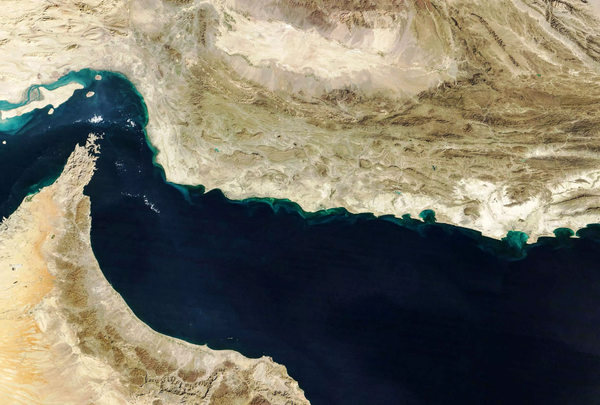
Across a century, oil has been more than a commodity. Those who are behind the game operate under a single principle: those who control oil, control the rules. Populations live, die, and labour within these structures without participation in their design. Beneath the bombs exploding across Iran and the closure of the Strait of Hormuz, we are forced to revisit this bitter history and witness how ambition, avarice, and ruthless power collide with lives treated as expendable — and yet history repeats, while those who claim to learn from it do so with the same ruthless irony.