
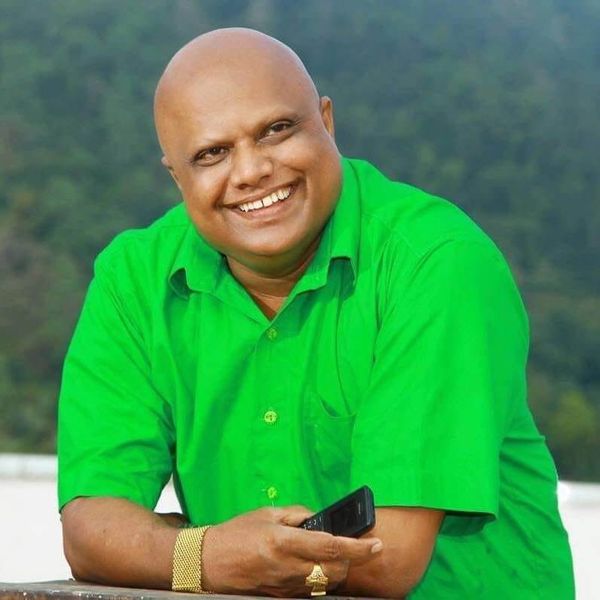
A political grenade was lobbed into the tax debate when Samagi Jana Balawegaya MP Jagath Withana casually dropped his salary slips on Facebook—only to reveal that Sri Lankan MPs are paying as little as 1% in income tax. While average citizens cough up tax rates three times higher, our honourable lawmakers seem to enjoy a VIP pass through the tax maze.
The revelation raised not just eyebrows but also blood pressure across both the public and private sectors. Irritated and clearly not amused, the Government Medical Officers’ Association (GMOA) has now filed a Right to Information (RTI) request, demanding to know how on earth these “miracle tax rates” are calculated.
The Numbers That Broke the Internet
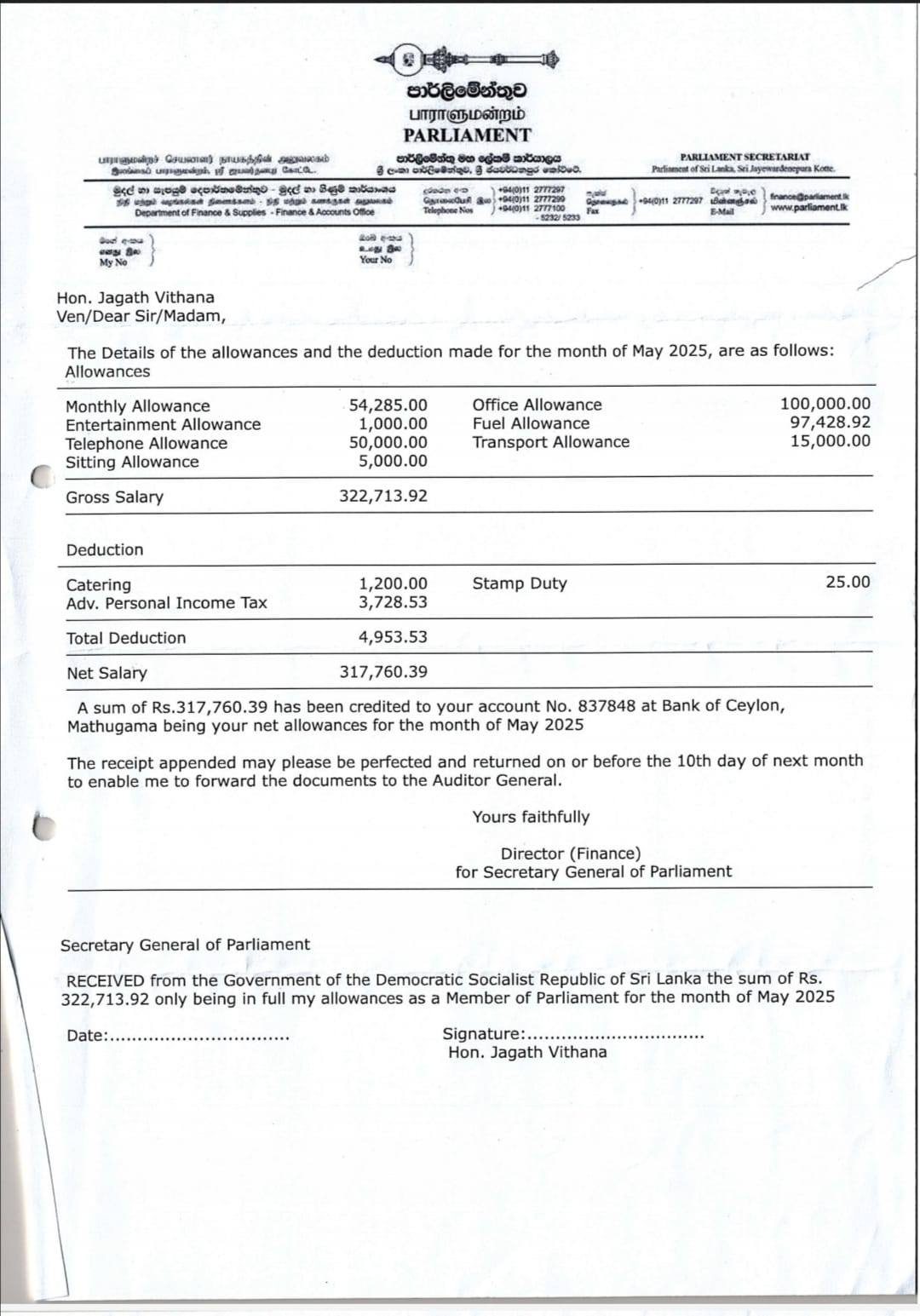
Withana's May 2025 payslip reveals that he earned Rs. 327,713 but paid only Rs. 3,728 in income tax—an effective rate of just 1.14%. In contrast, a government employee earning a similar gross monthly salary would typically pay around Rs. 10,600 in income tax—nearly three times more than what the MP contributes.
Under the current tax structure, effective from April 2025, an employee earning Rs. 300,000 pays approximately Rs. 9,000 in monthly income tax, while someone earning at the MP's income level would pay over Rs. 10,000. This stark disparity highlights how MPs have structured their compensation to minimize taxable income, resulting in an effective tax rate that is remarkably low compared to that of ordinary taxpayers.
The Great Allowance Shuffle
While Withana's basic monthly salary is Rs. 54,285, the real magic happens in the “allowances” department, which includes a fuel allowance of Rs. 97,428, a telephone allowance of Rs. 50,000, an office allowance of Rs. 100,000, an entertainment allowance of Rs. 1,000, a sitting allowance of Rs. 5,000, and a transport allowance of Rs. 15,000.
Under Sri Lanka’s tax law, these allowances are not treated as income but as “reimbursements.” While ordinary workers must pay tax on their full earnings, MPs have somehow persuaded the system that 83% of their compensation isn’t really compensation at all—but merely reimbursement for the supposed hardships of democratic service.
Academic Outrage and Medical Indignation
The disclosure has prompted sharp criticism from academics. Senior scholars have publicly questioned whether MPs are even subject to the same tax regime, with economics professors describing it as “a major issue” and pointing out that private sector employees earning similar amounts pay significantly more in taxes.
This revelation comes with the kind of exquisite timing only Sri Lankan politics can produce. As the country implements harsh austerity measures and raises taxes on ordinary citizens in the aftermath of the 2022 economic collapse, MPs have apparently been enjoying their own private tax haven.
The Inland Revenue Department, meanwhile, has maintained a diplomatic silence up to the time of writing this Monitor Memo—a silence that speaks volumes about the awkwardness of the situation. After all, how do you explain that the very people who write the tax laws have also exempted themselves from following them?