

CHENNAI — Tamil Nadu police have registered cases against at least 17 foreign nationals, including a Sri Lankan citizen, on suspicion of casting votes in the state’s recently concluded Legislative Assembly elections despite holding foreign passports and having no legal right to vote in India, officials said.
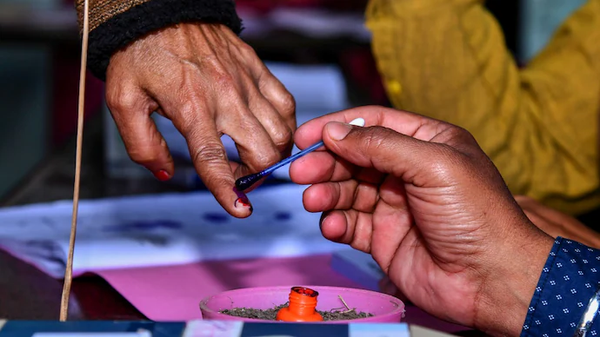
The individuals, passport holders from Sri Lanka, Canada, and Australia, were detained at Chennai and Madurai airports by immigration officers who noticed indelible election ink marks on their fingers as they attempted to depart the country in the days after polling.
Fifteen were intercepted at Chennai airport; two at Madurai. All were handed over to the Tamil Nadu Police crime branches for investigation.
A Sri Lankan citizen is among those under investigation. Kodungaiyur Police have registered a case against him for allegedly voting in the Perambur Assembly constituency in Chennai. His name has not been publicly released, and the investigation is continuing, police said. He was identified when immigration officials noticed the ink mark and found he was travelling on a Sri Lankan passport.
A Canadian national, an information technology professional originally from the Ashok Nagar area of Chennai who had returned to India for a family function, is alleged to have voted in the T. Nagar constituency. He was arrested and subsequently released on bail. An Australian citizen from Virugambakkam is under investigation by Virugambakkam Police for voting in that constituency.
Preliminary police findings indicate that at least two of the detained passengers cast votes in the Perambur and KK Nagar constituencies.
Investigators say those questioned offered a consistent account: they held voter identification cards from their years as Indian residents, their names had never been removed from the electoral rolls after they acquired foreign citizenship, and polling station officials did not question their eligibility.
“The primary reason for these incidents is the non-deletion of names from the electoral rolls after people acquire foreign citizenship,” a police source said.
Under the Representation of the People Act, foreign nationals are ineligible to vote in Indian elections, and by law, the names of those who acquire foreign citizenship must be struck from the rolls. In practice, that removal rarely occurs automatically and depends on individuals or local officials proactively notifying authorities.
The cases have drawn attention to the absence of citizenship verification at polling stations. In all reported instances, the individuals passed through without being identified as foreign nationals; their ineligibility came to light only during passport screening at airport departure gates.
The airport detentions come amid a broader pattern of inadequate roll-cleansing. In a separate case predating the current election, the Enforcement Directorate had flagged that a Sri Lankan national in the custody of the National Investigation Agency retained an active voter identification card in the Virugambakkam constituency of Chennai — indicating that the failure to update electoral rolls extends even to individuals known to security agencies.
Social activists have cited the Tirupattur constituency of Sivaganga district, where the Tamilaga Vettri Kazhagam candidate defeated a four-term Dravida Munnetra Kazhagam incumbent by a single vote, as an illustration of the potential electoral impact of illegal votes. Calls have been made for a Special Investigation Team or Criminal Investigation Department probe into all votes cast by foreign passport holders across Tamil Nadu’s 234 assembly constituencies.