By: Erik Solheim
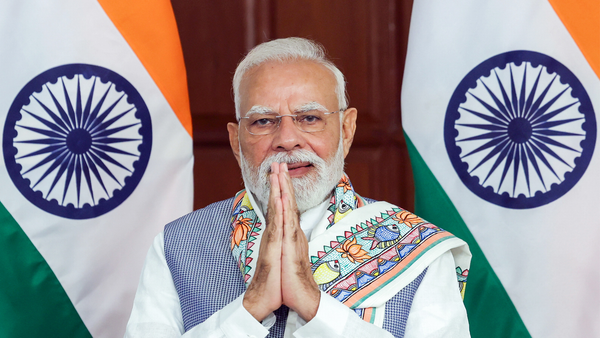
On Monday, 18 May, the world’s most popular politician will visit Norway. India’s Prime Minister Narendra Modi will be received by King Harald, promote Indian business, meet with the Indian diaspora and attend an India-Nordic prime ministers’ meeting.
The Nordic prime ministers should listen carefully. They have a lot to learn from their Indian counterpart. Whilst Nordic prime ministers barely enjoy a domestic approval rating of 30 per cent, Modi stands at around 70 per cent in the polls. No leader in any major country is nearly as popular at home as Modi. Modi has been in power in India for more than twelve years.
Should he choose to stand again, all the signs suggest he will be re-elected. A distant dream for European leaders. His success can be attributed to rapid economic development, a winning ideology, the world’s strongest political party and his own life story. Modi’s background is almost unique in a world where almost all heads of state come from the upper middle class. Modi’s parents owned three stalls where they sold tea at the railway station in Vadnagar, a tiny provincial town that hardly any Indians have heard of.
He has no one to thank for his career but himself – and the Hindu nationalist movement. He is an Indian Einar Gerhardsen – self-taught, an organiser. Einar was Norway’s former prime minister. He is fortunate to be leading a rapidly developing India, and he himself is a strong driving force behind that growth. The Indian economy is currently growing at seven per cent, faster than China’s and far outpacing any other major economy.
Growth is uneven, and there is a wide gap between the richest and poorest States in India. India lacks the highly educated workforce that China has. There is still too much bureaucracy, and India has not managed to develop any major export industry for the global market.
But at current growth rates, India’s economy will quadruple by 2050. India will then be the world’s second-largest economy, rivalling the United States. I have travelled to almost every state in India and have seen signs of development everywhere — new, modern airports; better roads leading to the most remote corners of the country; the world’s largest solar park under construction in Gujarat; and the world’s largest solar-wind-hydro power plant in Andhra Pradesh. Modi is the guarantor of green growth. India is now the world’s third-largest producer of solar and wind energy; no one should be surprised if it overtakes the United States and takes second place. Last year, coal emissions in India fell for the first time. Western leaders can learn a great deal from Modi’s consistent green message.
I attend many conferences where Modi is the keynote speaker. Modi almost never talks about global climate negotiations or emissions.
He asks no one to make sacrifices for the environment. The message is that India can lift 1.5 billion people out of poverty through green growth. There is no longer a choice between the economy and the environment. Even if secular parties were to win the next election, India’s ideology will remain Hindu nationalism. Hindu nationalism is India’s answer to the question that all non-Western countries have faced since the Industrial Revolution.
How to modernise without becoming like the West? Japan was the first to untangle that knot – becoming ultra-modern, yet remaining deeply Japanese. Korea is now richer than Japan and a major exporter of Korean culture and music.
China anchors its modernity in its own roots – in Confucianism, Taoism and Buddhism. The BJP is currently the world’s largest political party, with over 100 million members. The party has dedicated activists in every single constituency across northern and central India. The party has achieved something truly unique and unprecedented in India: the BJP enjoys the same level of support amongst high-caste, low-caste and untouchable communities. It has the support of both India’s billionaires and tribal peoples in the country’s remotest corners. Among Western analysts, it has become something of a pastime to find fault with the BJP. The critics are right in saying that the BJP stands for the unification of Hindus. But there is little evidence to suggest that there have been more conflicts between Muslims and Hindus under the BJP.
There was more violence and more pogroms when the Congress Party was in power. Millions of Muslims are crossing into India from neighbouring countries; hardly any Muslims are fleeing the other way.But the BJP’s insistence that Islam and Christianity are foreign religions, and that Muslim invasions in the Middle Ages and British colonialism can be equated, creates a sense of insecurity among many Muslims.
Many of the BJP’s proposals are common sense – such as the idea that there should not be a separate marriage law under which Muslim men can divorce more easily than other men. But in the emergence of a new, strong India rooted in Hindu dharma, the real test will be whether the BJP can also find room to include the world’s largest minority: the two hundred million Muslims in India. India is the only large, poor former British colony to have chosen a democratic model.
This is not down to the British. If it were to their credit, as they often claim, surely Pakistan, Myanmar and the Gulf monarchies would also be democracies? India is democratic because democracy is deeply rooted in Indian culture and tradition. In a world where Norway needs new allies for a rules-based international order and Norwegian business needs new horizons, we have much to gain from closer ties with India. But this requires us to be willing to listen, not just to lecture. Then, countless win-win opportunities could open up.