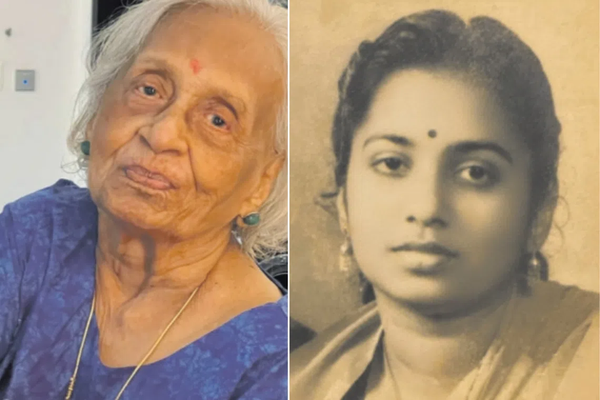
Sarvambikai Shanmugaratnam, daughter of a Jaffna physician and wife of Singapore’s “father of pathology,” is remembered as a quiet iconoclast who chose her own path.
JAFFNA — Sarvambikai Shanmugaratnam — known to her family as Ambikai, and to the Singaporean public as the mother of President Tharman Shanmugaratnam — died on Sunday afternoon at her home in Singapore. She was 99.
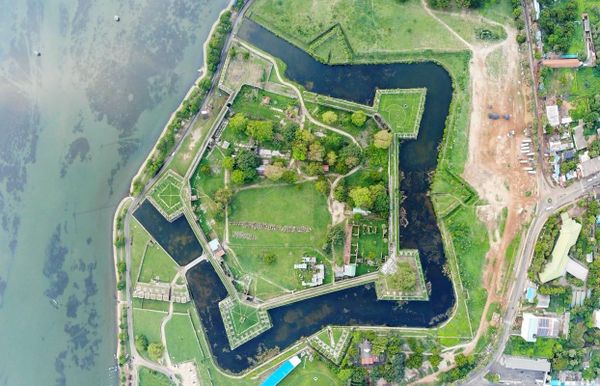
Though she was born in Kuala Lumpur and never lived in Sri Lanka, her roots were firmly in Jaffna, and, according to family members who spoke with Jaffna Monitor, she could read, write and speak Tamil fluently. Her father’s ancestral village, Urelu, lay in the peninsula’s agrarian interior, and its ethos shaped the moral grammar of the household in which she was raised. The family recalled on Monday that the patriarch would distribute the harvest “in equal measure to the temple priest, the carpenter and the washerman alike” — a principle she carried into her own life.
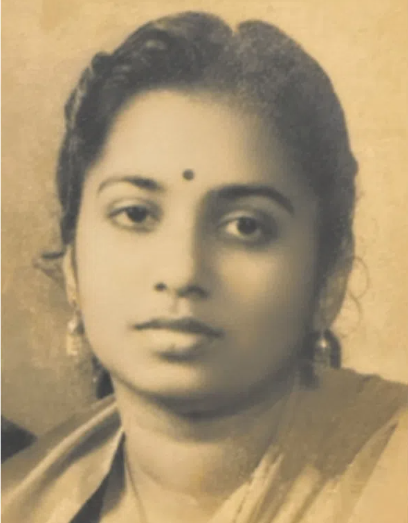
Her death was confirmed by the Singapore President’s Office on Monday in response to queries from Singaporean news outlets. No cause was given. In keeping with her wishes, she was cremated soon after in a private observance, the office said, adding, “We ask that the family’s privacy be respected during this time.”
A notice posted on the Singaporean memorial site Obits.sg, written in the family’s own voice, recorded that she “drew her last in the comfort of home” in the late afternoon, and was cremated soon after, respecting her preference in tradition.” It described her as “a quiet iconoclast” who “always kept her own counsel in holding to a different path, and stood on the side of adventure and independence in life.”
A village called Urelu
Mrs. Shanmugaratnam was born in Kuala Lumpur on July 5, 1926, the fourth of 11 children — ten daughters and one son — of Dr. Arumugam Viswalingam and Rathnammal Ayathurai. Both parents were natives of Jaffna. Dr. Viswalingam, who was born in 1890 in Urelu, was raised largely by his grandparents in what those who knew him described as an orthodox Saiva tradition, steeped in the agrarian rhythms of the peninsula. He left for Malaya as a young man to practice medicine, but, according to family accounts, he never left Urelu behind.
As a physician in Malaya, and later as a father, he insisted that his children “deal with royalty and commoners with the same measure of respect and dignity.” Ambikai, who absorbed that lesson early and never departed from it, became its living example.
Dr. Viswalingam was also a reformer. In 1941, he founded the Sivan (Adheswaran) Temple in Kuala Lumpur. According to people who knew him and spoke with Jaffna Monitor, he envisioned it not as a conventional place of ritual but as a deliberate turning away from the worship of minor deities toward Siva, regarded as the formless Supreme. He wanted, they recalled, a temple that taught enlightenment and equality rather than hierarchy, and he navigated the legal and political thickets of wartime Malaya to have it protected by special state enactment so its social message would outlive him. He died in 1985.
War, and what it forged
Ambikai’s formative schooling unfolded under Japanese occupation. It was, by every account in the family, harrowing. Her father was stripped of his home and his professional standing; the family was pushed into destitution. In that collapse, it was Ambikai and her sisters — the elder daughters of a house of ten girls — who held things together.
She watched her father refuse, even then, to compromise his principles, and she seems to have decided young that dignity was not contingent on circumstance. The resilience forged in those years sat underneath the surface of her later life. Those who knew her describe a woman of grace, poise, and elegance — soft-spoken, almost reticent — with what the family calls “an unwavering inner core.”
A partnership
She married Kanagaratnam Shanmugaratnam, a Sri Lankan Tamil pathologist of international standing who would become known in Singapore as the country’s “father of pathology.” Family members describe him as “phenomenally erudite, sagacious, and a gentleman to the core,” a man who carried into his own career the same insistence on equal regard for every person that had defined his father-in-law’s household in Kuala Lumpur.
Like Dr. Viswalingam, Professor Shanmugaratnam was an institution-builder. As a medical student, he helped persuade a Royal Commission to establish the University of Malaya; he later became Chair of Pathology and Dean of the Faculty of Medicine. In 1950, he founded the Singapore Cancer Registry, one of the earliest population-based cancer registries in Asia, conceived explicitly as a tool of public health for the ordinary citizen. He authored the World Health Organization’s classification of tumours of the upper respiratory tract, a reference text used in pathology laboratories around the world. He died in 2018, aged 97.
The partnership was, in the family’s telling, one in which Ambikai’s quieter authority and the Professor’s formidable intellect operated as counterparts rather than opposites. She was, they say, the stable foundation on which a family of high achievers was raised.
A son in the Istana
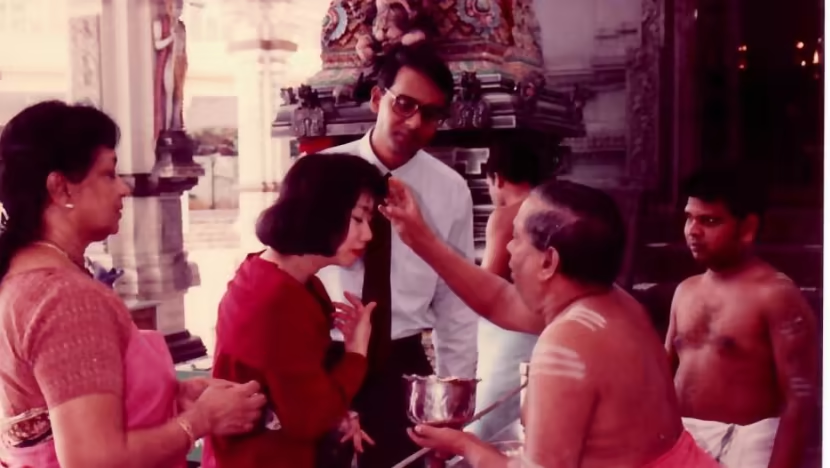
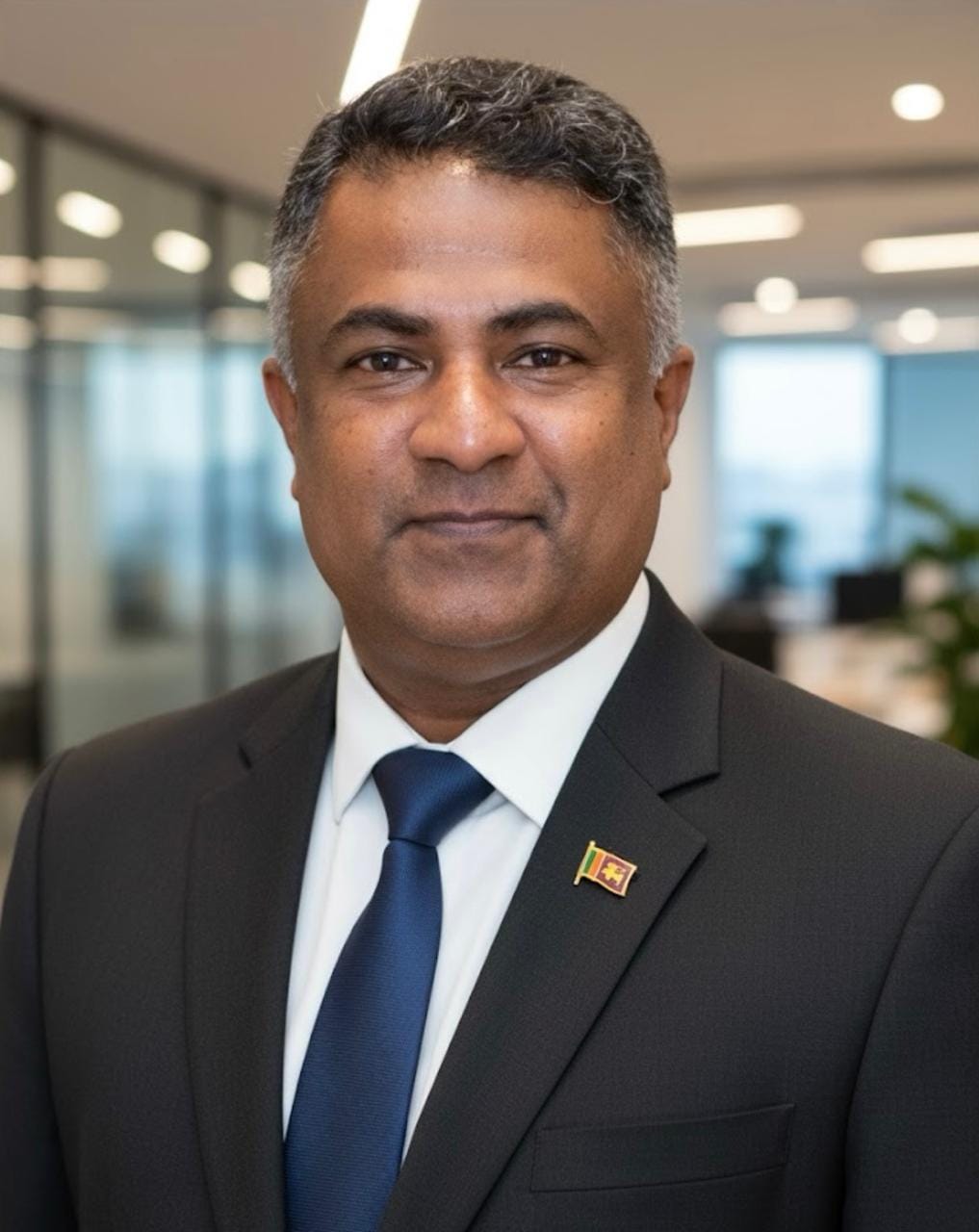
In September 2023, her son Tharman became the ninth president of Singapore, winning more than 70 percent of the vote in the first contested presidential election the country had held in more than a decade. A former deputy prime minister and central bank chairman, he is the first person of non-Chinese descent to win a contested Singaporean presidency, and has spoken often of his family’s Sri Lankan Tamil heritage.
Ambikai guarded her privacy through both her husband’s public stature and her son’s political ascent. The obituary her family composed this week — understated, unhurried, attentive to her own preferences down to the form of her cremation — reads as a portrait calibrated to exactly the life she had chosen.
The Sum of Many Influences
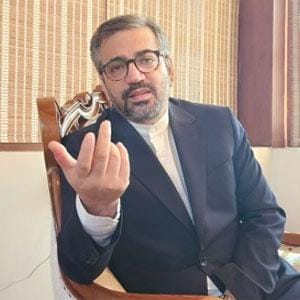
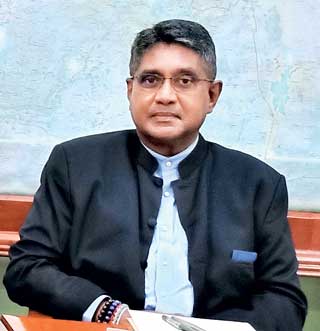
Jeevan Thiagarajah, former Governor of the Northern Province and a former member of the Election Commission, and a nephew of Mrs. Sarvambikai Shanmugaratnam, said in an interview with Jaffna Monitor that she “was the epitome of grace, poise and elegance — attributes instilled by her parents.”
“Her mother was an angel,” he said. “Her father, who straddled rural Jaffna at the turn of the last century, was academically brilliant, utterly disciplined, and at ease across the breadth of society, regardless of rank or circumstance. Tempered by wartime and the Japanese occupation, and by the hardships that followed, she was shaped by those influences. Her husband was the ideal foil — wise, sagacious and an absolute gentleman. She was, in many ways, the sum of all these influences.”
Mrs. Sarvambikai Shanmugaratnam is survived by her three children — a daughter, Vani, and two sons, Santhan and President Tharman — along with their spouses, Carol and Jane Yumiko Ittogi; four grandchildren, Aran, Akilan, Arivan, and Maya; her grandchildren’s partners, Mattie, Rachel, and Imran; and two sisters, Shivananthy Thiagarajah, of Colombo, and Dr. Nirmala Rappolt, of London.
Her death marks the passing of another link to an early 20th-century Jaffna — a peninsula that sent its doctors, lawyers, and teachers across the British imperial world, and whose descendants now work in laboratories and universities and, in her son’s case, serve in a presidential palace.