MULLAITIVU, Sri Lanka — For many families across Sri Lanka’s Northern Province, a document known as the 'Family Card' plays a central role in their dealings with the state. Residents say it is routinely required to collect Samurdhi welfare benefits, apply for housing under government schemes, and obtain certificates from village officers. In practice, they say, the card must be carried much like a national identity card.
Yet the document is largely unknown outside the former war zone. According to an investigation by the Ipen Institute, conducted under Sri Lanka’s Right to Information Act, no ministry appears to claim responsibility for it, no clear legal basis has been identified for its use, and its enforcement varies from district to district. Nevertheless, residents say it remains essential to accessing a range of government services.
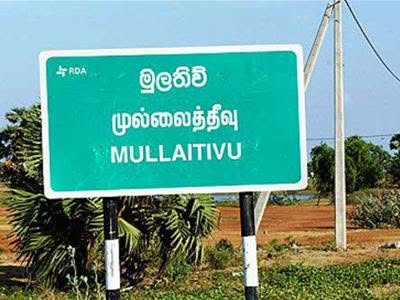
Introduced during the civil war for security and record-keeping purposes, the system appears to be one of several administrative practices that survived long after the fighting ended. In Mullaitivu District, it has been made compulsory for every household.
A document with no parent
The Family Card is not a legal document establishing citizenship, identity, or residence in the way a National Identity Card is. In Sri Lanka, official proof of identity is provided through the National Identity Card issued by the Department of Registration of Persons. The Family Card sits entirely outside that framework. It typically records the members of a household — their names, NIC numbers, occupations, and address — and functions, where it is used, as a ledger of convenience for the village-level Grama Niladhari.
“To obtain government assistance, Samurdhi benefits, housing under government schemes, and certificates issued by the Grama Niladhari, a Family Card is essential,” said Padmarajah Sasikanth and Sumathi Thangarasa, residents of Jaffna. “Just like a National Identity Card or voter registration card, it must be carried. An annual fee of 50 rupees is charged to update birth and death information.”
“Here, the Family Card is more important to us than the National Identity Card,” said Paramalingam, a resident of Kilinochchi.
Another resident, Jasotharan Kalatharan, said the practice was once limited to communities around Mannar town but had been extended this year across the district, broadening a requirement that many residents say is difficult to avoid.
What the Right to Information Act revealed
Seeking to establish under whose authority and under what law the system operates, the Ipen Institute filed requests under the Right to Information Act, No. 12 of 2016 — the transparency law that obliges public authorities to answer citizens’ requests within two weeks. The replies, the Institute found, did not cohere.
The Ministry of Public Administration, Home Affairs, Provincial Councils and Local Government — the central body responsible for the administrative machinery in question — answered that it did not know what a Family Card was. No such document, the ministry stated, is required for any government service.
The district secretariats told a different, and internally contradictory, story. In Mullaitivu, the card is mandatory: every household is required to hold one. In Jaffna, Kilinochchi, and Vavuniya, the secretariats said it was not compulsory but remained in routine, everyday use — a matter, they said, of administrative convenience. The Additional District Secretary of Mullaitivu went further still, acknowledging that the practice is not a program of the central ministry but a district-level decision, while insisting that the card is used throughout the Northern Province and that to suggest otherwise is incorrect.
That the document is unknown in the south is itself telling. There is no public record of a comparable household card being demanded by village officers in the Sinhala-majority districts, where residents establish their identity, as the law provides, through the National Identity Card alone.
Where does the money go?
The card also generates revenue. Families pay 50 rupees annually for its renewal or printing, a charge that the Ipen Institute estimates yields about 2.37 million rupees a year in Mullaitivu District alone.
While the fees are collected locally, the Ministry of Public Administration says it does not oversee the Family Card system, leaving unclear the legal basis for the collections and the mechanisms by which the funds are accounted for.
“Treated as a separate category”
For many residents, the grievance is not the annual 50-rupee fee but what the Family Card represents: a state that, 17 years after the war, still appears to treat the north differently.
“Why should this practice be used only here?” asked Suresh, a resident of Mullaitivu.
Critics argue that the continued use of a wartime-era administrative requirement, enforced in some northern districts but unknown elsewhere in the country, amounts to discrimination. The Ipen Institute's investigation found that the system operates without explicit legal authority and is implemented unevenly across districts.
The findings also highlight what critics describe as a persistent inequality in Sri Lanka’s system of governance. Residents who spoke with Jaffna Monitor asked: How did a requirement that has become effectively mandatory persist without clear authorization from the Ministry of Public Administration? And what does it mean when citizens in one part of the country are expected to carry a document that many people elsewhere in Sri Lanka have never even heard of?