
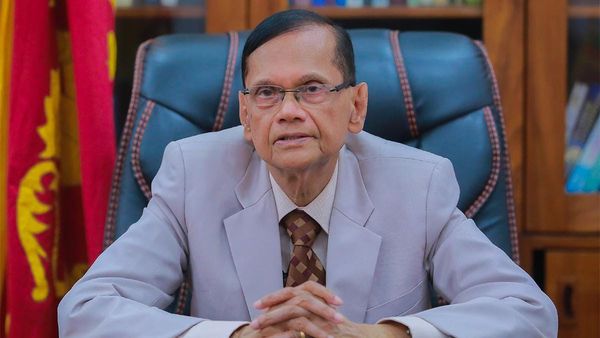
COLOMBO — March 3, 2026 — G. L. Peiris, Sri Lanka’s former foreign minister, on Monday called on President Anura Kumara Dissanayake to publicly articulate the government’s position on the escalating crisis in the Middle East, warning that the fallout could quickly destabilize key pillars of the island’s still-recovering economy.
In a letter dated March 3, reviewed by Jaffna Monitor, and addressed to the President at the Presidential Secretariat, Professor Peiris said the “volatile situation” in the region posed grave and immediate consequences for Sri Lanka. Writing on behalf of what he described as concerned citizens, he urged the government to explain “without delay” both to the Sri Lankan public and to the international community its stance on the unfolding conflict and its intended course of action.
“The crisis has a direct impact on Sri Lanka in at least four major respects,” he wrote.
Energy Shock and Cost of Living
First among them, Professor Peiris warned, is the likelihood of rising global oil prices translating into higher domestic fuel costs in the near future. Such increases, he said, would significantly raise the cost of living and intensify economic hardship for ordinary Sri Lankans.
Sri Lanka remains heavily dependent on imported fuel, making it particularly vulnerable to international price fluctuations. Any sustained spike in energy costs would ripple through transportation, electricity generation, and the price of essential goods — a politically sensitive fault line in a country still emerging from economic collapse.
Export Markets at Risk
Professor Peiris also cautioned that export revenues could diminish, particularly in the tea sector, because of reduced access to critical Middle Eastern markets affected by active military operations.
The Middle East has long been a major destination for Ceylon tea. Disruptions to trade routes or demand could weaken a sector that provides both employment and vital foreign exchange at a time when the government is seeking to stabilize public finances and rebuild reserves.
Tourism Cancellations
The tourism industry, he wrote, is already experiencing “cancellation on a considerable scale” from prospective visitors from Europe, North America, and the Gulf, citing complications in air travel across the conflict-affected region.
Tourism, another key source of foreign exchange, has only recently begun to recover from the twin shocks of the pandemic and Sri Lanka’s 2022 financial collapse. Industry analysts say renewed instability in global travel corridors could stall that recovery.
Remittances in Jeopardy
Finally, Professor Peiris warned that remittances from Sri Lankan workers across the Gulf and the wider Middle East could be jeopardized if the crisis intensifies. Worker remittances constitute one of Sri Lanka’s largest inflows of foreign currency and play a critical role in sustaining household incomes and national reserves.
Call for Transparency
In his letter, Professor Peiris said that those he represents stand ready to assist the government in addressing what he described as a “multifaceted calamity”. He noted that discussions were underway regarding practical measures to mitigate the crisis’s impact and said a public briefing would be held in the near future.
He urged the government to place in the public domain basic information about its approach to the crisis, arguing that transparency would enable informed public participation in shaping the national response.
The President’s Office has not publicly responded to the letter.
As tensions in the Middle East intensify, Sri Lanka finds itself once again exposed to forces beyond its control — energy shocks, disrupted trade, volatile tourism flows and uncertainty in migrant labor earnings — testing the resilience of an economy only recently pulled back from the brink.