

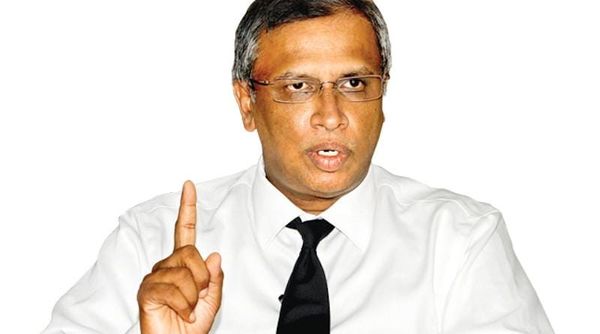
COLOMBO — The leadership of the Ilankai Tamil Arasu Kachchi (ITAK) has sought to distance the party from a controversial resolution passed by the Pachchilaipalli Pradeshiya Sabha, a local council controlled by ITAK, supporting what it described as United States efforts to “maintain world peace.”
In a Facebook status posted on social media on Friday, the party’s acting general secretary, M. A. Sumanthiran, said the resolution adopted by the local council had no connection to the party’s official position.
“This resolution is said to have been passed by the Pachchilaipalli Pradeshiya Sabha,” Mr. Sumanthiran wrote. “Not only does it have no connection whatsoever with the Ilankai Tamil Arasu Kachchi, it is in fact contrary to the policies and principles of our party.”
He added that the party leadership had already issued strict instructions to chairmen of local authorities operating under its political influence not to involve themselves in matters relating to international affairs.
“Those responsible for handling international matters exist at other levels,” Mr. Sumanthiran said. “We have already instructed other chairmen of councils functioning under our leadership that they should not engage in such actions.”
Mr. Sumanthiran said the party would investigate how the resolution — as well as its Tamil translation — had been prepared and circulated, and that appropriate disciplinary action would be taken if necessary.
He also noted that the chairman of the Pachchilaipalli Pradeshiya Sabha had already been subjected to disciplinary proceedings within the party and had previously been suspended from ITAK membership.
The clarification comes after a resolution adopted by the Pachchilaipalli Pradeshiya Sabha in Kilinochchi District triggered political debate in Sri Lanka’s Northern Province. The resolution authorized the council chairman to send a letter to the United States Embassy expressing support for what the council described as American efforts to maintain world peace.
Critics have questioned why a local government body — whose legal mandate under Sri Lanka’s local government laws is limited to municipal administration and community services — would take a position on a major international conflict.
The controversy has also unfolded against the backdrop of visible internal tensions within ITAK, one of Sri Lanka’s largest Tamil political parties. Differences between factions aligned with Mr. Sumanthiran and those associated with parliamentarian Sivagnanam Sritharan have increasingly surfaced in recent years.
Political observers say Mr. Sumanthiran’s statement stops short of outlining the party’s position on the broader international conflict between Iran and the United States that formed the backdrop to the resolution.
Some analysts argue that such silence is appropriate, noting that a Sri Lankan regional political party need not take a position on a foreign war.
The episode has also drawn attention to the disciplinary action taken by the party against the Pachchilaipalli Pradeshiya Sabha chairman.
In his statement, Mr. Sumanthiran confirmed that the chairman had been subjected to disciplinary measures and suspended from party membership, rather than expelled.
A political observer noted that a credible political leadership might have considered expulsion rather than suspension. However, there may have been political calculations behind the decision to resort only to suspension.
Under Sri Lanka’s Local Authorities Elections Ordinance, a council seat may be declared vacant if the Elections Officer determines that a member has ceased to belong to the political party that nominated him, such as through resignation or expulsion. A suspension from party membership does not automatically remove a councillor from office, meaning the chairman can continue to hold his seat and exercise the powers of his position within the council.
The Pachchilaipalli Pradeshiya Sabha, though controlled by ITAK, is understood to include a majority of councillors loyal to parliamentarian Sivagnanam Sritharan. The council’s chairman, Subramaniyam Suren, is also believed to be a loyal supporter of Sritharan.
Expelling the chairman, some analysts suggest, could therefore have risked destabilizing the council itself, as councillors aligned with his faction might have shifted their support or triggered a political confrontation within the local authority.
“For the party leadership, suspension may have appeared to be the safer option,” a political source familiar with the situation told Jaffna Monitor. “It allowed them to signal disciplinary action while avoiding the risk of losing control of the council.”
The episode, the source added, reflects the way the current leadership of the Ilankai Tamil Arasu Kachchi has been managing internal disputes within the party. “This is precisely how the leadership prefers to handle sensitive issues — through political balancing rather than direct action,” said a long-time supporter of the party.
He added that such internal management strategies — which some supporters consider ineffective — may also help explain some of the party’s recent electoral setbacks.
For some within the party’s support base, the Pachchilaipalli controversy reflects a deeper question about leadership and direction.
“Discipline is announced, but rarely decisive,” the supporter said. “And voters are beginning to notice.”