“I object to violence because when it appears to do good, the good is temporary; the evil it does is permanent”. Mahatma Gandhi
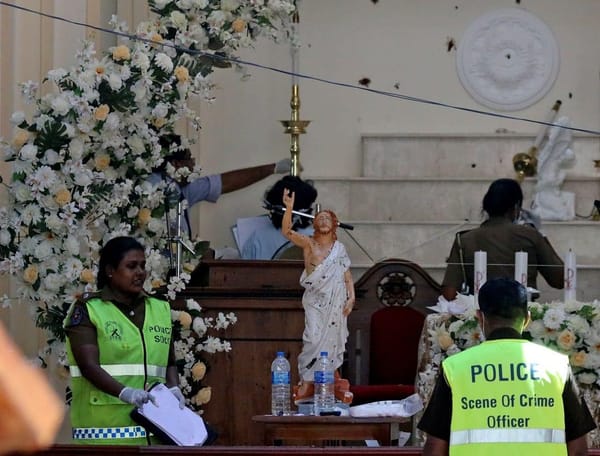
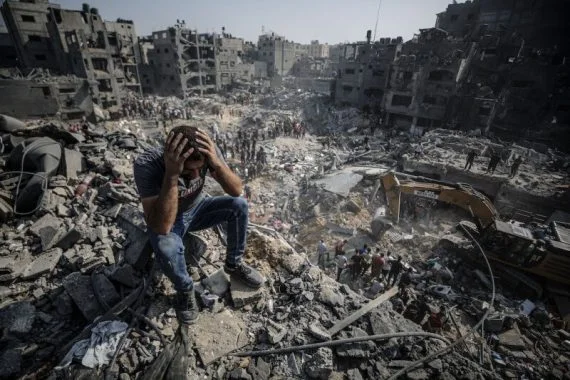
Times of war create the illusion that only force can resolve irreconcilable differences. Some social theorists even justify the inevitability of violence in achieving social change on the basis that groups in power rarely relinquish that privilege voluntarily. In this context, the armed conflicts that plagued Sri Lanka for three decades and continue to unfold in Gaza teach us some vital lessons. They are not only stories of immense human suffering and destruction but are also powerful reminders that the pursuit of an ideological utopia against regional and global political currents is rarely successful. In both cases, communities fought or were caught in the crossfire trying to resolve questions of identity, autonomy, and justice. Yet, despite years of bloodshed, the central questions remain unresolved. It is therefore important to reflect on what communities living with similar challenges - around the world, can learn from these collective experiences. In doing so, it is necessary to explore the issues dispassionately without casting aspersions or questioning motives.
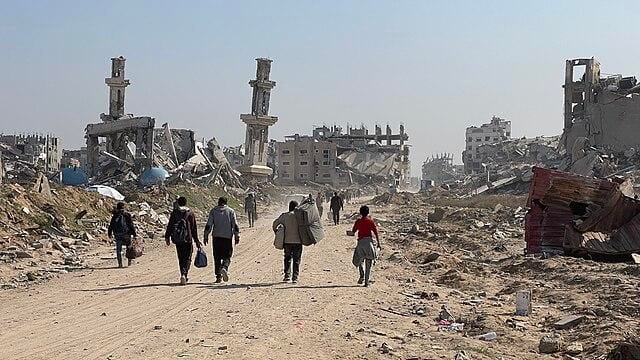
The sad reality of global politics:
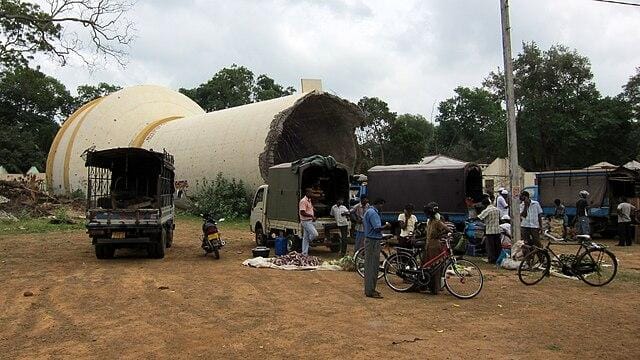
The Sri Lankan war lasted over 30 years, during which many armed groups fought with each other for supremacy and the ethno-nationalistic governments attempting to marginalise the minorities from the Nation’s history, heritage and governance. The war ended in 2009 with the defeat of all armed resistance and the loss of over 100,000 lives across all sides of the divide. This outcome was clearly predictable as early as 1987 when the Sri Lankan government forces launched ‘Operation Liberation’ forcing their opponents to retreat from the Vadamarachi sector – a sparsely populated rural landscape. This confirmed that in conventional warfare the side with greater manpower, firepower and resources (usually the state) will be the final victors. Sadly, the local civilian population was tragically mis-informed and manipulated by narratives that a similar outcome cannot be achieved in more densely populated areas. “No government can cause large scale damage to civilians” and “International community will not tolerate” were some of the sentiments that formed part of this narrative. This theory was fundamentally flawed as a leadership – rooted in deep ethno-nationalistic sentiments, willing to tolerate extensive damage to civilian lives and infrastructure eventually emerged in 2005 with the international community largely remaining silent.
The Gaza story has many parallels. A civil resistance, based on the genuine grievances of the Palestinian people evolved after the creation of modern Israel and the region has endured multiple spikes in the intensity of violence since then. Many groups fought for supremacy and the side that presented a utopia - that could be achieved by sustained armed struggle, prevailed in Gaza. Their propaganda machinery too presented the vision that Israel could never fully eliminate a group embedded within the population as damage to civilians would create an uproar that the world cannot ignore. However, as in Sri Lanka, a leadership did eventually evolve in Israel that was willing to accept the civilian toll of war – running over 70,000 deaths in the latest iteration, a man-made famine, and the destruction of an entire region. The Global bodies once again largely stood ineffective.
The motives, the scale and the players may have been different, but one principle – however brutal and horrific, was clearly established. In the face of a determined government - with powerful allies, global agencies are ineffective in changing the course of a destructive war. The ongoing massacre of civilians in Sudan adds further proof – if one is needed, to this bitter reality.
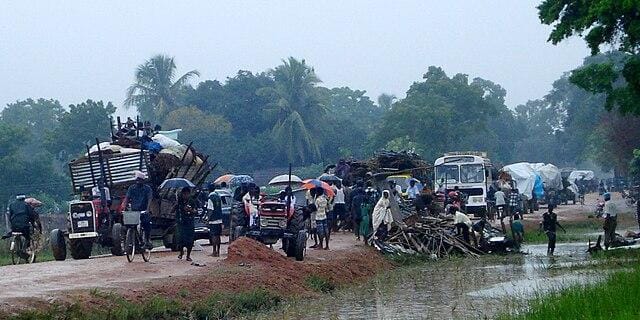
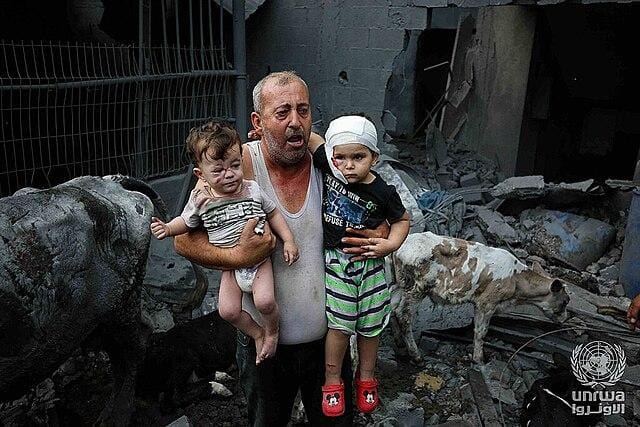
Generic lessons from the two conflicts:
Several common themes emerge from these two conflicts:
Firstly, in the context of a protracted war, a leadership willing to accept large scale damage to civilian populations will eventually emerge and when the destruction unfolds, the world will largely remain silent. Campaigns against such a war conducted in Western cities - through mobilising concerned citizens including the diaspora, are ineffective in preventing a determined state with powerful allies from prosecuting the war with catastrophic outcomes to humanity.
Secondly, no amount of military action can replace the need for genuine political solutions borne through discussions between the affected groups.
Thirdly, in the pursuit of political solutions, compromise is essential on both sides. Such compromises can be reached only if the respective leaderships wind down rhetorics and create a political discourse based on prevailing realities rather than overzealous political idealism. The history of Sri Lanka and Palestine present numerous examples where opportunities for political compromise was missed, with catastrophic consequences.
Fourthly, violence or threat of violence silences the voices that matter most in society. Both conflicts saw several examples where alternate views were discouraged and the labels of ‘betrayal’ or ‘traitors’ were used ad lib to isolate, marginalise and eliminate dissenting voices. When ideologically motivated violence is inflicted, the community’s initial reaction is one of condemnation and revulsion. This initial response however is eventually blunted on the basis of ‘ends justifying the means’. This transition embeds violence in society with long term consequences – still felt acutely in Sri Lanka, 16 years after the guns fell silent.

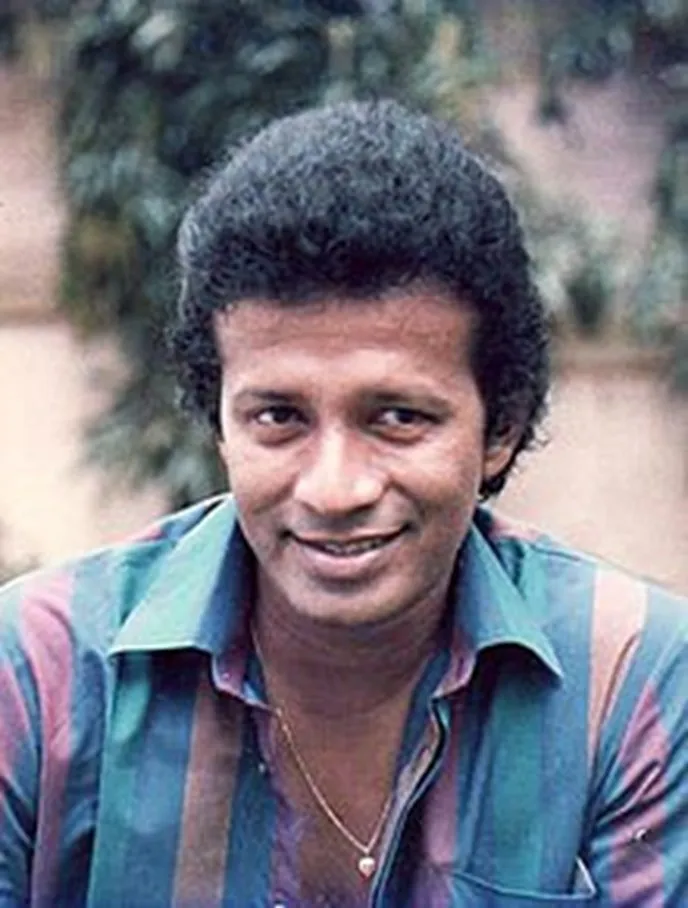

Fifthly, armed groups may win isolated battles, but in the long term they often lose the broader struggle for legitimacy and lasting change. In the Sri Lankan conflict, the Sri Lankan and Indian armies suffered many military setbacks and these ‘victories’ were portrayed as proof of valour and sacrifice. The powerful emotive language deployed in messaging, understandably evoked contradictory emotions within the wider population. The attack on Israeli athletes at the Munich Olympics, first and second intifadas, hijacking of aircrafts and the final October 7 attack on Israel, if viewed through a purely militaristic prism, did have elements of surprise, meticulous planning, bravery and sacrifice. They too, quite justifiably, evoked a set of complex and mixed emotional responses within Palestinians who had endured prolonged occupation and oppression. However, these attacks galvanised popular opinions pushing the respective governments to a position where they became immune to civilian suffering.
Sixthly, neither of these conflicts happened in isolation and external powers played key roles. Sri Lanka’s government received support from countries like China, Pakistan, Israel, UK or India and Tamil groups were (directly or indirectly) supported by India and many Western governments. There are well documented instances where the same external partner supported (and trained) the government forces and its opponents simultaneously in the same training facility! Politics in the Middle East has been shaped by regional rivalries for ‘spiritual supremacy’ and external forces with an eye on oil and gas deposits. The Palestinian question merely provided the conduit for the confluence of these conflicting interests.
And finally, real solutions can only come from within. Biologically speaking a modern nation is a self-organising system, where several subunits – with their own priorities and aspirations, come together to form an integrated whole. It is convenient to point fingers at various colonial powers for creating such modern states – perhaps with indifference to local imperatives. However, the key question now – almost 100 years after their creation, is how these ‘self-organising wholes’ could function effectively for the common good.
What is the way forward?
If violence has failed, what path remains? Thankfully, the alternative isn’t passivity - it’s nonviolent resistance, democratic politics, and grassroots activism based on the following premises
1. Reclaim non-violence as power: Gandhian movement for Indian independence, U.S. civil rights movement and the anti-apartheid campaign in South Africa have demonstrated the power of non-violence as it draws in broader support, retains moral authority and doesn’t destroy the very society it seeks to protect.
2. Unity without uniformity: Internal divisions: whether among Tamil political parties or Palestinian factions, weakened their causes. Unity doesn’t mean unanimity in opinion, but it does mean working towards common goals with honesty and internal democracy. Emotive rhetorics by leaders out-performing each other steers the population towards unachievable goals and the inevitable destruction that follows.
3. Power of Global Village: Modern world is more connected than ever. Stories of injustice can reach global audiences in seconds. Strategic use of media, international law, and diplomacy can build pressure where bullets fail. But this requires discipline, self-restraint and ethical leadership. Unrestrained use of social media and ‘politics through Face Book’ and ‘You Tube heroism’ merely create a ‘post-truth reality’ spreading hate.
4. Power of civilian voices: Post-conflict recovery cannot be led entirely by elites or foreign donors. It must be built through an inclusive approach from bottom-up, involving civil organisations, survivors, youth, women, and marginalized communities for these are the people who appreciate what was lost—and what must never be lost again.
5. Memory and restorative Justice: Remembering is important - but how we remember matters. Memorials, truth commissions, and historical education can promote healing, but unless channelled towards justice and reconciliation they risk reopening old wounds with every iteration.
6. People to people connections: In any democracy political solutions cannot emerge without civilian buy-in. This mandates that political discourses must happen in parallel with activities that promote understanding and acknowledging past mistakes. Suitable language and educational policies must be enacted by the state to facilitate such interactions.
Hope After the Storm
It is heartening to see some of these strategies being implemented by the current administration in Sri Lanka. As documented in my article in the October 2025 issue of Jaffna Monitor, some green shoots of recovery are evident, and the Tamil political leaderships must add further momentum. Future aspirants of national political power must recognise that development, prosperity or peace is merely a distant dream in a country that excludes groups of people from its historic and cultural legacy. All parties to the conflict must recognise that hatred - once unleashed, will consume its very proponents as evident in the country’s recent history. In the context of Palestine, there is no alternative to co-existence between the Jews and the Arabs. The Abraham accord – despite the shortcomings of its proponents, may provide the necessary framework. The objectives of Arab-Israeli coexistence cannot be achieved if either group remains wedded to the concept of ‘wiping out’ the other – due to historic enmity, or the imperatives to bury the ‘corruption within’ by pointing towards a ‘genie beyond’.
“Without forgiveness, there is no future”. Desmond Tutu
Note: The views and opinions expressed in this article are solely those of the author and do not reflect the views of the University of Manchester, where he is employed.