When two hijacked planes tore into the World Trade Centre in New York, causing the iconic buildings to collapse with hundreds of casualties, an Indian friend remarked even before it was known who the mass murderers were: “This could have been done only by the Al Qaeda or the LTTE.”
Osama bin Laden, of course, proudly claimed responsibility for the horrific deed. But the fact that someone thought the Liberation Tigers of Tamil Eelam (LTTE) could have carried out the history-changing terror attack spoke volumes about the Tamil Tigers’ abilities and reputation.
This is why, when Israel launched its military blitzkrieg against Hamas in October 2023, I had predicted (elsewhere) that the Palestinian group would meet a fate similar to that of the Tamil Tigers. That has happened – almost.
Comparisons have since been made between the two armed groups, which shared some parallel characteristics, especially their ruthlessness and scant regard for human lives, but were nevertheless vastly different.
Both the Hamas (abbreviation for the Islamic Resistance Movement) and the LTTE had supreme, although misplaced confidence in their power and skill to overcome the enemy one day. Both were heavily armed and had a core but varying ideology. Both outfits claimed to represent the people on whose behalf they were fighting, but never sought their approval for whatever they did. The Hamas and the LTTE were undemocratic in nature and intolerant of any criticism within their communities. It is not surprising that both became the dominant force in their own zones after physically exterminating their rivals through extreme cruelty.
There were plenty of dissimilarities, too.
Hamas’ long-term objective was to destroy Israel and to be replaced by a Palestinian State. The LTTE wanted to secede Tamil-majority areas from Sri Lanka, but it had no desire to wipe out the Sinhalese-Buddhist State.
Hamas enjoyed the solid backing of Iran, besides Qatar and Turkey, as well as powerful Shia and Sunni armed groups in the region linked to Tehran. In contrast, the LTTE was home-grown, and its unending arms supplies came from the global market as well as some dubious sources. It had no country or its military and intelligence apparatus supporting it, once the limited sympathies it enjoyed in India evaporated after the 1991 assassination of former Prime Minister Rajiv Gandhi.
The two groups had vastly different growth trajectories.
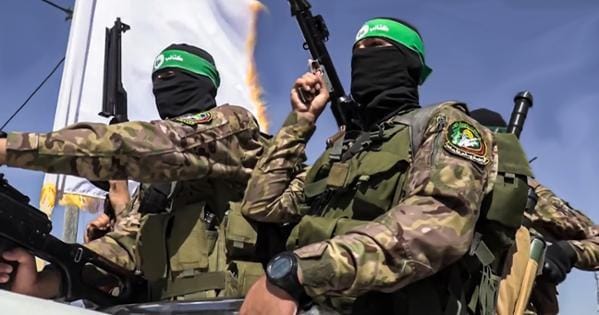
Hamas was founded in 1987. Within just two decades—by 2007—it had come to govern the Gaza Strip after electorally and then physically ousting its rival, the Palestinian Authority (PA). Its grip over Gaza was strengthened not only by substantial Qatari funding but also by Israeli complacency. Israel's hostility toward the late Yasser Arafat ran so deep that successive governments distrusted the PA, the successor to Arafat’s Fatah movement, even more. As a result, Israeli governments allowed Hamas to remain in control of Gaza, imprudently assuming that the organisation had lost the will or capacity to challenge Tel Aviv militarily. (This is one of the factors that is now openly debated in Israel.)
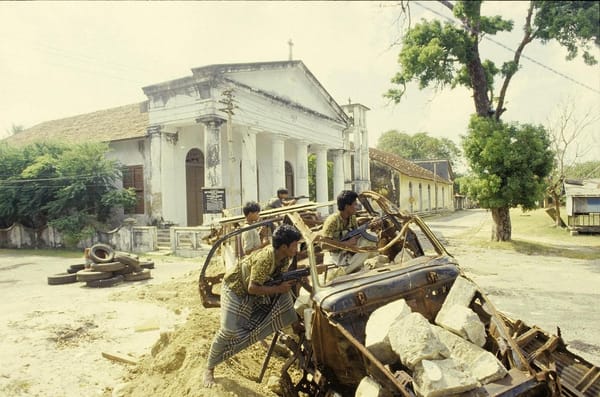
In contrast, the LTTE had a slow and steady growth except in some short periods. Since its birth in 1976, the LTTE took seven years before making a deadly attack on the Sri Lankan military in July 1983. By 1987, it was the dominant militant force in the island nation’s north and east. Its authority got cemented after it fought the Indian military in 1987-90, in part with Colombo’s complicity. It is in the 1990s that the Tigers came to control a third of Sri Lanka’s land and virtually two-thirds of its winding coast.
Whatever its ability to carry out terror attacks inside Israel, Hamas could never target any high-profile figure in the predominantly Jewish state. In sharp contrast, the LTTE played havoc in Sri Lanka, assassinating a President, a Defence Minister and a Foreign Minister, besides other prominent figures. Its terror attacks in Sri Lanka—from Colombo to Kandy—were deadly. The Tigers also showed their fangs in India, assassinating Rajiv Gandhi and the EPRLF leadership.
Hamas had a powerful and well-organised military wing (the al-Qassam Brigades) but lacked a naval arm. The LTTE had both a potent military and a navy capable of sinking enemy ships. The LTTE’s control over the northeast (until Karuna’s 2004 revolt) was earned through its fighting strength, unlike Hamas, which remained in power largely due to Israeli indifference.
Both committed strategic blunders in the end, but with a crucial difference.
When the LTTE created conditions that led to the victory of Mahinda Rajapaksa in Sri Lanka’s presidential election, it was under the impression that it would actually win any impending war. The calculation turned upside down, inviting the LTTE’s annihilation.
Anyone with even minimum common sense would have admitted that you could give pinpricks to Israel, but there was not even a conventional military force—forget Hamas—capable of overpowering Tel Aviv’s military might. But with its founders, Ahmed Yassin and Hassan Yousef, gone, and later led by a cold-blooded Yahya Sinwar, Hamas unleashed a brazen attack on Israel, which, no doubt, humiliated it but also woke up a sleeping tiger that then unleashed its overwhelming military superiority without caring about mass civilian casualties and destruction.
In the process, Hamas got battered; that remnants exist is no indication of its strength. If anything, Hamas has not seen the last of the Israeli killing machine. Come what may, Israel will never allow Hamas to return to power in any form in Gaza. Indeed, the monstrous civilian atrocities in Israel blamed on Hamas in October 2023 preclude it from governance for any foreseeable future—if not forever.
But for the October 2023 invasion, Hamas would still be in power in Gaza, and the thousands of innocent Palestinians who have died would be alive today. It is another matter that the LTTE’s decision to forcibly populate Mullaitivu to create a so-called protective ring is the main reason why so many innocent Tamils died during the fag end of the Sri Lankan war.
The LTTE’s arrogance was self-grown. It accrued from its ability to win battle after battle over the decades, and from the confidence that built up when the Indian military withdrew from Sri Lanka. Hamas’ faith, by contrast, was based on external strength—primarily from Iran, a country vastly bigger than Israel and one that shared the rebel group’s goal of destroying the Jewish state. Hamas could never have conquered Israel on its own. It believed that a multi-pronged assault by Iran and its proxies in Lebanon and Yemen would help it cruise to victory. Israel defeated them all, with American help both overt and covert.
It is not difficult to conclude that although Hamas may appear to be a more powerful organisation, it got its oxygen primarily from abroad. It was no match for Israel even in Gaza. The LTTE, by contrast, proved more than a match for the Sri Lankan military for long until the Rajapaksas took power.
Finally, Sri Lanka crushed the Tigers without the high-pitched international outcry Israel has had to face. If anything, many countries near and far openly and covertly helped Colombo in its war against the LTTE. Except for the US, Israel had no military ally. This is why Sri Lanka, despite battling charges of heaping cruelty on Tamils, today has plenty of friends internationally; Israel, in contrast, is diplomatically the most isolated country in the world.